Zheng He: An Introduction to the Greatest Navigator in History
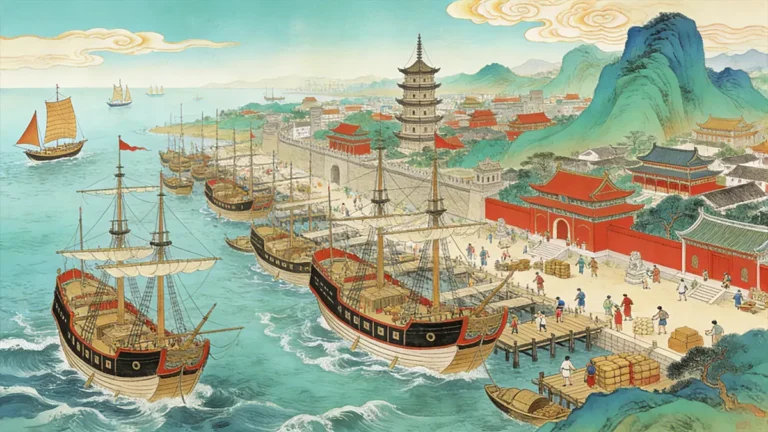
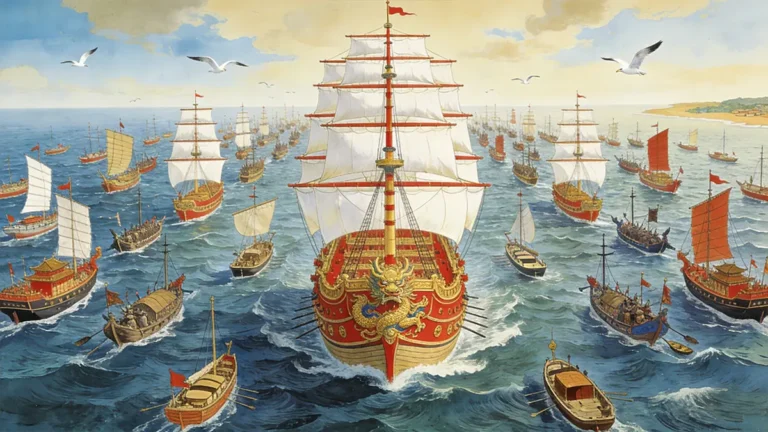
On a sweltering July day in 1405, the waters of Longjiang Port in Nanjing shimmered under the summer sun. Along the Yangtze River lay 317 massive ships—floating citadels with masts like forests and sails that blotted out the sky. Aboard them stood 27,800 officers and crew, not as an army of conquest, but as an imperial embassy of goodwill led by the eunuch admiral Zheng He. Their holds carried no cannons, no chains—only silk, porcelain, calendars, and an imperial edict from the Yongle Emperor: “Extend virtuous rule and pacify distant lands with benevolence.”
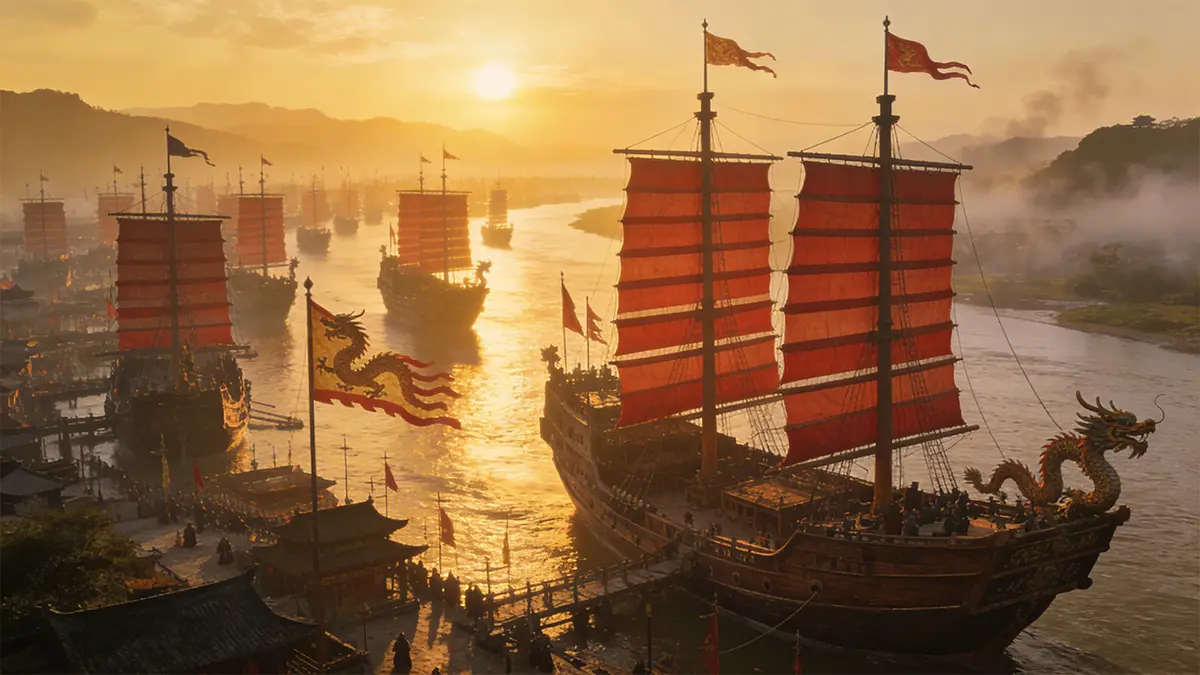
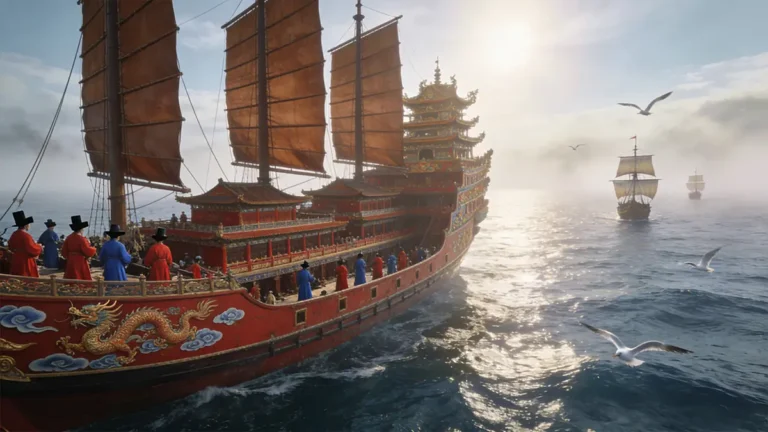
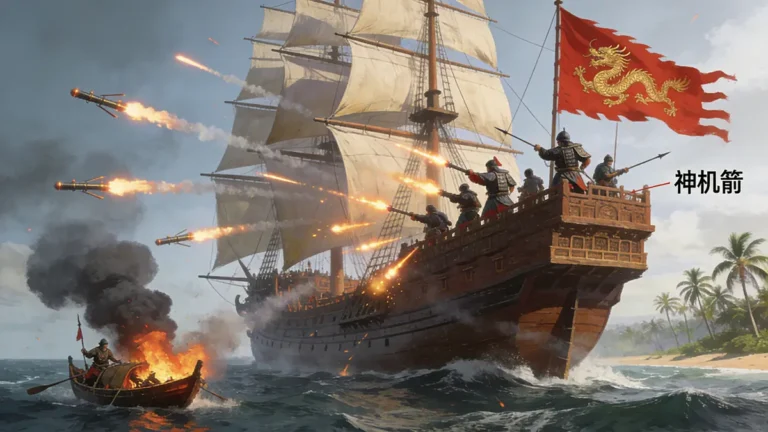
Fully 87 years before Columbus sketched his imagined route to India on Portuguese maps, Zheng He had already completed the first of seven voyages across the Indian Ocean at the helm of the world’s largest ocean-going fleet. His treasure ships, recorded in the History of Ming as measuring 44 zhang 4 chi (approximately 138 meters), dwarfed Columbus’ flagship Santa Maria (a mere 25 meters) by more than fivefold. Yet what truly set Zheng He apart was this: wherever his fleet sailed, it built not a single colony, forced not one conversion, and plundered not a city’s wealth. Powerful, yet restrained; far-reaching, yet peaceful—this remains a near-unique chapter in the annals of maritime history.
So what made Zheng He unforgettable?
He did not merely redraw trade routes across Asia and Africa—he proved that globalization need not be born of gunboats and greed. Civilizational exchange, he showed, could begin with respect, not fear.
This article invites you into Zheng He’s world—from a boy torn from his home in Yunnan’s highlands to the commander of China’s greatest naval enterprise; from the lantern-lit bazaars of Hormuz to the palm-fringed shores of East Africa where legends of “qilin” still echo. We’ll explore the questions that matter most: How did he achieve all this? What was his greatest legacy? And why did China, after him, turn its back on the sea? Along the way, we’ll dispel myths and recover a vision of global connection too long forgotten.
Chapter 1: From Yunnan Hills to the Imperial Court—A Life Reforged by Fate
In 1371, in Kunyang, Yunnan (modern-day Jinning, Kunming), a Hui Muslim family welcomed a son named Ma He. Both his grandfather and father had made the sacred pilgrimage to Mecca, earning the honorific title Hajji. As a child, Ma He may have recited verses from the Qur’an in the soft dawn light of a mosque—or gazed up at the stars above Dianchi Lake, dreaming beneath the sky of ancient Nanzhao.

But fate shattered when he was just ten. In 1382, Ming forces crushed the last Yuan loyalists in Yunnan. Young Ma He was taken prisoner, castrated—a brutal punishment for the vanquished—and sent to serve in the imperial palace in Nanjing. Overnight, a boy destined to inherit faith and family honor became rootless.
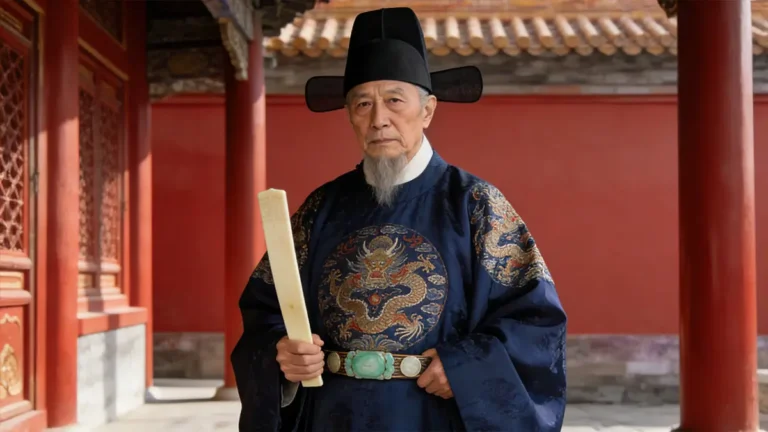
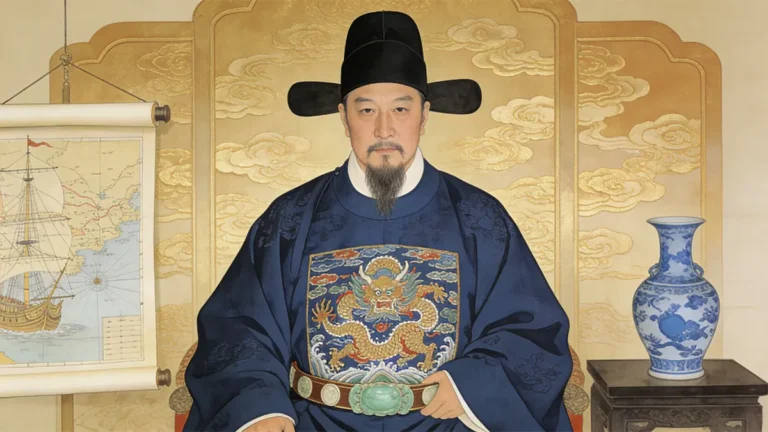
Yet he refused despair. Intelligent and resolute, he was assigned to serve Zhu Di, Prince of Yan. During the Jingnan Rebellion (1399–1402)—the civil war in which Zhu Di seized the throne from his nephew—Ma He fought bravely and advised shrewdly. When Zhu Di ascended as the Yongle Emperor, he rewarded his loyal aide with a new name: Zheng. Thus, Ma He became Zheng He—a rebirth sealed by imperial grace. This bond between ruler and servant was the spark for a grand maritime vision; you can explore the connection between the Forbidden City and the origin of the Ming Treasure Fleet to see how this era began.
Why did the emperor trust him so deeply?
In Ming China, eunuchs—though barred from lineage—could act as the emperor’s direct agents, bypassing the cautious bureaucracy of scholar-officials. Zheng He was rare: a man of military acumen, diplomatic finesse, and cultural duality. A devout Muslim by birth, he also honored Mazu, the Chinese goddess of seafarers. Before each voyage, he burned incense at the Tianfei Temple in Changle, Fujian; in Arab ports, he entered mosques to pray. This was not hypocrisy—it was empathy. And it opened doors from Colombo to Mombasa.
Chapter 2: Seven Voyages, Twenty-Eight Years—A Silent Pilgrimage of Civilizations
To the Ming mind, “the Western Seas” was less a place than a dream—the sapphire expanse of the Indian Ocean, where cloves and ivory flowed, and Islamic minarets rose beside Hindu temples. Between 1405 and 1433, Zheng He led seven expeditions, visiting over 30 polities and sailing more than 160,000 kilometers—enough to circle the Earth four times. To visualize the full geographic scope of these expeditions, explore this map of Zheng He’s voyages before reviewing the voyage-by-voyage timeline below.
This was no reckless exploration, but a grand strategy of peace.
| Voyage | Years | Key Destinations | Notable Events |
|---|---|---|---|
| 1st | 1405–1407 | Champa, Java, Sumatra, Ceylon | Crushed pirate Chen Zuyi; restored safe passage |
| 2nd | 1407–1409 | Calicut, Cochin | Invested local king with Ming seal and robes |
| 3rd | 1409–1411 | Ceylon | Captured tyrant Alagakkonara; installed a just ruler (attested by the Galle Trilingual Stele) |
| 4th | 1413–1415 | Hormuz | First Ming contact with the Persian Gulf |
| 5th | 1417–1419 | Arabia, East Africa (Kenya, Somalia) | Escorted envoys from 19 nations back to their homelands |
| 6th | 1421–1422 | Southeast Asia, India | Recalled early upon Yongle’s death |
| 7th | 1431–1433 | Hormuz, East Africa | Zheng He died at sea; fleet returned under Wang Jinghong |
He brought back more than goods—he brought wonder.
In 1415, after his fifth voyage, a giraffe stepped gently onto Chinese soil. Never seen before in the Middle Kingdom, court scholars pored over ancient texts and declared it the mythical qilin—a celestial omen of sage rule. The emperor commissioned the Illustration of the Auspicious Qilin (now in Taipei’s National Palace Museum), in which the creature bows its long neck as if in reverence. It was a beautiful misunderstanding between two worlds.
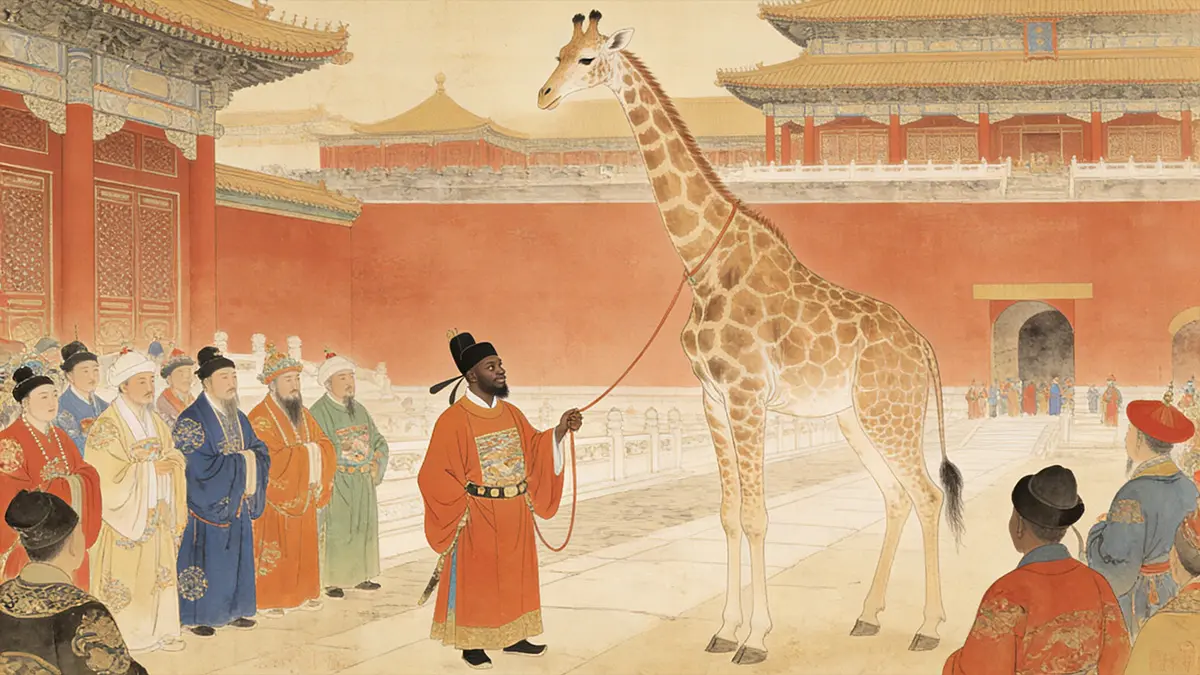
Zheng He also returned with zebras, ostriches, frankincense, and African drum rhythms. In turn, China shared silk, porcelain, agricultural techniques, and astronomical knowledge—a true exchange of civilizations.
Chapter 3: The Treasure Ship—A Wooden Leviathan of the 15th Century
“The treasure fleet included 63 great ships,” records the History of Ming, “the largest measuring 44 zhang 4 chi in length and 18 zhang in width.” By Ming standards (1 zhang ≈ 3.11 m), that’s roughly 138 meters long and 56 meters wide—making it among the largest wooden ships ever built.
Skeptics have questioned these figures, but archaeology offers compelling support: in 2003, a rudder shaft 11.07 meters long was unearthed at the Longjiang shipyard in Nanjing. Such a component implies a vessel well over 100 meters in length.
Even more impressive was its engineering:
- Watertight compartments: The hull was divided into independent sections, preventing total flooding—a technology Europe wouldn’t adopt for another 600 years (recognized by UNESCO as intangible cultural heritage in 2008).
- Navigation tools: Compasses guided direction; stellar sighting boards (qianxing ban) measured Polaris’ altitude; hand-drawn rutters charted coastlines.
- Onboard life: Crew grew bean sprouts to prevent scurvy; distillation units turned seawater drinkable; physicians, translators, and astronomers staffed dedicated departments.
This was no floating armada—it was a mobile city of peace.
Chapter 4: The Philosophy of Restraint—When Power Chooses Peace
Zheng He’s true marvel wasn’t his fleet’s size, but its spirit.
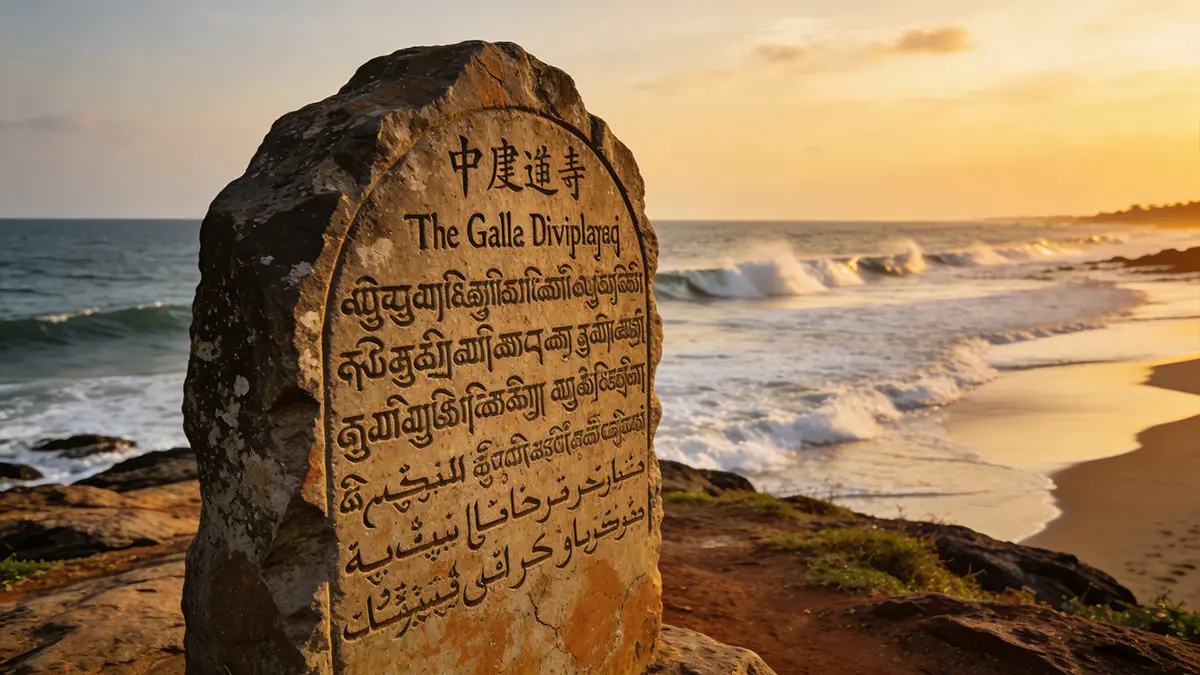
He mediated Sumatran civil wars, deposed Ceylonese tyrants, and respected prayer times in every Hormuz mosque. At Galle in Sri Lanka, he erected a trilingual stele—in Chinese, Tamil, and Persian—inscribed with a simple wish: “May all beings be happy; may the land enjoy peace and prosperity.”
His greatest achievement?
Not the treasures he brought home, nor the kings he met—but this: with unmatched naval power, he completed seven global missions without founding a colony, enslaving a soul, or imposing a creed. In human history, such restraint amid strength is almost unparalleled.
Chapter 5: Why Did the Voyages End?—An Empire Turns Inward
Zheng He died during the return of his seventh voyage in 1433. Soon after, the Ming court issued a stark decree: destroy all maritime records, ban construction of large ships, and enforce the policy that “not even a single plank was to touch the sea.”
Four forces drove this retreat, revealing the complex internal and external reasons why China stopped Zheng He’s voyages:
- Financial strain: The voyages cost an estimated 6 million taels of silver—3–5% of the Yongle state’s annual revenue.
- Bureaucratic backlash: Confucian officials condemned the expeditions as “wasteful extravagance” and eunuch-led ventures as “violations of ancestral law.” within the shifting 15th-century Ming Dynasty politics.
- Northern threats: Rising Mongol Oirat power shifted focus to the Great Wall frontier.
- Ideological shift: From cosmopolitan engagement to agrarian conservatism—“valuing grain, restraining commerce.”
An empire that once embraced the ocean chose to forget it.
Chapter 6: Why Zheng He Matters Today—A Model for a Fractured World
In our age, “globalization” often means domination—economic, cultural, military. Zheng He reminds us of another path: one built on reciprocity, not extraction; dialogue, not doctrine.
UNESCO has hailed his voyages as a “model of civilizational dialogue.” In Kenya’s Lamu Archipelago, villagers still speak of “Zheng He’s descendants.” Near Quanzhou’s Qingjing Mosque, Ming-era Arab tombstones stand as silent witnesses to that era of mutual respect.
Five poignant truths about Zheng He:
- A Muslim who lit incense for Mazu—bridging faiths without contradiction.
- Brought a giraffe, revered as a qilin—a tender collision of myth and reality.
- His fleet employed full-time translators, doctors, astronomers, and record-keepers.
- Captured a foreign king—yet replaced him with a just ruler, not a puppet.
- In seven voyages, never stationed a soldier or tax collector abroad.
Epilogue: Rereading Zheng He Is Reimagining Our Future
Zheng He’s greatness lies not in “discovering” new lands, but in refusing to claim them. In an age that glorified conquest, he chose ceremony; in an empire hungry for glory, he practiced humility.
Today, as the world again stands at a crossroads—between coercion and cooperation—we might look back to that summer of 1405 on the Yangtze,A fleet without guns sailed into the unknown blue.
Its commander carried only reverence—and a quiet conviction,“Those who dwell beyond the horizon are human, just as we are.”
Who Was Zheng He? A One-Sentence Definition
Zheng He definition: Zheng He (c. 1371–1433), born Ma He in Kunyang, Yunnan, was a Chinese Muslim eunuch, admiral and diplomat who commanded seven Ming Dynasty treasure-fleet expeditions across the Indian Ocean between 1405 and 1433 — the largest naval operations the world had seen up to that time.
If you need a short definition of Zheng He for a class or a quick answer: he was the Ming emperor’s chief maritime envoy, and his fleets carried silk, porcelain and silver as far as Hormuz and the East African coast, returning with envoys, spices, gems and tribute animals.
To define Zheng He in one word, most historians would say “maritime.” He was Admiral Zheng He — the title he is best known by — but he was never a conqueror. His ships brought trade goods and diplomatic gifts rather than colonists, and after his death the Ming court dismantled the very fleet that had made him famous.
So what did Zheng He do, in the plainest terms? He turned the Indian Ocean into a single connected diplomatic space for about twenty-eight years, sailing from Nanjing to Malacca, Ceylon, Calicut, Hormuz and Malindi, and back again — seven times.
How Do You Pronounce “Zheng He”?
Searching for how to pronounce Zheng He? The name is two Mandarin syllables, and neither sounds the way an English reader expects.
- Zhèng — a short, unaspirated “j” sound, close to the “j” in jungle, but without the English “d” onset. It is not “zeng,” and not “cheng.”
- Hé — like the word “huh” with a flat, clipped vowel. It is not the English pronoun “he.”
Put together, Zheng He pronunciation> comes out roughly as “jung huh” (sometimes written “juhng-huh” or “jeng-huh”). Practice it as two even beats — the first falling, the second rising — and drop any English stress habit. Mandarin also uses tones that English speakers naturally flatten, so any English reading is an approximation.
The pronunciation of Zheng He trips students up most often on the surname, because English “zh” does not exist as a sound. A useful hook: it is a soft j, so the admiral’s name rhymes with nothing in English — just say the two syllables cleanly and you will be understood.
Where Was Zheng He From? Yunnan, Not the Sea
Where was Zheng He from? He was born in Kunyang, a town in Yunnan province in southwest China, around 1371. His family was Muslim — his father and grandfather had both made the pilgrimage to Mecca and carried the honorific hajji.
So if you are asking where is Zheng He from, the answer is a landlocked frontier province, not a port. Nothing in his boyhood pointed toward the ocean. That changed in 1381, when Ming armies swept into Yunnan, he was captured as a boy, and he was eventually taken into the household of Zhu Di, the future Yongle Emperor. He grew up inside the court, converted his position into trust, and was given command of the fleet that would define Zheng He exploration for the next three decades.
Zheng He Facts: 10 Things Most People Don’t Know
- Zheng He was not his birth name. He was born Ma He; “Zheng” was a surname granted by the Yongle Emperor.
- He was a eunuch — captured as a boy and castrated, which in Ming China was a route into court service, not a bar to power.
- His fleet was enormous. Crew lists for the later voyages run to roughly 27,000 people, including sailors, soldiers, interpreters, doctors, astrologers and craftsmen.
- He sailed seven times, between 1405 and 1433, always under Ming imperial sponsorship rather than private trade.
- He reached East Africa. Voyages delivered envoys as far as Malindi, in present-day Kenya.
- A giraffe came back. The fleet brought a giraffe to Nanjing, read at court as an auspicious qilin.
- The ships were built in Nanjing, at the Longjiang shipyards, and the treasure ship’s true size is still argued over — claimed dimensions in Chinese sources are far larger than anything else afloat at the time.
- He was Muslim, and the fleet was multi-faith. Buddhist, Daoist and Muslim observances all appear in the voyage record — a practical choice on a route running through Muslim port cities.
- Two stone inscriptions are the fleet’s own voice. Steles erected in 1431 at Liujiagang and Changle describe the voyages in the first person.
- The voyages stopped after his death. The Ming court turned inward, and the records were later subject to official suppression.
Those are the zheng he facts that show up most often in classrooms. If you want the short version: the facts on Zheng He that matter are scale, reach, and the fact that it ended. For a lighter read, the most often repeated fun facts about Zheng He are the giraffe, the 27,000-man crew, and the ships so large they are still disputed. The most interesting facts about Zheng He, though, are structural — this was state trade and diplomacy, not empire-building, which is exactly why it was reversible.
Why Was Zheng He Important? The Short Answer
Why was Zheng He important? Three reasons. First, he proved that long-distance oceanic trade and diplomacy could be run at state scale — six centuries before anyone else attempted it. Second, he connected the Ming court directly to Malacca, Ceylon, Calicut, Hormuz and Malindi, giving China a working picture of the Indian Ocean world. Third, his voyages were the last time imperial China projected maritime power at that distance; what ended with him did not come back.
Why is Zheng He important to students and historians today? Because the significance of Zheng He lies less in what he brought home than in what his career reveals about Ming priorities — and about how quickly a global power can choose to stop being one. That is the zheng he significance most world-history courses want you to see.
What Was Zheng He Famous For — and What Did He Discover?
What was Zheng He famous for? The size of his fleet, the length of his routes, and the tribute system his voyages served. What is Zheng He famous for in popular memory is simpler: the treasure ships, the giraffe, and the maps.
What did Zheng He discover? Strictly speaking, very little was unknown to the ports he visited — the Indian Ocean was already a busy trading world. What the voyages did was open direct, sustained contact between Ming China and that world. When people ask what did Zheng He discover, the honest answer is that he did not discover Malacca, Ceylon, Calicut, Hormuz or Malindi; he made them permanent entries in the Ming court’s records. And if you are looking for the compact form, what did he discover is best answered as: a sea route and a diplomatic network, not new continents.
The achievements of Zheng He run the same way — seven voyages completed, tribute missions carried both directions, no colonies founded, and an enormous amount of logistics solved along the way. His Zheng He achievements belong to the fleet as much as to the man.
How Did Zheng He Die, and When?
When did Zheng He die? In 1433, the same year the seventh voyage returned. How did Zheng He die? Almost certainly of illness. Chinese sources give no dramatic account — no battle, no execution, no shipwreck story — and some place his death at Calicut, on the outbound or return leg of the final voyage.
That silence is itself informative. The most powerful admiral of his era exited the record without ceremony, and within a generation the Ming court had ended the voyages, restricted shipbuilding, and let the fleet decay. Where exactly his remains are is disputed; a tomb in Nanjing is maintained as a memorial rather than as a verified burial site.
Zheng He Quotes: What We Actually Have
There is no surviving diary, and no reliable record of the admiral’s private words. The most trustworthy Zheng He quotes come from two stone inscriptions the fleet itself erected in 1431 — at Liujiagang and at Changle — which means they speak in the voice of the expedition rather than as personal remarks.
“We have traversed more than one hundred thousand li of immense water spaces and have beheld in the ocean huge waves like mountains rising skyward, and we have set eyes on barbarian regions far away hidden in a blue transparency of light vapors, whilst our sails, loftily unfolded to the moon’s breeze, have traced a course through the starry night.”
That passage, carved at Liujiagang in 1431, is the closest thing to a quote by Zheng He that survives — and the standard English rendering dates from the twentieth century, so treat it as a translation of a translation. The same inscription records the fleet’s seven voyages port by port, which makes both steles far more valuable as records than as aphorisms.
If you came looking for a single Zheng He quote to use in an essay, this is the one to cite — with the attribution “Liujiagang inscription, 1431,” not “Zheng He said.”