Why Was Ming Porcelain So Valuable? The Global Demand Created by Zheng He’s Treasure Fleet
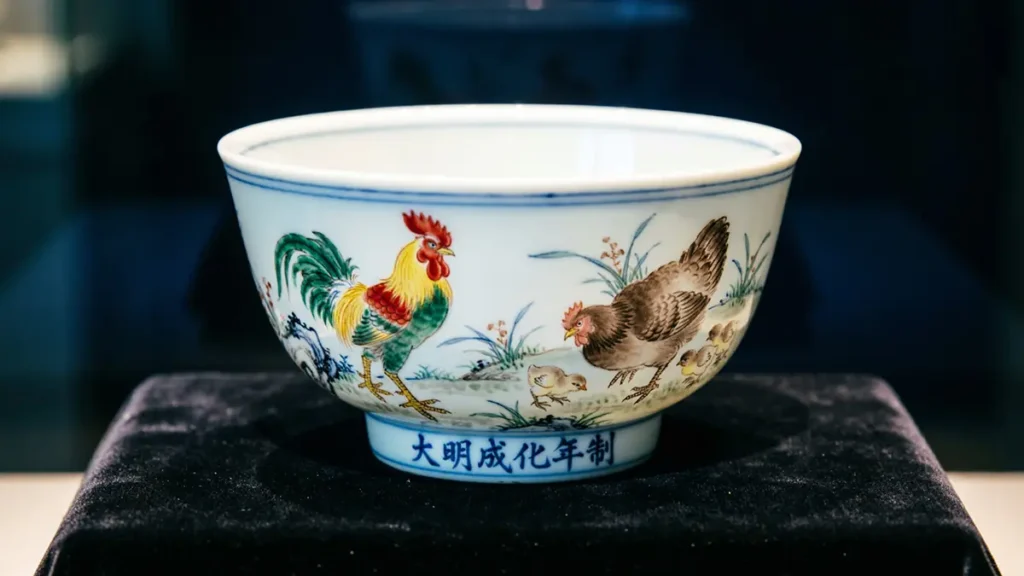
In 2014, a Chenghua-period doucai chicken cup sold at auction for HK$281.24 million. This figure was not a random market anomaly. It represents the final valuation of a technical system, a transnational distribution network, and a visual language that evolved over nearly three centuries. The question persists: why was Ming porcelain so valuable? Answering it requires shifting focus from antique collecting to global material exchange between the 15th and 17th centuries. Long before Ming porcelain became a prized commodity in European markets, Zheng He’s treasure fleet helped connect Chinese porcelain production with ports across the Indian Ocean and Southeast Asia. The premium rests on four pillars: imperial kiln monopolies, transoceanic scarcity, cross-cultural aesthetic demand, and a low survival rate amplified by modern auction mechanics. The following sections trace how craftsmanship, trade, art, and market dynamics collectively established this enduring legacy.
Technical Barriers and the Imperial Kiln Monopoly
Ming porcelain’s primary value driver was not merely artisanal skill, but a state-controlled production system. In 1369, the Hongwu emperor established the Imperial Porcelain Factory in Jingdezhen. The court enforced strict quality control: defective pieces were physically destroyed on-site to prevent market leakage (Palace Museum, Archaeological Report on the Jingdezhen Imperial Kiln Site). This policy artificially restricted supply.

Technological refinement played an equal role. Potters perfected the “binary formula,” blending kaolin and petuntse in precise ratios. This mixture allowed firing temperatures to exceed 1,300°C, drastically reducing warping. Analysis from the Dresden State Art Collections confirms that high-whiteness Ming bodies maintained a stable alumina content around 20%. The result was mechanical strength and translucency that far outpaced contemporary European stoneware (Dresden State Art Collections, Material Analysis Report, 2018).
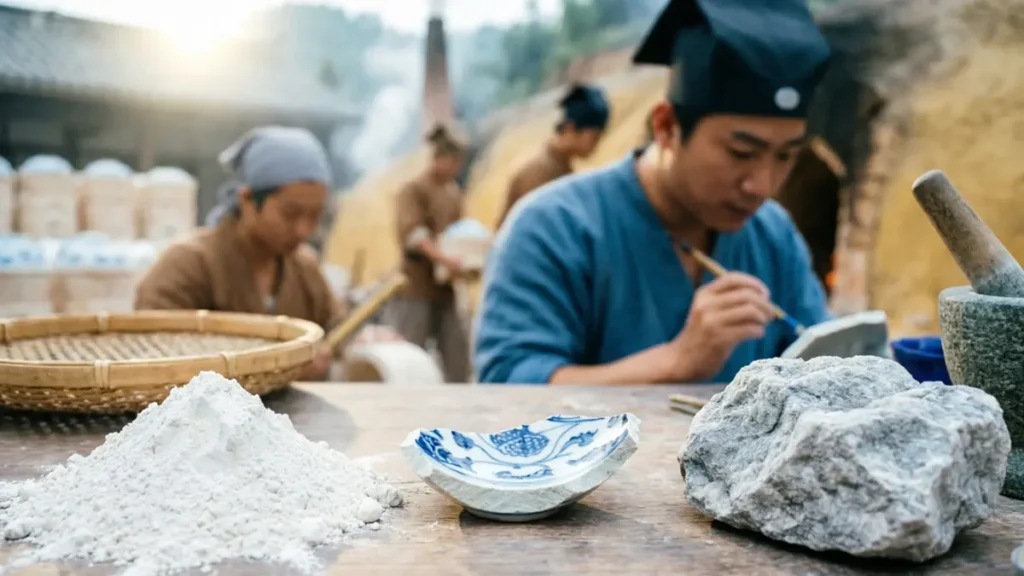
Cobalt introduction widened the technological gap further. The Yongle and Xuande reigns relied on “Sumaliqing” cobalt (a Persian-sourced blue pigment imported via maritime trade routes under the Ming Dynasty Tributary System). High in iron and low in manganese, this material naturally produced dark crystalline spots and a soft halo effect under high-temperature reduction. What began as a firing variation became an imperial authentication standard. Modern thermoluminescence (TL) and X-ray fluorescence (XRF) testing confirm that later replicas struggle to replicate this exact microstructure and kiln atmosphere.
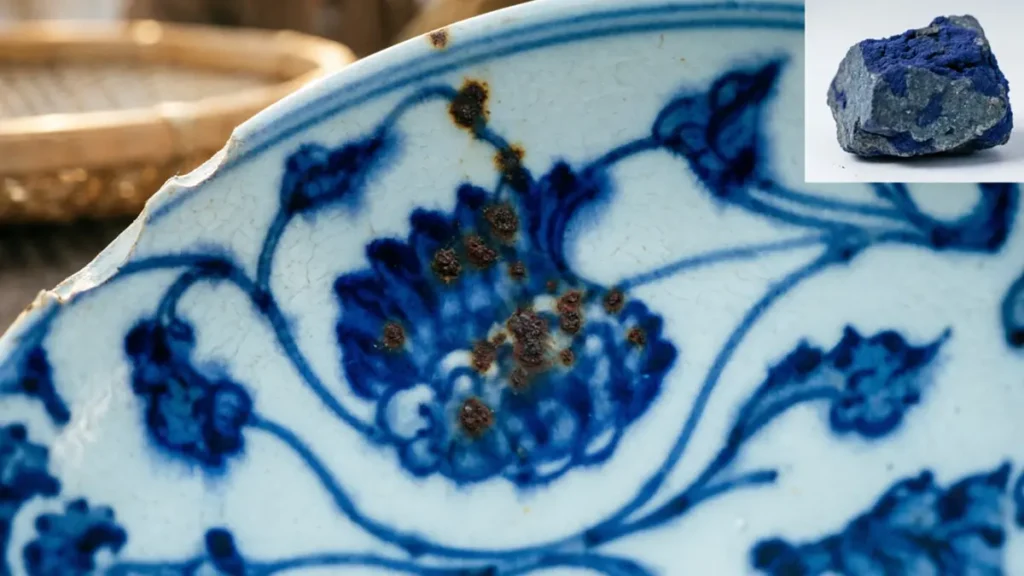
Mastery of materials and kiln control enabled consistent, high-quality output. Yet technological maturity alone did not guarantee global influence. The true value multiplier emerged only after transoceanic trade networks connected Jingdezhen to European markets.
Global Trade and the Logic of “White Gold”
By the early 16th century, Ming porcelain entered Europe as a standardized commodity. Portuguese traders reached Guangdong in 1517, followed by the Dutch East India Company (VOC) in 1602. The VOC shifted porcelain from diplomatic gift to bulk trade asset. Company ledgers show that by the mid-17th century, a single large Xuande blue-and-white jar in Amsterdam could fetch the equivalent of a skilled carpenter’s three-year income (VOC Archives, Nationaal Archief The Hague, 1650 Trade Ledgers).
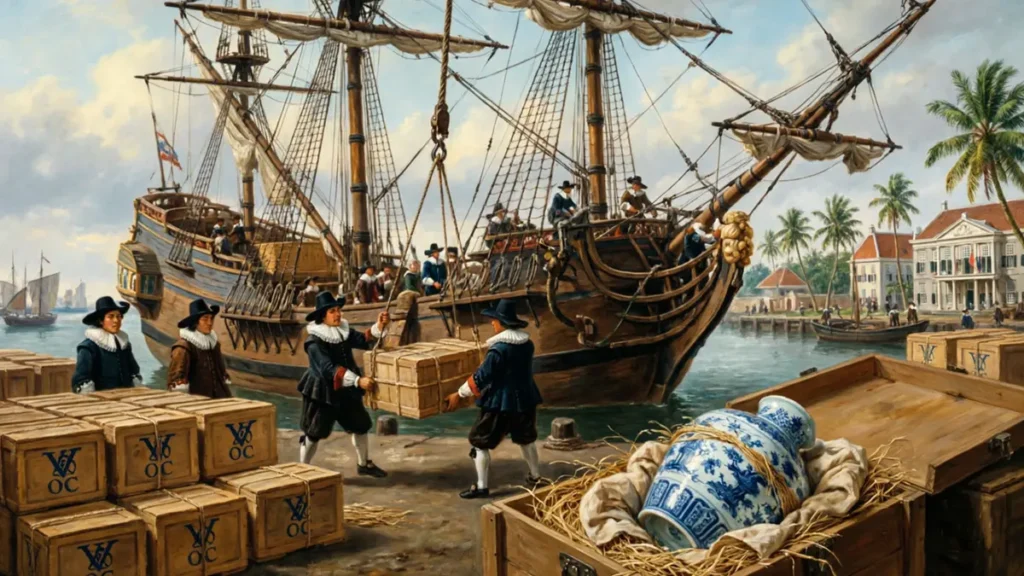
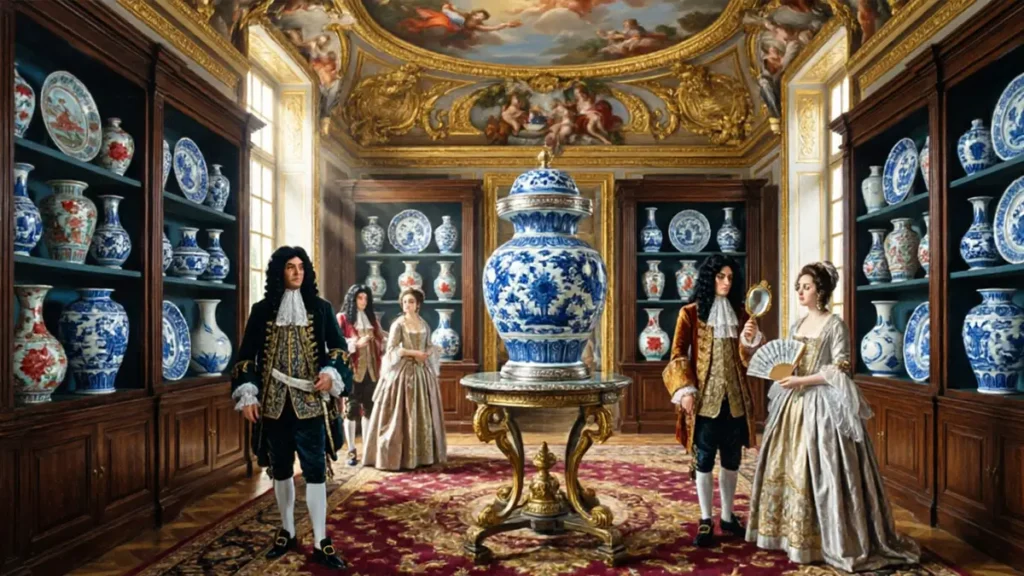
European courts rapidly integrated these objects into displays of power. Louis XIV commissioned a dedicated porcelain salon at Versailles. Queen Mary II hired Christopher Wren to design a gallery at Hampton Court. These were not mere decorative spaces; they functioned as early globalization showcases. Europe lacked the technology to fire hard-paste porcelain until Meissen’s breakthrough in 1708. Consequently, Western literature routinely labeled Ming wares as “white gold.” Jesuit missionary Matteo Ricci’s late-16th-century letters also noted that Jingdezhen’s scale and division of labor deeply impressed European observers (Matteo Ricci, De Christiana expeditione apud Sinas, 1615).
Trade routes also created a clear value hierarchy. “Kraak porcelain,” exported for mass European markets, featured panelled decoration and utilitarian shapes. Production volumes were high, and survival rates remain relatively strong. Imperial pieces, reserved for court use or diplomatic exchange, followed closed distribution channels. Fewer survived. This supply-demand imbalance established the baseline for cross-cultural premium pricing.
Once objects crossed oceans, physical utility mattered less. Visual symbolism and cultural interpretation became the new pricing dimensions.
Visual Symbols and Cross-Cultural Aesthetic Premium
Ming decorative programs followed a highly codified visual language. Yongle and Xuande blue-and-white wares frequently featured Islamic geometric medallions and Arabic script, responding directly to Middle Eastern patronage. The Chenghua court shifted toward refined intimacy. Artisans developed doucai (a technique combining underglaze blue outlines with overglaze enamel fills). Vessel sizes shrank to hand-held proportions. Palace Museum catalogs note that Chenghua glaze formulas contained trace arsenic, producing a distinctively soft, milky opacity (Palace Museum, Chenghua Doucai Catalog, 2012).
Western reception transformed these motifs. Dragons and phoenixes appeared in early European inventories as “Eastern mythical beasts,” directly fueling the 17th- and 18th-century Chinoiserie movement. Victoria & Albert Museum archives document how European silversmiths frequently mounted imported Ming pieces with gilded silver rims and feet. This adaptation aligned the objects with local dining customs and interior design standards (V&A Museum, Chinese Export Silver & Porcelain Records).
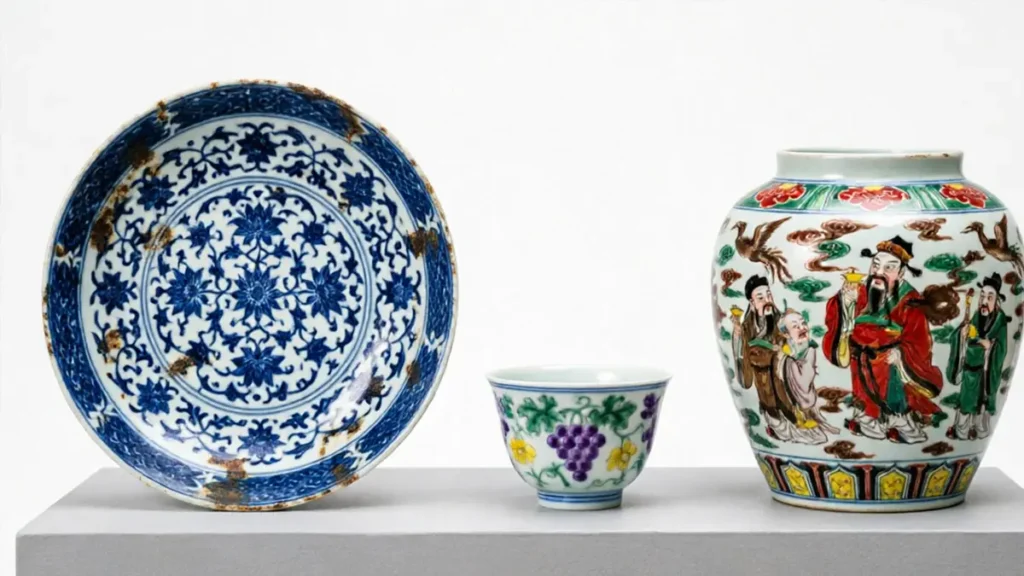
Secondary modification did not erase original value. It expanded the collector base. Xuande blue-and-white conveyed imperial grandeur. Chenghua doucai projected courtly restraint. Jiajing wucai (five-color overglaze enamel painting) reflected religious and secular vibrancy. Each category appeals to distinct aesthetic preferences and historical narratives. When an object combines clear dating, documented provenance, and cross-cultural use history, its valuation transcends the art market.
Aesthetic appreciation and historical context ultimately converge on a practical reality. After centuries of conflict, maritime disasters, and material decay, how many pieces actually remain, and how do they move through contemporary channels?
Surviving Quantities, Archaeological Evidence, and Modern Auction Dynamics
The surviving corpus is far smaller than public perception suggests. The Jingdezhen Institute of Ceramic Archaeology estimates that while imperial kilns produced hundreds of thousands of pieces over 276 years, intact survivals likely represent under 3% of total output. Late Ming warfare, Qing dynasty transitions, modern dispersal, and early transport losses account for the attrition. Excavations since the 1990s have recovered thousands of dated wasters and standard specimens. These finds provide critical stratigraphic benchmarks for authentication (Jingdezhen Institute of Ceramic Archaeology, Report on the Excavation of Ming Dynasty Imperial Kiln Sites).
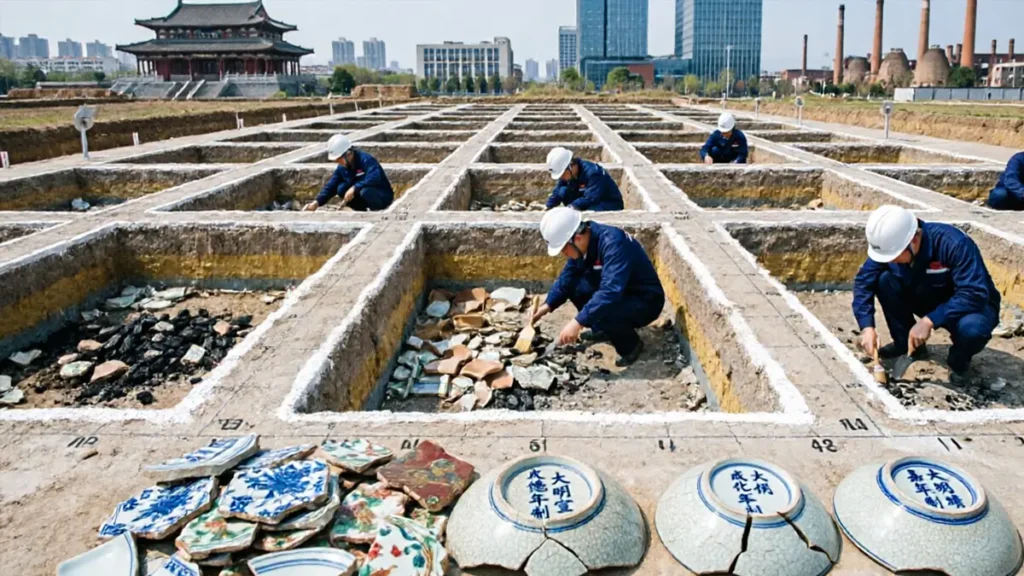
Modern auction mechanics amplify this scarcity. Sotheby’s and Christie’s data indicate that fewer than 400 verified Ming imperial pieces enter public sales annually. Provenanced, condition-stable examples typically realize $50,000 to $45 million. The 2014 Chenghua chicken cup record and a 2022 Xuande blue-and-white bowl that reached $38 million follow identical logic. The market pays for verifiable historical continuity, not ambiguous period labels (Sotheby’s & Christie’s, Ming Porcelain Auction Summaries, 2014–2023).
Legal compliance now governs all legitimate transactions. National heritage laws enforce strict 1911 and 1949 export thresholds. The EU requires licenses for cultural objects over 50 years old. The U.S. Cultural Property Implementation Act (CPIA) restricts specific archaeological categories. Reputable auction houses publish full provenance chains, scientific reports, and compliance documentation in their catalogs. Objects without clear ownership history face severe market friction, regardless of technical attributes.
Navigating this landscape requires foundational knowledge of authentication frameworks and international heritage law.