Maritime Silk Road Before Zheng He: Exploring Ancient China’s Medieval Sea Trade
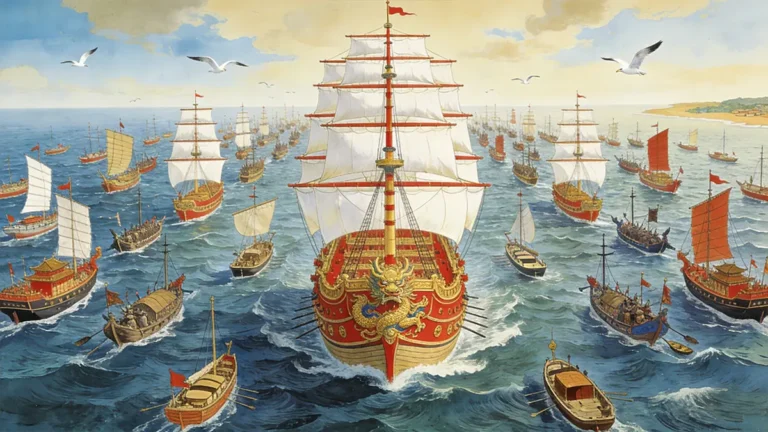
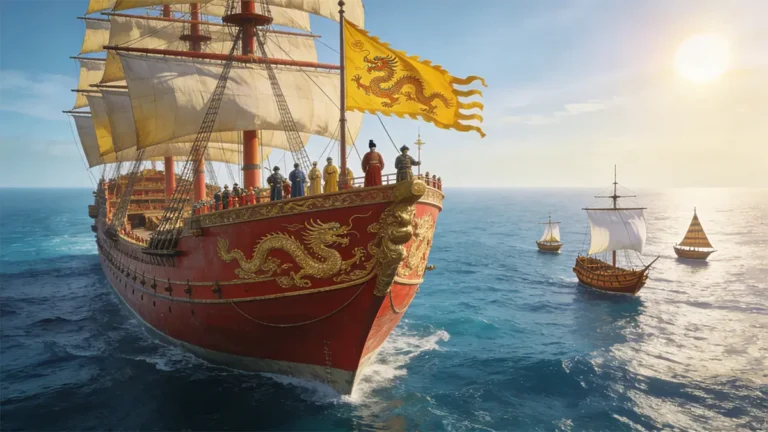
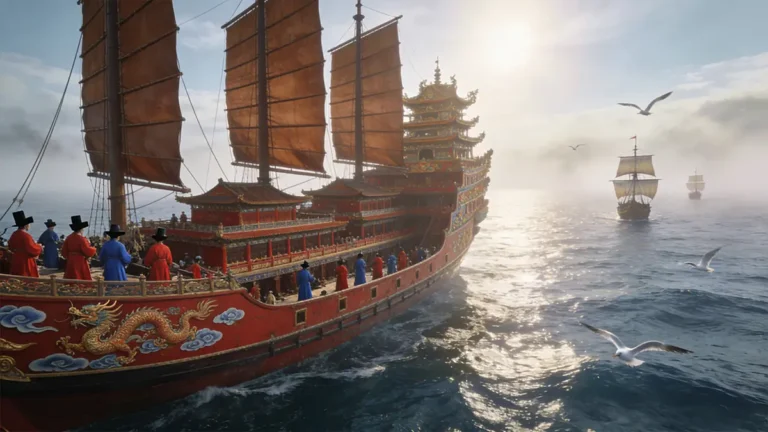
In 1405, Zheng He led a fleet of over 200 ships and 27,000 crew members from the Chinese coast. The sheer scale of this expedition remained unmatched until the outbreak of World War I. Most Western readers encountering Zheng He for the first time tend to view him as the originator of China’s maritime history.
The opposite is true.
When Zheng He set sail, maritime trade networks had already been operating for approximately 1,600 years. From the Han Dynasty to the Yuan Dynasty, mature trade routes had long been established between Chinese ports and Southeast Asia, India, Arabia, and even the East African coast. Zheng He was not a pioneer; he was an inheritor.
We trace the complete history of the Maritime Silk Road before Zheng He. Ports during the Tang and Song dynasties were busier than their European counterparts. Arab merchants established permanent communities along China’s coast. Monsoons dictated the rhythm of trade across the Indian Ocean.
Equally important, we track the flow of specific goods—from how celadon from Zhejiang’s Longquan kilns appeared on Kenya’s shores, to how Southeast Asian agarwood became a luxury item in the Song imperial court. Material evidence speaks louder than any written record.
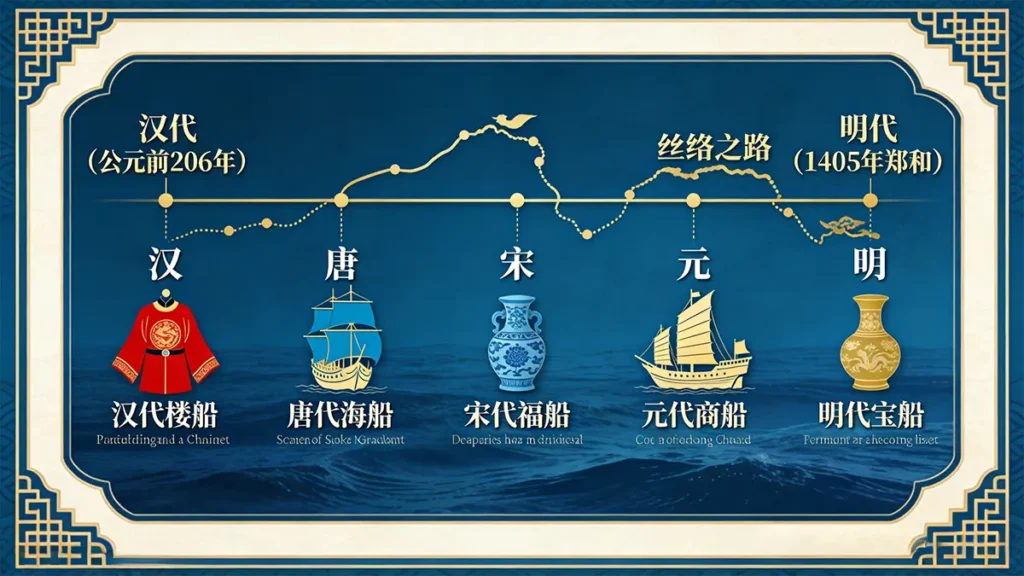
First, we need to clarify what the Maritime Silk Road was and why it existed long before Zheng He.
What is the Maritime Silk Road?
The term “Silk Road” was coined by German geographer Ferdinand von Richthofen. He first used the phrase in 1877, originally referring solely to overland trade routes. Later scholars expanded the concept to include maritime trade networks.
The Maritime Silk Road differs from the overland Silk Road in several key ways:
| Aspect | Overland Silk Road | Maritime Silk Road |
|---|---|---|
| Main Period | 2nd century BCE – 14th century CE | 2nd century BCE – 15th century CE |
| Transport Capacity | Camel caravans, ~20 tons per trip | Ships, 200-300 tons per voyage |
| Goods Type | Primarily luxury goods | Luxuries + bulk everyday commodities |
| Participating Civilizations | China, Central Asia, Persia, Rome | China, Southeast Asia, India, Arabia, East Africa |
Data sources: Britannica, “Silk Road” entry; UNESCO World Heritage Centre
Land routes were more susceptible to political factors. Wars and regime changes could disrupt trade routes. While sea routes were constrained by monsoon patterns, they remained generally more stable. This explains why maritime trade flourished after land routes became impassable during the Song Dynasty.
Western readers may be familiar with the Mediterranean trade network. During the Roman Empire, regular shipping routes connected Alexandria in Egypt with India. The Maritime Silk Road operated similarly, yet on a broader scale and for a longer duration.
With these foundational concepts established, we return to our starting point—the Han Dynasty—to examine how this trade route began.
Han Dynasty: The Emergence of Trade Networks (206 BCE–220 CE)
The Han Dynasty marked the dawn of China’s maritime trade. The Book of Han: Geography explicitly records that fleets departing from Xuwen and Hepu could reach Southeast Asia and eastern India. This constitutes the earliest documented account of maritime trade in China’s official historical records.
Archaeological discoveries corroborate these accounts. The Han tombs at Hepu, Guangxi, yielded abundant Southeast Asian artifacts including amber, glass beads, and spices. These items could not have been transported overland and must have arrived by sea.
Key Data:
- Hepu Han Tombs: Over 1,000 tombs excavated
- Overseas artifacts unearthed: Approximately 5,000 pieces
- Chronological range: 2nd century BCE – 2nd century CE
- Source: China National Cultural Heritage Administration, 2017 Report
The trade route roughly followed this path: Departing from southern Chinese ports (Xuwen, Hepu), vessels sailed south along the Vietnamese coast, traversed the Malay Peninsula, and reached eastern India. On the return journey, they carried goods such as pearls, gemstones, and spices.
Nautical technology during this period remained relatively primitive. Ships primarily navigated along coastlines, rarely venturing into the open sea. Sailors relied on celestial navigation and rudimentary understanding of monsoon patterns. Trade scale was limited, yet a fundamental framework had emerged.
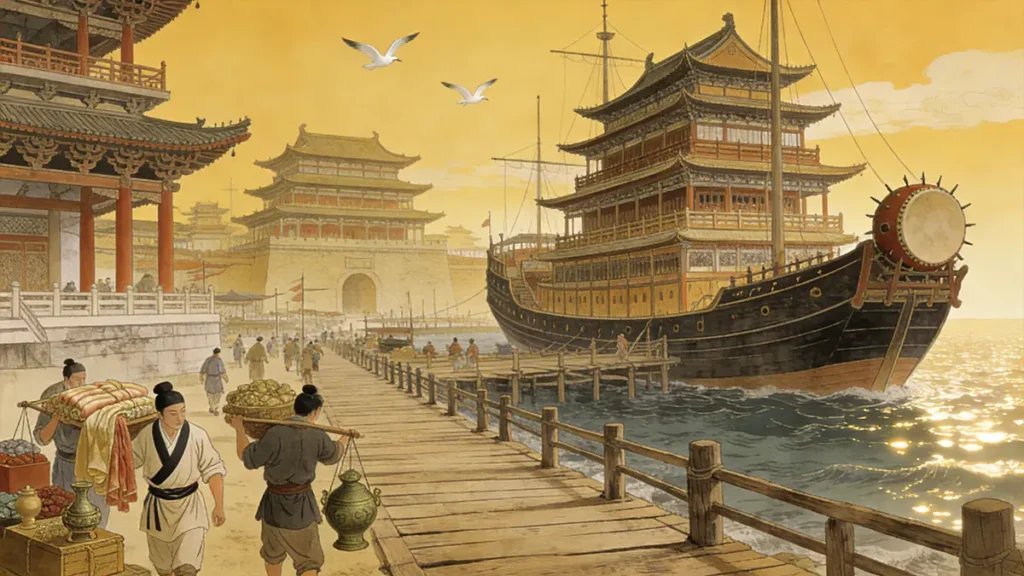
One scholarly debate merits attention. Traditional views hold Hepu as the most significant Han Dynasty port. However, recent scholars suggest Xuwen Port’s superior geography may have led to its underestimation. The 2019 underwater archaeological discovery of Han Dynasty shipwreck artifacts in Xuwen, Guangdong, supports this perspective.
Historical research is dynamic. New evidence can reshape established understandings. This is what makes archaeology compelling.
The Han Dynasty laid the foundation, but true prosperity would not arrive until the Tang Dynasty. We now examine the first golden age.
Tang Dynasty: The First Golden Age (618–907)
The Tang Dynasty corresponds to Europe’s Early Middle Ages. While Western Europe endured the “Dark Ages,” China’s maritime trade flourished. Guangzhou emerged as the first international port, attracting numerous foreign merchants.
In 685, the Tang Dynasty established the Office of Maritime Trade. This precursor to customs authorities managed overseas trade and collected tariffs. At the same time, Europe lacked any comparable customs system.
Guangzhou’s Internationalization:
- Permanent Population: Approximately 200,000
- Foreign Merchants: Approximately 10,000–20,000 (primarily Arab and Persian traders)
- Foreign Enclave: “Fanfang” (Foreign Quarter), granted autonomous governance
- Sources: The Travels of Suleiman the Arab (851); Old Book of Tang
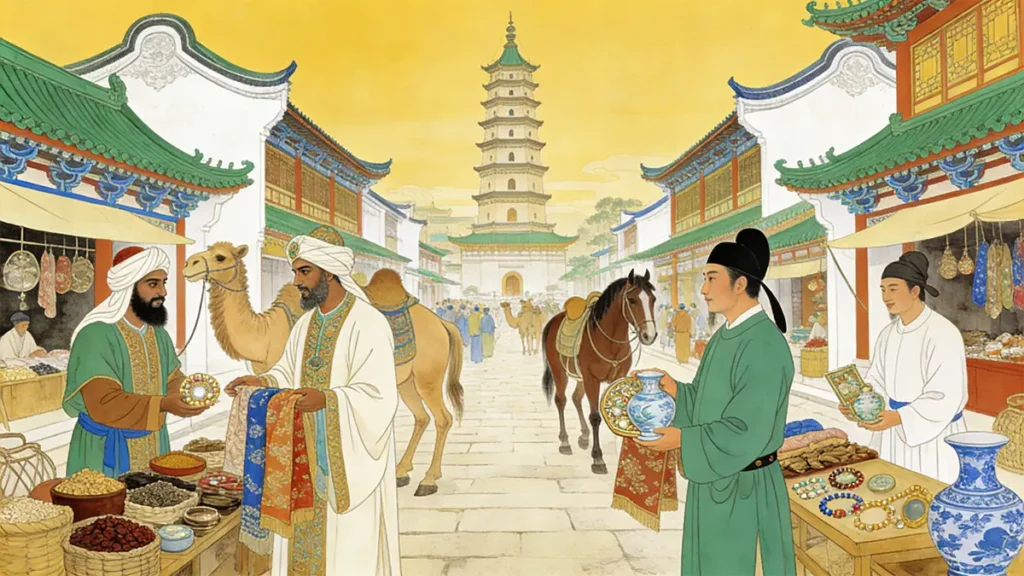
The Travels of Suleiman the Arab chronicles an Arab merchant’s journey. During his 851 visit to Guangzhou, he vividly documented the port’s prosperity. The text notes that Chinese officials securely stored foreign merchants’ goods, ensuring they were delivered to heirs if the merchants met with misfortune. This commercial credit system was remarkably advanced for its time.
The light tower at Guangzhou’s Huaiseng Mosque still stands today. This Islamic structure, built during the Tang Dynasty, serves as tangible evidence of Arab merchant activity in Guangzhou. Similar relics have been discovered in Quanzhou and Yangzhou.
Monsoons Dictated Trade Rhythms
Tang Dynasty navigators had mastered the patterns of Indian Ocean monsoons. This understanding was crucial for the regular operation of maritime trade.
Monsoon Trade Cycle:
- April–September: Southwest monsoon period, merchant ships sail westward (China → Southeast Asia → India → Arabia)
- October–March: Northeast monsoon period, merchant ships return eastward (Arabia → India → Southeast Asia → China)
- Waiting Period: Merchants remained in ports for 3-6 months
- Source: A History of Indian Ocean Trade (K.N. Chaudhuri, 1985)
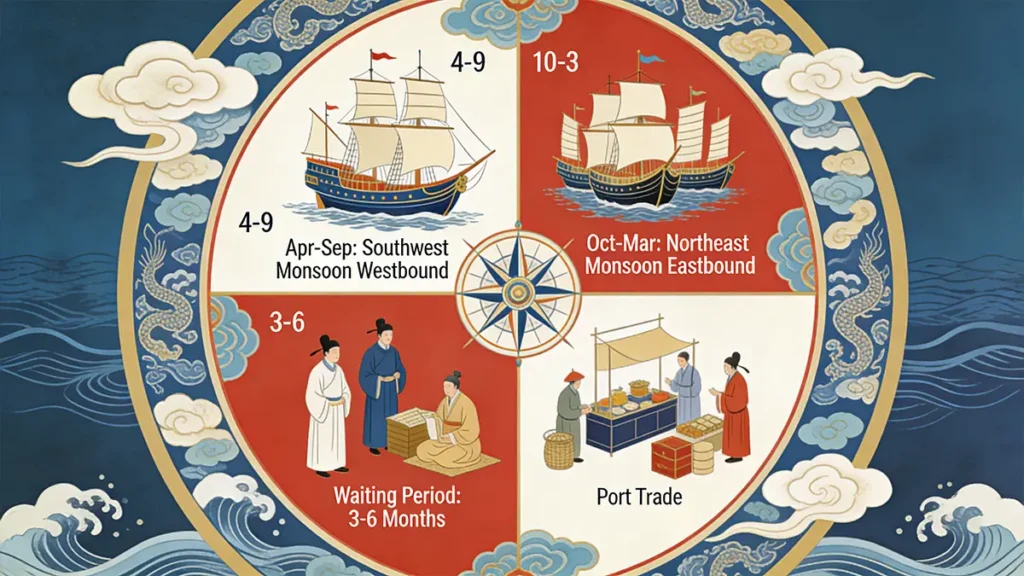
Merchants could not travel freely. They had to wait in ports for favorable winds. During these waits, foreign traders established temporary or permanent communities in port cities. This is how the “foreign quarters” emerged.
Mediterranean trade also relied on seasonal winds. The Indian Ocean monsoon was more regular, enabling a more stable trade cycle. Arab merchants capitalized on this pattern to establish a trade network spanning the Indian Ocean. Chinese ports served as the eastern terminus of this network.
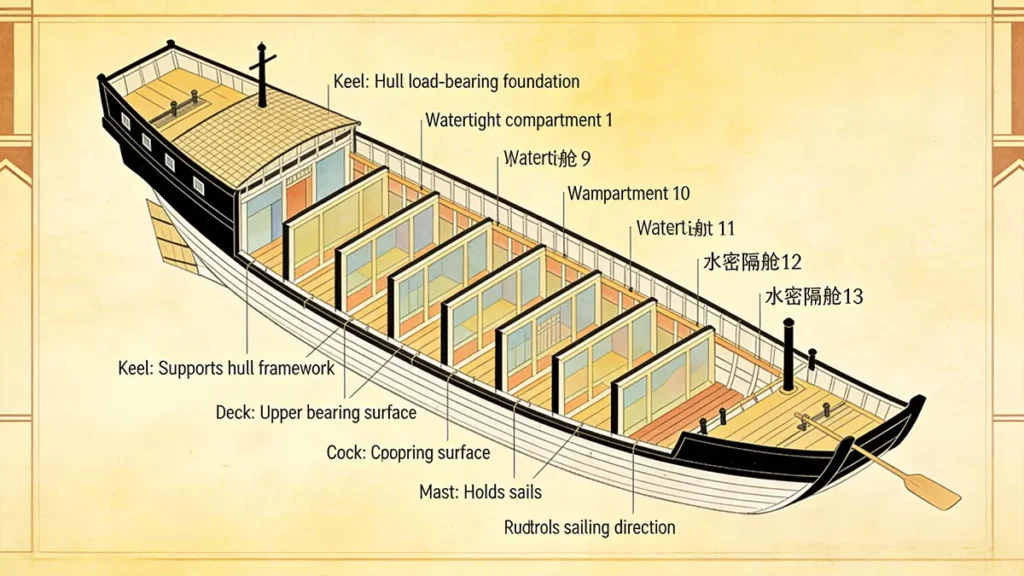
Technological breakthroughs during the Tang Dynasty are also noteworthy. Watertight compartmentalization technology matured during this period. Ship holds were divided into multiple independent compartments, preventing the vessel from sinking even if part of the hold took on water. This technology predated its European counterpart by approximately 1,000 years.
In 1974, a Song Dynasty ocean-going vessel was excavated in Quanzhou, Fujian. Archaeologists discovered 13 watertight compartments within its hull. Preserved at the Quanzhou Museum of Maritime History, this ship stands as tangible evidence.
The prosperity of the Tang Dynasty laid the foundation for the Song Dynasty. We now turn to the pinnacle of maritime technology.
Song Dynasty: The Peak of Maritime Technology (960–1279)
The Song Dynasty marked the most pivotal period in the history of the Maritime Silk Road before Zheng He. During this era, maritime technology, trade scale, and port facilities all reached unprecedented levels.
Why was the Song Dynasty so exceptional?
The overland Silk Road faced severe disruptions during the Song era. Regimes like the Western Xia, Liao, and Jin controlled the northwestern routes. The Song government was compelled to pivot toward maritime trade. Consequently, revenue from sea trade became a vital pillar of its finances.
Revenue Data from the Song Dynasty’s Maritime Trade Office:
- Northern Song Period: Annual revenue of approximately 500,000–1,000,000 guan
- Southern Song Dynasty: 5-10% of total fiscal revenue
- Annual long-distance vessels entering/exiting ports: Approximately 200-300 ships
- Trade partners: Over 50 countries and regions
- Sources: Compilation of the Song Dynasty Official Records; Research on Overseas Trade in the Song Dynasty (Li Jinming, 2002)
The 5-10% share of maritime trade in fiscal revenue was remarkably high. By comparison, customs revenue in European nations during the same period typically accounted for less than 2% of their finances.
Quanzhou: The World’s Busiest Port
In 1087, the Song Dynasty established a Maritime Trade Office in Quanzhou. The city rapidly developed into the foremost port of the East. Arabs referred to it as “Zayton” (Port of Citron).
Marco Polo visited Quanzhou in the late 13th century. In his travelogue, he wrote: “The bustle of Quanzhou Port surpasses that of Alexandria.” Alexandria was the largest port in the Mediterranean at the time. This comparison helped Western readers grasp Quanzhou’s scale.
Quanzhou was different. And it still is.
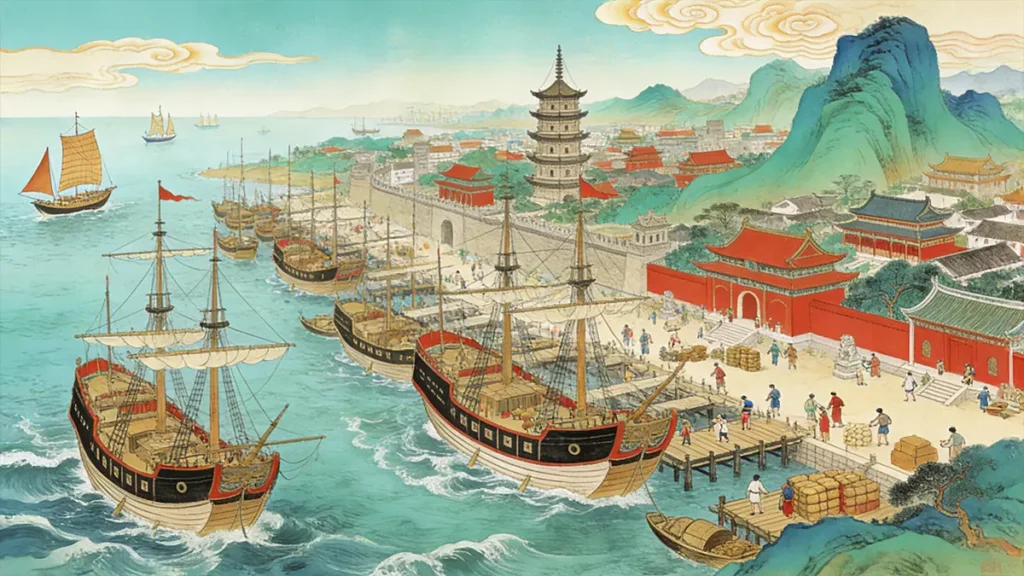
In 2021, “Quanzhou: Maritime Metropolis of the World in Song and Yuan China” was inscribed on the UNESCO World Heritage List. The site comprises 22 heritage elements, including ports, temples, bridges, and wharves.
Key Data for Quanzhou World Heritage Site:
- Number of Heritage Elements: 22
- Heritage Area: 147 hectares
- Buffer zone area: 4,997 hectares
- Date inscribed: July 25, 2021
- Source: UNESCO World Heritage Centre
The Quanzhou Mosque, built in 1009, still stands today. An Arabic stone inscription within the mosque documents the activities of the early Muslim community. Quanzhou also preserves Hindu stone carvings, Christian tombstones, and other relics. These artifacts attest to Quanzhou’s role as a multicultural port where diverse cultures converged.
The Shipbuilding Revolution
Song Dynasty shipbuilding technology represented the world’s highest standards of its time.
Technological Breakthroughs:
- Compass Navigation: Applied to maritime voyages beginning in the 11th century
- Watertight Compartments: Mature technology featuring over 13 compartments
- Multi-deck Design: Large ocean-going vessels boasted 3-4 decks
- Cargo Capacity: 200-300 tons (smaller vessels: 50-100 tons)
- Sources: Dream Brook Essays (Shen Kuo, 1088); Archaeological Report on the Song Dynasty Ocean-going Vessel from Quanzhou
The application of the compass was revolutionary. Prior to this, navigators primarily relied on celestial navigation. Sailing during cloudy weather or at night carried significant risks. The compass enabled ships to navigate under all weather conditions.
The Song Dynasty ocean-going vessel unearthed in Quanzhou in 1974 measured 24 meters in length and 9 meters in width. Archaeologists estimate its carrying capacity at approximately 200 tons. The vessel employed 13 watertight compartments. Cargo discovered onboard included spices, medicinal herbs, and porcelain. The ship is now housed at the Quanzhou Maritime Museum.
By comparison, European sea vessels of the same period typically carried 50-100 tons. It wasn’t until the 15th century that European ships reached the scale of Song Dynasty maritime vessels.
Tracing Material Culture: Longquan Celadon
When discussing maritime trade, we cannot remain confined to abstract concepts. The flow of specific commodities speaks volumes.
Longquan celadon was one of the most significant export goods of the Song Dynasty. Produced at the Longquan kilns in Zhejiang, it is characterized by its greenish-blue glaze and remarkable durability.
Global Distribution of Longquan Celadon:
- Southeast Asia: Approximately 500,000 pieces unearthed in Indonesia, the Philippines, Malaysia, and other regions
- South Asia: Approximately 100,000 pieces discovered at coastal sites in India and Sri Lanka
- Middle East: Approximately 50,000 pieces held in museums in Iran and Turkey
- East Africa: Approximately 20,000 pieces found along the coasts of Kenya and Tanzania
- Source: Research on Chinese Export Porcelain (Feng Xianming, 1998); museum collection data
In 2010, a Song Dynasty shipwreck was discovered in the Java Sea off Indonesia. It carried approximately 100,000 pieces of porcelain, mostly Longquan celadon. Known as the “Java Sea Shipwreck,” it is now housed at the Asian Civilisations Museum in Singapore.
Fragments of Song Dynasty celadon were also discovered on Kenya’s Lamu Archipelago. Archaeologists estimate these ceramics date from the 12th-13th centuries, indicating Chinese porcelain had reached East African shores.
The Islamic world referred to Longquan celadon as “celadon.” Middle Eastern nobility regarded it as a status symbol, collecting it for palaces and mosques. The Topkapi Palace in Turkey houses a collection of approximately 4,000 Chinese porcelain pieces, the majority being Longquan celadon from the Song and Yuan dynasties.
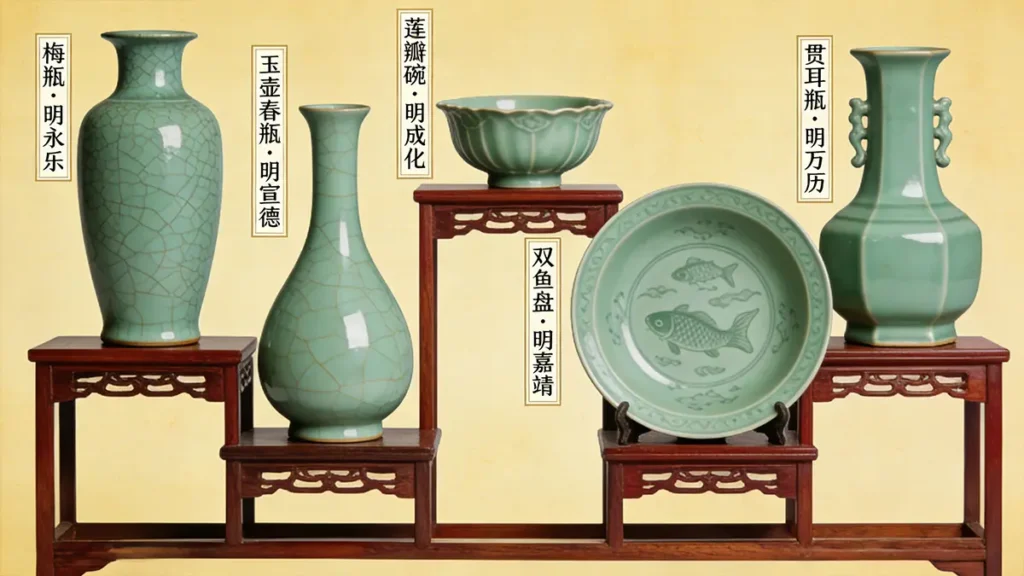
This global circulation resembles the contemporary “Made in China” phenomenon. Eight hundred years ago, Chinese porcelain had already spread across the shores of the Indian Ocean.
Material Culture Tracker: Agarwood
In contrast to porcelain exports, agarwood was a significant import commodity.
Produced in Southeast Asian tropical rainforests—primarily Vietnam, Cambodia, and Indonesia—agarwood served as a fragrance for religious ceremonies, medicine, and luxury goods.
Agarwood Trade Data:
- Import Route: Southeast Asia → Guangzhou/Quanzhou → Chinese Mainland
- Uses: Buddhist rituals, imperial incense ceremonies, traditional Chinese medicine
- Value: Priced by weight, comparable to gold
- Sources: Compilation of the Imperial Records of the Song Dynasty; Records of the Barbarian States (Zhao Rusi, 1225)
The Song Huiyao Jigao documented agarwood import volumes. In 1169 alone, Guangzhou Port imported approximately 15,000 jin of agarwood—a substantial quantity.
Consumption centers were primarily imperial courts, temples, and affluent households. Song Dynasty literati cultivated an “incense appreciation” culture akin to modern wine tasting. Agarwood from different origins possessed distinct aromas, leading to significant price variations.
In Buddhist rituals, agarwood was an essential item. With Buddhism flourishing during the Song Dynasty, temples had a substantial demand for it. This was one reason for the high import volume of agarwood.
Interestingly, agarwood was also highly popular in the Arab world. Arab merchants acquired agarwood from Southeast Asia, shipping some to China and some to the Middle East. They acted as middlemen in this trade.
The Peak of the Monsoon Trade System
The Song Dynasty saw the highest level of monsoon utilization. Merchants precisely mastered monsoon patterns, establishing a fixed trade cycle.
Annual Monsoon Trade Cycle of the Song Dynasty:
- March–April: Merchant ships departed from Quanzhou and Guangzhou, sailing westward with the southwest monsoon
- May–September: Trading at ports in Southeast Asia, India, and Arabia
- October–November: Waiting for the northeast monsoon
- December–February: Return voyages powered by the northeast monsoon
- Source: A History of Trade in the Indian Ocean (K.N. Chaudhuri, 1985)
A complete trade cycle spanned one year. During monsoon delays at overseas ports, merchants established temporary communities. Some even settled abroad, forming early Chinese communities.
This trade pattern resembled Mediterranean commerce. Yet the Indian Ocean spanned a broader region with a more intricate network. Chinese ports formed its eastern terminus, Arab ports its western end, while Southeast Asia and India served as pivotal hubs.
The prosperity of the Song Dynasty persisted into the Yuan Dynasty. We now examine the trade networks during the Mongol Empire era.
Yuan Dynasty: The Mongol Empire’s Trade Network (1271–1368)
The Yuan Dynasty corresponds to Europe’s Late Middle Ages. The Mongol Empire controlled most of the Eurasian landmass, integrating overland and maritime trade networks.
Marco Polo was the most famous witness of this period. He arrived in China in 1275 and lived there for 17 years. His travelogue became a key source for Western understanding of the East.
Marco Polo’s Description of Quanzhou:
- “One of the world’s largest ports”
- “Ships enter and depart daily in great numbers”
- “Merchants come from all corners of the world”
- Source: The Travels of Marco Polo (1298)
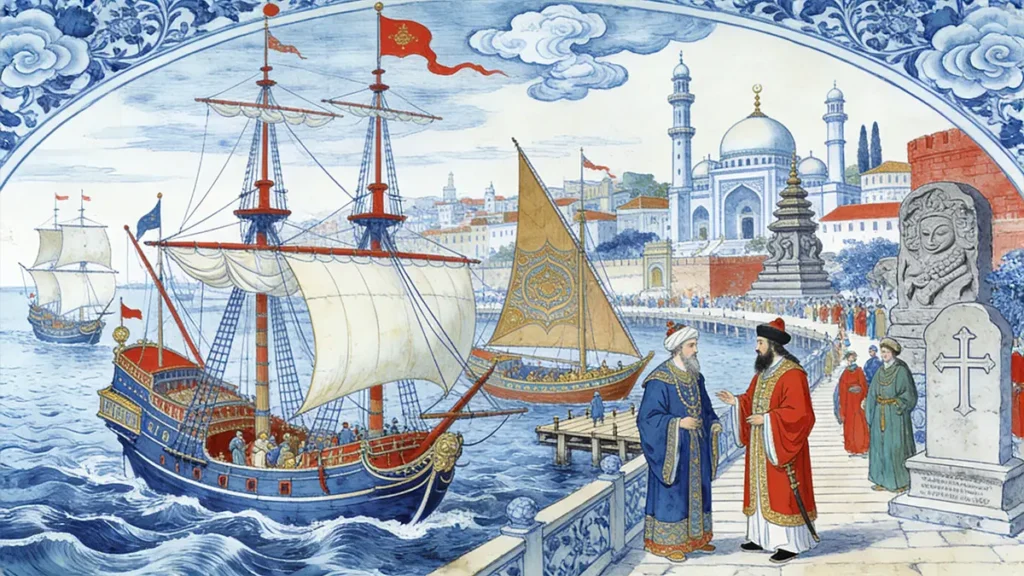
Marco Polo’s accounts may contain exaggerations. However, archaeological evidence supports Quanzhou’s prosperity during the Yuan period. Of the 22 heritage sites inscribed in 2021, 10 date to the Yuan Dynasty.
The Yuan Dynasty continued the Song’s Maritime Trade Office system. Guangzhou, Quanzhou, and Mingzhou (modern Ningbo) remained the primary ports. Trade routes expanded further, reaching the East African coast.
Changes in Yuan Dynasty Trade:
| Continuity | Changes |
|---|---|
| Maritime Trade Office system | Trade range extended to East Africa |
| Primary ports | Increased proportion of official trade |
| Monsoon trade patterns | Surge in porcelain exports |
Sources: History of Yuan: Treatise on Food and Money; Research on Overseas Trade in the Yuan Dynasty (Chen Gaohua, 2005)
The Yuan government attempted to establish official trade monopolies. However, private trade remained active. Arab and Persian merchant communities in Chinese ports continued to expand.
In the 14th century, piracy became a serious problem. Late Yuan conflicts also disrupted trade. These factors laid the groundwork for the Ming Dynasty’s maritime restrictions.
Having seen the various participants beyond China, we now examine what Zheng He inherited from this legacy.
Multiple Participants: Not Just China
When discussing the Maritime Silk Road before Zheng He, many assume it was a trade network dominated by China. The reality is more complex. This was a network built collaboratively by multiple parties, each playing their own role.
Austronesian Seafarers
The Austronesian peoples were among the earliest navigators in Southeast Asia and the Pacific. Their seafaring traditions date back to 3000 BCE.
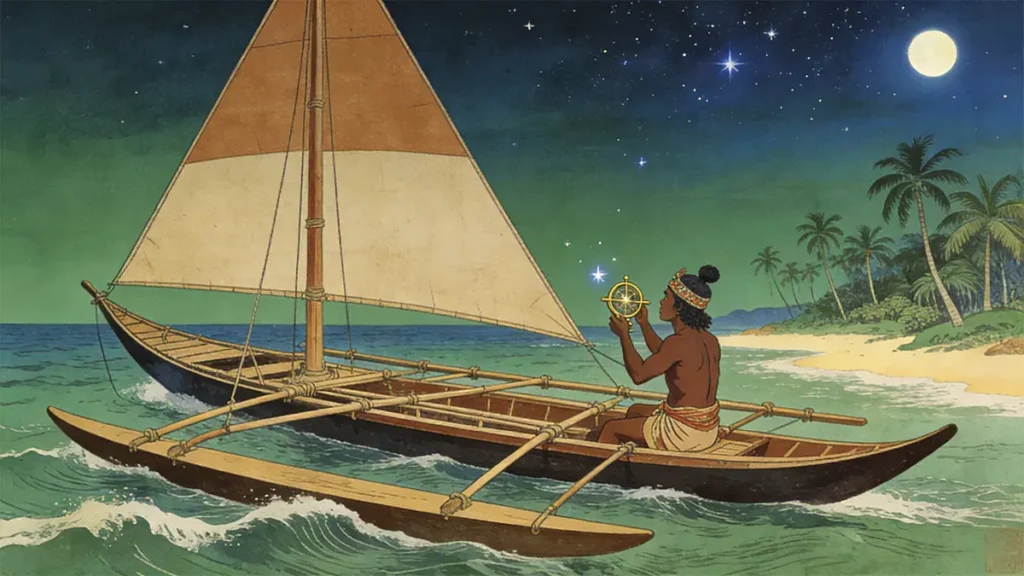
Austronesians utilized outrigger canoes, vessels renowned for their stability and suitability for long-distance voyages. They relied on natural navigation markers like stars, waves, and birds. This technique, requiring no instruments, was remarkably precise.
Early Chinese maritime activities may have been influenced by Austronesian cultures. Certain shipbuilding techniques, such as the balanced rudder and multi-masted sailing vessels, likely originated in Southeast Asia. While academic debate persists, the concept of “two-way exchange” is increasingly accepted.
Arab and Persian Merchants
Arab merchants established permanent communities in Chinese ports during the Tang and Song dynasties. Foreign quarters known as “Fanfang” existed in Guangzhou, Quanzhou, and Yangzhou.
These merchants were not only traders but also cultural disseminators. Islam entered China via maritime routes. Guangzhou’s Huaiseng Mosque and Quanzhou’s Qingjing Mosque were both established during the Tang or Song dynasties.
Arab merchants also introduced astronomical knowledge. Observatories in the Yuan Dynasty utilized Arab instruments. The Huihui Yaofang (Recipes of the Huihui) is a Chinese translation of an Arab medical text.
Islamic Heritage Sites in Chinese Ports:
- Guangzhou Huaiseng Mosque Light Tower: Built during the Tang Dynasty
- Quanzhou Qingjing Mosque: Built in 1009
- Yangzhou Xianhe Mosque: Built during the Song Dynasty
- Source: Islamic Association of China; Local Chronicles
Srivijaya Empire
Srivijaya was a maritime power in Southeast Asia from the 7th to the 13th century. Its capital was located on present-day Sumatra Island in Indonesia.
This empire controlled the Strait of Malacca. All ships passing through the strait were required to pay tolls to Srivijaya. This made it a wealthy trade intermediary.
Srivijaya maintained close trade ties with China. Song Dynasty records document multiple visits by Srivijayan envoys. Buddhism also spread to China from Srivijaya.
In the 13th century, Srivijaya was replaced by the Majapahit Empire. However, the strategic importance of the Strait of Malacca remained unchanged. Zheng He’s fleet made frequent stops in Malacca, establishing relations with the local government.
Indian Ocean Trade Network
The Indian Ocean trade network formed the western extension of the Maritime Silk Road. It encompassed ports in southern India, the Arabian Peninsula, and the East African coast.
Calicut (modern Kozhikode, India) served as a vital hub. Zheng He’s fleet visited here multiple times. Yet long before Zheng He, Calicut was already a bustling port.
Chinese porcelain has also been discovered along the East African coast. Archaeological sites in Kenya and Tanzania have yielded fragments of Song and Yuan dynasty ceramics, indicating that the trade network extended as far as Africa.
Key Ports of the Indian Ocean Trade Network:
| Eastern Terminus | Central Terminus | Western Terminus |
|---|---|---|
| Quanzhou, Guangzhou, Mingzhou | Calicut, Colombo, Malacca | Aden, Hormuz, Mogadishu |
ource: History of the Indian Ocean (Michael Pearson, 2000)
This network represented a pre-modern form of globalized trade. Goods, technologies, religions, and cultures flowed through it. China was a major participant, but not the sole center.
We now examine what Zheng He inherited.
The Legacy Before Zheng He
When Zheng He set sail in 1405, he inherited a mature trade network that had been operating for 1,600 years.
The Legacy Zheng He Inherited:
- Mature navigation technology (compass, watertight compartments, celestial navigation)
- Known trade routes (Southeast Asia, India, Arabia, East Africa)
- An established port network (Quanzhou, Guangzhou, Malacca, Calicut, etc.)
- Multilingual translators (Arabic, Persian, Southeast Asian languages)
- Knowledge of monsoon trade systems
- Source: Zheng He’s Voyages to the Western Seas (Wang Gengwu, 1998)
The scale of Zheng He’s fleet was truly unprecedented. With over 200 vessels and 27,000 crew members, it surpassed any preceding fleet. Yet the technologies, routes, and ports utilized were not novel.
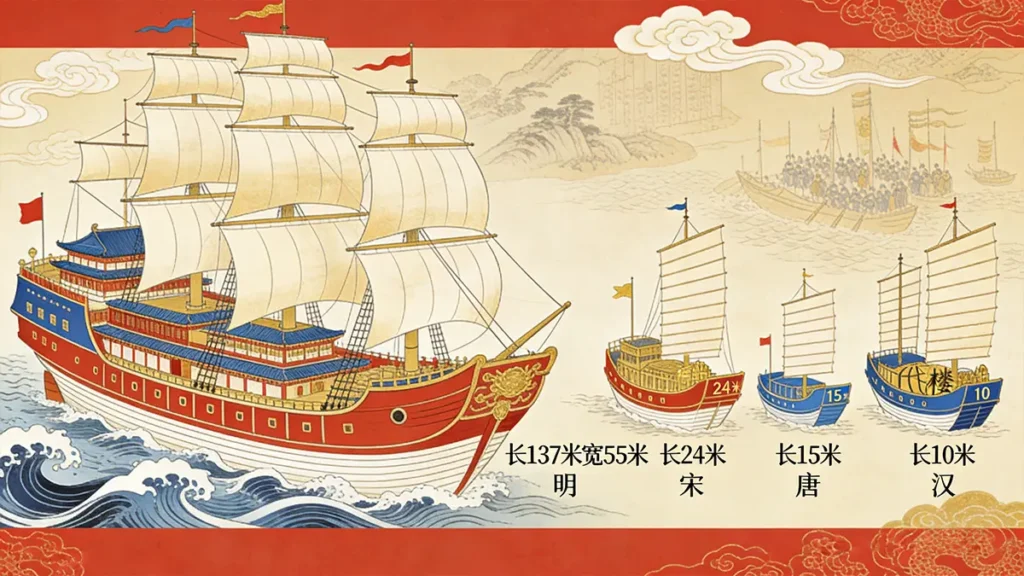
Why did Zheng He gain greater renown than earlier navigators?
Several factors contributed. Zheng He’s voyages were comprehensively documented in official records. The Veritable Records of the Ming Dynasty meticulously detail the timing, routes, and destinations of all seven expeditions. Earlier accounts were comparatively fragmented.
Western historiography took a long time to recognize Zheng He. Before the 19th century, European scholars had limited knowledge of Chinese maritime history. Research on Zheng He only truly flourished after the Cold War.
Another reason lies in the historical contrast. After Zheng He, the Ming Dynasty implemented maritime restrictions, leading to the gradual decline of the Maritime Silk Road before Zheng He. Simultaneously, Europe entered the Age of Exploration. This juxtaposition made Zheng He a symbol of “China missing the opportunity of the Age of Exploration.”
Timeline Comparison:
- 1433: Zheng He’s final voyage concludes
- 1436: Ming Dynasty prohibits construction of ocean-going vessels
- 1492: Columbus reaches the Americas
- 1498: Vasco da Gama reaches India
- Sources: History of the Ming Dynasty; A Global History (Stavrianos)
This comparison is misleading. Zheng He’s voyages differed in purpose from European explorations. His missions aimed to demonstrate imperial might and establish tributary relationships, not to discover new trade routes or colonies.
We now turn to academic debates surrounding this historical period.
Academic Controversies and Critical Thinking
Historical research is not static. Scholars hold differing views on many issues. Understanding these controversies helps us gain a more comprehensive understanding of history.
Controversy 1: Hepu Port vs. Xuwen Port (Han Dynasty)
Traditional scholarship holds that Hepu was the most important maritime trade port during the Han Dynasty. The Book of Han: Geography explicitly records shipping routes originating from Hepu. Han-era tombs in Hepu yielded numerous artifacts from overseas.
However, recent scholars argue that Xuwen Port enjoyed a more advantageous geographical location. Situated at the southern tip of the Leizhou Peninsula, Xuwen lies closer to the main shipping lanes of the South China Sea. In 2019, underwater archaeological discoveries in Xuwen, Guangdong, unearthed artifacts from a Han Dynasty shipwreck.
Comparison of the Two Perspectives:
| Perspective | Main Evidence | Supporters |
|---|---|---|
| Hepu Priority | Book of Han records, abundant excavated artifacts | Chinese Academy of Social Sciences, Guangxi Museum |
| Xuwen Underestimated | Superior geography, underwater archaeological finds | Overseas sinologists, Guangdong Archaeological Institute |
The current consensus is that the two ports may have coexisted with distinct functions. More archaeological evidence is needed to reach a definitive conclusion.
Controversy 2: Scale of Maritime Trade in the Song Dynasty
Scholars offer differing estimates regarding the proportion of the Song Dynasty’s maritime trade revenue to its total fiscal income.
The higher estimate suggests revenues exceeded 10% of the total, based on partial records in the Compilation of the Imperial Gazetteer of the Song Dynasty. If accurate, this would indicate maritime trade played a crucial role in the Song economy.
The lower estimate puts the actual proportion at around 5%, supported by cross-referencing other historical sources and accounting for inflation.
This debate influences interpretations of the Song Dynasty’s economic structure. A high proportion of maritime trade suggests a more open economy, while a low proportion indicates agriculture remained the economic backbone.
Controversy 3: Direction of Technological Diffusion
Traditional views posit that Chinese shipbuilding technology spread to Southeast Asia and the Arab world. Technologies like watertight compartments and the compass are believed to have originated in China.
Revised perspectives suggest bidirectional technological exchange. Maritime techniques from Austronesian peoples may have influenced early Chinese navigation, while Arab triangular sail technology could have been introduced to China.
Current academic trends lean toward “bidirectional exchange” rather than unilateral export. This approach avoids ethnocentrism and allows for a more objective assessment of contributions across civilizations.
Why is Scholarly Debate Significant?
Controversy reveals the complexity of historical research. History is not a simple accumulation of facts but evidence-based interpretation. New evidence may emerge, and old interpretations may be revised.
Understanding debates fosters critical thinking. Readers can independently judge which perspective is more persuasive rather than passively accepting a single narrative.
We now clarify some common misconceptions.
Common Misconceptions Clarified
There are many misunderstandings about the Maritime Silk Road before Zheng He. Below are five of the most common misconceptions:
Misconception 1: The Maritime Silk Road began with Zheng He
- Fact: Clear records from the Han Dynasty exist, predating Zheng He by approximately 1,600 years.
Misconception 2: Only Chinese ships participated
- Fact: Arab, Indian, and Southeast Asian vessels participated alongside Chinese ships, with numerous foreign merchants operating in Chinese ports.
Misconception 3: Trade was limited to luxury goods
- Fact: Trade included everyday commodities like porcelain, copper coins, and medicinal herbs. Copper coins circulated as currency in Southeast Asia.
Misconception 4: Chinese maritime technology lagged behind Europe
- Fact: Shipbuilding and navigation technologies during the Song and Yuan dynasties surpassed Europe’s; watertight compartments predated European equivalents by approximately 1,000 years.
Misconception 5: Trade routes were fixed
- Fact: Routes shifted with monsoon patterns, political landscapes, and market demands, leading to the rise and fall of ports.
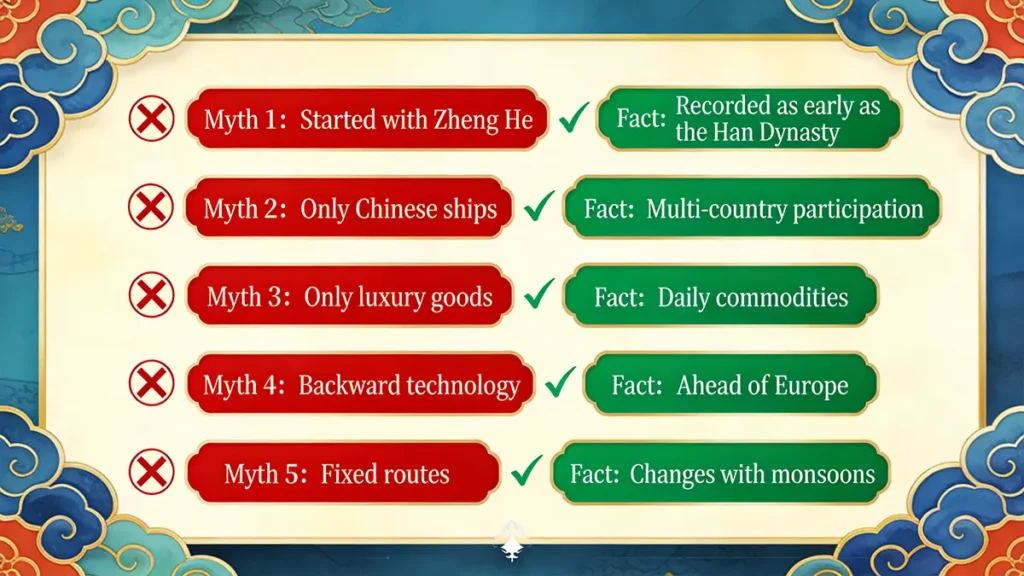
These misconceptions stem from incomplete information. We hope this article helps readers develop a more accurate understanding.
Why This History Remains Relevant Today
Reflecting on the 1,600-year history of the Maritime Silk Road before Zheng He, we arrive at several core conclusions:
The Maritime Silk Road spanned over 1,600 years, with Zheng He as an inheritor rather than its founder
The Tang, Song, and Yuan dynasties marked its golden age of navigation, reaching peaks in technology, trade scale, and port infrastructure
The monsoon system dictated trade rhythms, requiring merchants to wait for favorable winds
Multiple civilizations participated, with distinct contributions from China, the Arab world, India, and Southeast Asia
Specific commodities (Longquan celadon, agarwood) attest to global circulation
Simultaneous exchange of technology, culture, and religion had profound, lasting impacts
Academic research continues, with new discoveries potentially reshaping our understanding
What relevance does this history hold for today?
First, it helps contextualize the historical background of the Belt and Road Initiative. Modern policies do not emerge in a vacuum; they have historical roots.
Second, it reveals the early form of pre-modern globalization. Goods, technologies, and cultures circulated within the Indian Ocean network, mirroring today’s globalized world.
Third, it offers historical precedents for intercivilizational exchange. Different religions and cultures coexisted in port cities, providing valuable lessons.
Fourth, the relationship between climate and trade is noteworthy. Monsoons dictated trade rhythms, and today’s climate change may similarly impact global commerce.
These very monsoon patterns were the heartbeat of the Ming Dynasty’s naval achievements. By mastering these seasonal winds, the Treasure Fleet orchestrated the largest maritime undertaking in history. Discover the precise timing of these journeys in our [1405–1433: The Complete Timeline of Zheng He’s 7 Voyages].”
Further Exploration Resources:
| Type | Title | Source/Link |
|---|---|---|
| Book | The Song Dynasty Maritime Trade | Academic journals |
| Documentary | Maritime Silk Road | CCTV/Netflix |
| Website | Quanzhou World Heritage Page | UNESCO.org |
| Museum | Shanghai China Maritime Museum | Shanghai, China |
| Academic Papers | ISEAS Working Paper Series | iseas.edu.sg |
Historical research is an ongoing endeavor. New archaeological discoveries and fresh interpretations of historical materials may alter our understanding. Maintaining an open mind and staying abreast of the latest research is the best way to comprehend history.