The Ming Dynasty’s Indian Ocean Gateway: Why Calicut Was Key to the Maritime Silk Road
One early morning in 1420, the air on Calicut’s beach hung thick enough to wring. It wasn’t the ordinary sea breeze, but a complex blend of pungent black pepper, cloying fermented coconut oil, and salty seawater. This was no ordinary fishing village, but the busiest crossroads on Earth at the time. Picture it: Chinese raw silk cascading like waterfalls across stalls, Indian cotton fabrics piled into mountains, Arabian frankincense sizzling over charcoal fires, African gold blindingly sparkling in the sunlight.
To understand how this port fits into the larger maritime context, you can explore the full Zheng He 7 voyages timeline.
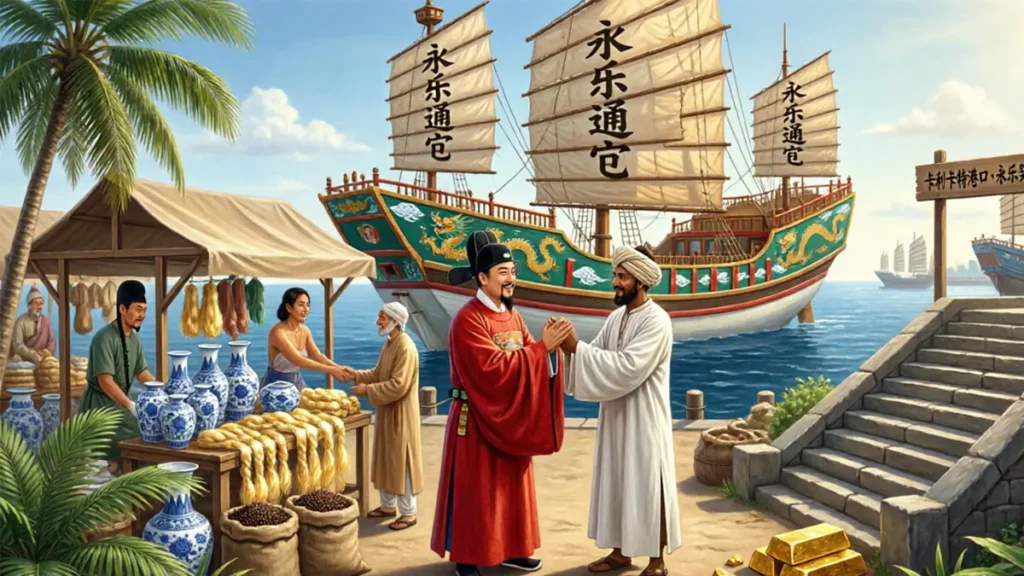
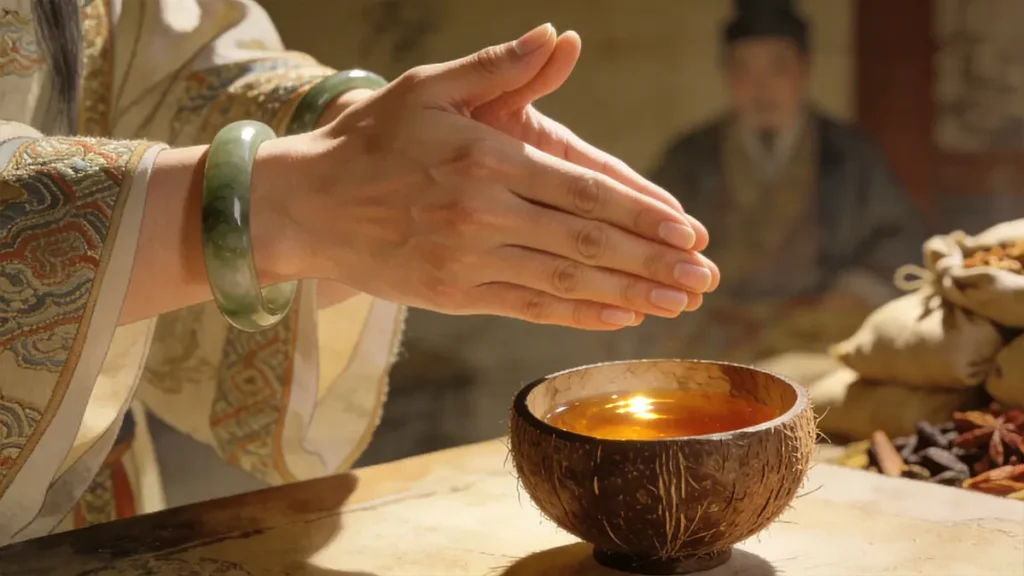
Merchants from different continents needed no translators, not even paper or pen. A simple clap of hands sufficed—a unique local ritual sealing contracts. Once palms met, the deal was instant and irrevocable. In the alley later dubbed “Silk Street,” Ming dynasty interpreter Ma Huan once stared at a colossal sapphire for half an hour. His notes omitted the gem’s price but meticulously recorded the locals’ coconut-shell cups, describing how they held tart palm wine that, despite its initial astringency, instantly quenched thirst under the blazing sun. This fascination with sensory details, rather than cold numbers, defined communication in that era.
This city, today’s Kozhikode, was more than a port of call. It stands as the pivotal answer to the historical question: Calicut key to Maritime Silk Road. Here, geographical destiny intertwined with human ambition, shaping the embryonic form of modern globalization.
If you think this is merely a tale of spices, you’d be mistaken. It is, in fact, an epic about trust, power, and how two starkly different world orders collided here. Let us rewind to the age when great ships filled the skies and discover why the Eastern Dragon held such favor for this coastline.
The Looming Shadow of the Dragon: A Peacemaker on the Malabar Coast
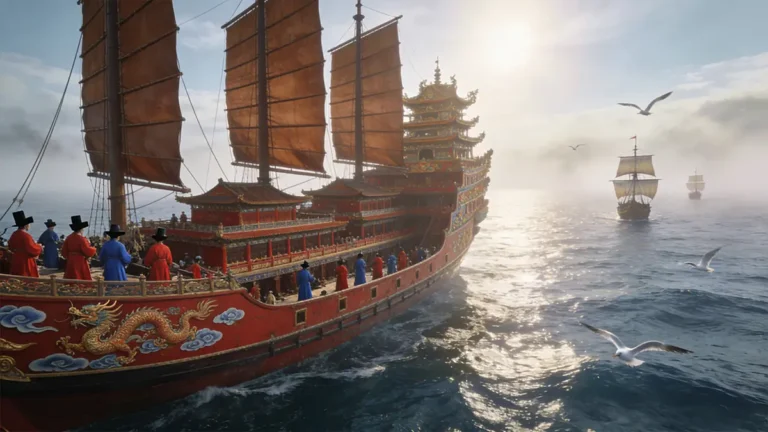
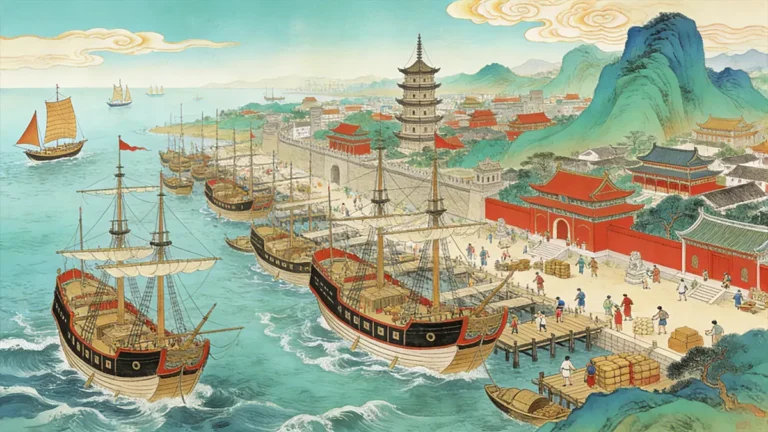
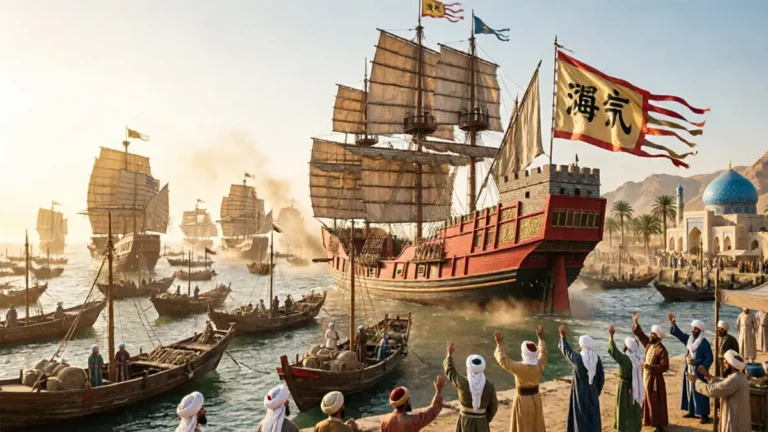
When Zheng He’s Treasure Fleet first appeared on the horizon, the sense of overwhelming presence was indescribable. Historical records indicate Zheng He’s treasure ships measured approximately 400 feet (about 122 meters) in length, with an estimated displacement exceeding 3,000 tons. By comparison, Vasco da Gama’s flagship, the São Gabriel, which arrived here eighty years later, measured a mere 85 feet in length and displaced approximately 120 tons. This was not merely a difference in size, but a chasm between eras. The deck space of a single treasure ship nearly equaled the combined deck area of da Gama’s entire fleet.
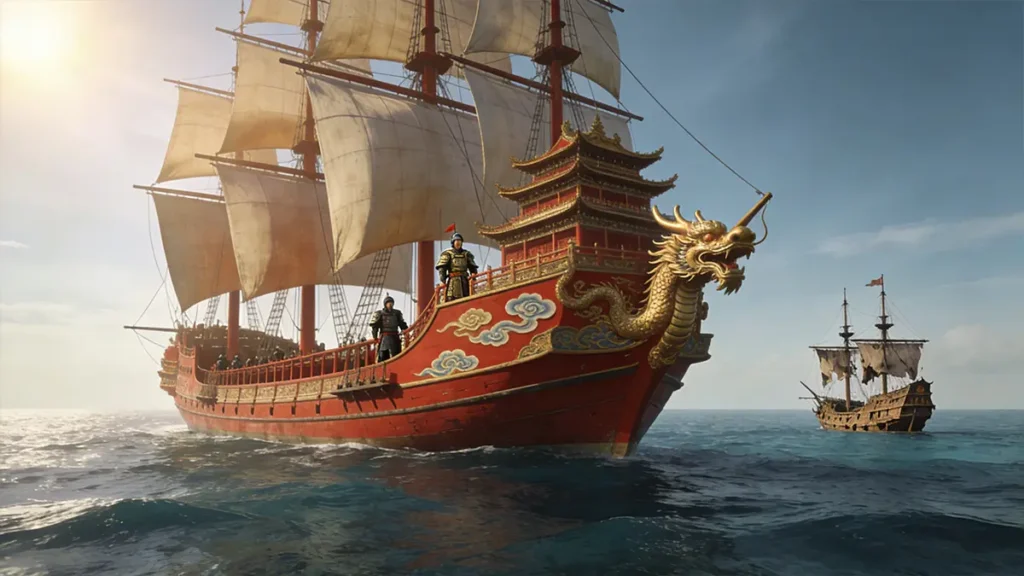
So why did Zheng He stop at Calicut? The answer lies in the rhythm of the monsoon. The Malabar Coast occupies a pivotal node within the Indian Ocean monsoon system. Each June, the southwest monsoon brings torrential rains, forcing all vessels crossing the Indian Ocean to seek sheltered harbors until the winds shift. Calicut, with its natural deep-water harbor and abundant freshwater resources, became an irreplaceable “floating service station.” For the vast Ming fleet, this served as the final major supply base before venturing toward the Arabian Peninsula and East Africa.
Yet its significance extended beyond geography. Was Calicut the main port for the Treasure Fleet? In many respects, yes. Ming historical records indicate that at least four of Zheng He’s seven voyages explicitly documented extended stays at “Guli” (Calicut). It served not only as a supply station but also as a diplomatic hub. Zheng He established official warehouses (guanchang) here and erected commemorative steles, formally designating Calicut as the Ming Dynasty’s “anchor point” in the Indian Ocean.
This special status was not established by chance. Understanding how the Ming people perceived Calicut reveals the depth of this relationship.
The Clap Contract: How Trust Built a Trading Empire
How did the Ming Dynasty view Calicut? In the writings of Ming interpreter Ma Huan, it was a near-perfect utopia. His Yingya Shenglan detailed the Yingya Shenglan description of Guli: “The country is exceedingly prosperous… its people are trustworthy and honest, never deceitful.” Ma Huan specifically noted the region’s uniquely informal trading practices: no written contracts were needed between buyers and sellers—a simple “clap of hands sealed the deal.” Even for priceless goods, breaches of contract never occurred. Such trust based solely on verbal agreements is nearly unimaginable in today’s commercial world.
This high level of social trust formed the foundation for the smooth operation of the Ming Dynasty tribute system with Calicut. Unlike the “tribute” later understood by Europeans, the Ming tribute system in Calicut manifested more as “reciprocal diplomatic trade.” The Zamorin of Calicut relations with Ming were not one of oppressive suzerainty and vassalage, but rather a ceremonial, equal partnership. The Zamorin (local ruler) accepted honors from the Ming court and reciprocated with ivory, gems, and spices. Through this ritual, both sides affirmed their mutual desire for peace.
Within this atmosphere, the list of goods traded in Calicut during the Ming Dynasty was dazzling. China exported raw silk, porcelain, copper coins, and musk; while Calicut supplied the world’s most prized commodity: pepper. The Pepper trade volume Ming China Calicut was immense—estimates suggest Zheng He’s fleet alone carried tens of thousands of jin of pepper on a single return voyage. Additionally, cinnamon, cardamom, and a fabric poised to revolutionize global textiles—calico—were exchanged.
Here’s an intriguing detail: Every calico shirt you wear today carries this city’s genetic code in its very name. The word “calico” derives directly from “Calicut.” This vibrant cotton fabric exported from here to Europe became wildly popular due to its quality and affordability, even forcing the British government to ban imports through legislation. This ban ultimately spurred Britain’s own textile mechanization revolution. It can be said that Calicut not only supplied spices but also inadvertently “forced” the birth of the modern industrial world.
These goods were more than mere commodities; they were circulating capital. Calicut thus accumulated astonishing wealth, transforming into a true international metropolis. Yet this prosperity, built on mutual trust, faced an unprecedented challenge in 1498.
1498: A Brutal Awakening and the Collapse of Order
In May 1498, three weather-beaten Portuguese ships sailed into Calicut Harbor. At their helm was Vasco da Gama, bearing letters from King Manuel I and a pile of cheap gifts: red caps, sugar, oil, and several bolts of Flanders cloth. When he presented these gifts to the Zamorin, the air froze. The local Arab advisor scoffed that such offerings were “fit for common merchants,” even declaring they were “unworthy of a king’s servant.”
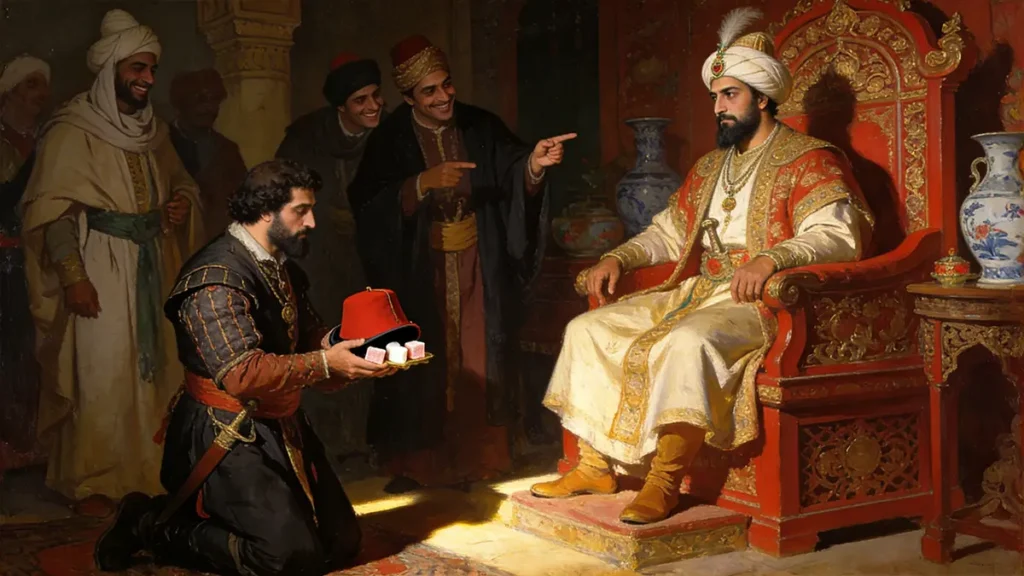
Da Gama felt humiliated. He had expected to be treated as a monarch, befitting his role as a “discoverer.” But the Zamorin calmly stated: If you wish to trade, follow our local customs—exchange gold or superior goods. This encounter marked the end of the old order in 15th-century Indian Ocean trade.
Zheng He brought Diplomatic missions and a vision for building networks, while Vasco da Gama arrived with cannons and a thirst for monopoly. The Portuguese objective was clear: Disintermediation. They did not seek to become merely another participant in the vast trading network; they aimed to sever the link between Arab merchants and Indian ports, seizing direct control over the source.
This clash of mentalities proved fatal. For the Zamorin, trade was open—anyone who followed the rules could participate. For da Gama, trade was a zero-sum game where competitors had to be forcibly eliminated. Within mere years, Portuguese fleets began bombarding Calicut, attempting to impose tolls by force. The city that once prided itself on “sealing deals with a clap” was forced into a state of armed defense.
I sometimes wonder: if Vasco da Gama had brought a chest of gold instead of cheap red caps to that awkward meeting, or if he had chosen to learn local customs like Zheng He before discussing trade, might the history of maritime exploration have unfolded differently? Perhaps the era of “armed trade” would have arrived later, perhaps Calicut could have remained that open “Great Hall of the World” for longer. But history knows no “what ifs.” Only that crisp clap of hands gradually faded into the roar of cannon fire.
Modern Echoes: Searching for Lost Silk Road Memories
Today’s Kozhikode (Kozhikode history) still preserves fragments of that glorious era. If you walk down Mittai Theruvu Street in the old town, locals still refer to it as “Silk Street.” Though it now primarily sells traditional sweets, the name itself serves as a landmark, pointing to an era when silk flowed like water. Walking along the street, you might still catch whiffs of that blend of spices and sea air, even as the present atmosphere is dominated by the aroma of fried bananas and sugar syrup.
In the Kuttichira district, ancient mosque complexes still stand tall. Their architecture blends Dravidian roofs with Arabesque arches, bearing witness to the journey of Muslim merchants who settled here and integrated into local society. This is another legacy brought by the Monsoon winds: the movement of people forged cultural fusion.
Don’t forget to sample the local cuisine. Within Moplah dishes, you’ll find echoes of Chinese noodles, the richness of Arab spices, and the foundation of Indian rice. Each bite is a layering of history. At Kappad Beach, beside the monument commemorating Vasco da Gama’s landing, fishermen still mend their nets. Waves lap the shore, whispering two tales: one of handshakes and trust, the other of cannons and chains.
When we look back at this history, the significance of Calicut key to Maritime Silk Road may not be as black and white as textbooks portray. It was not merely a geographic coordinate; it was a testing ground. Here, humanity experimented with a model of globalization based on sharing and respect, while also witnessing the rise of another model rooted in control and plunder. These two models continue to vie for dominance in our world today.
The tale of Calicut reminds us that the prosperity of globalization is never guaranteed. It depends on open-mindedness and fair rules. That city, once standing at the crossroads of the world, striving to maintain balance amid the storm, continues to impart this ancient wisdom to us. Next time you grind pepper or slip on a cotton shirt, perhaps you’ll recall this distant port and the world of possibilities it once held.