Sunken Treasures: Ming Dynasty Shipwrecks Found in Philippine Waters
On December 14, 1600, the waters of Manila Bay turned murky. A Spanish galleon named the San Diego was listing heavily to one side, slowly sliding into the depths. Chaos reigned on deck; the roar of cannons was drowned out by the crashing waves. Originally a merchant vessel, it had been hastily converted into a warship to fend off an attack by the Dutch navy. The heavy iron cannons weighed down the ship’s sides, while in the hold, thousands of blue-and-white porcelain plates from Jingdezhen, China, rolled about as seawater flooded in.
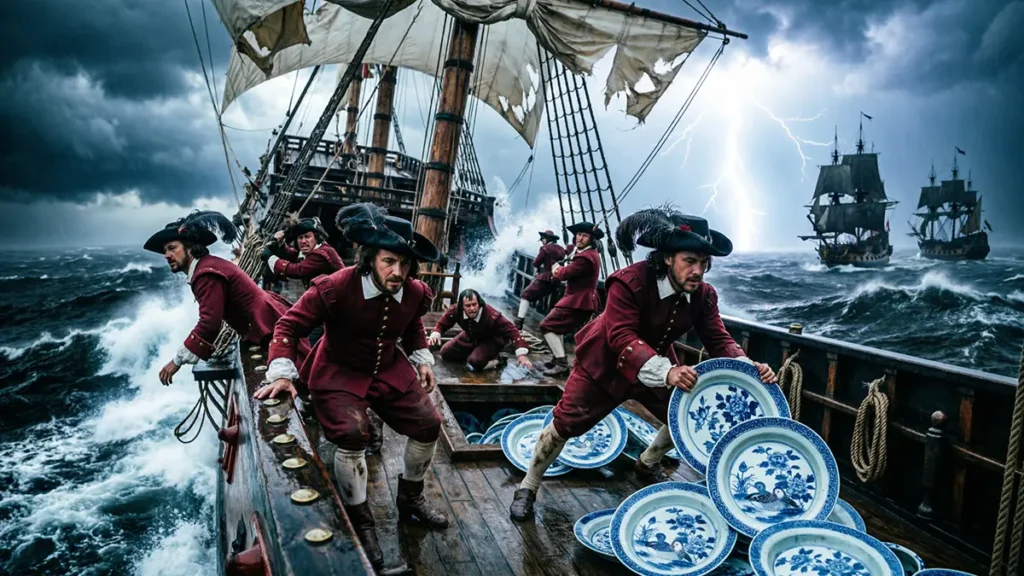
For the crew at the time, this marked the catastrophic end of a naval battle. But for us, four centuries later, it represents a perfect preservation. When silt eventually covered the wreckage, the site became a massive time capsule, locking away the most vivid moment of global trade during the late Ming Dynasty. Today, as we revisit these Ming Dynasty shipwrecks in the Philippines, we see not merely treasures on the seabed, but the invisible yet tight bond that connected China, Spain, and the Americas during the early waves of globalization.
How exactly was this dormant history awakened? Let us turn our attention to the discovery that changed everything.
1991: The Discovery That Rewrote History
In 1991, while conducting routine surveys near Manila Bay, Filipino archaeologist Florencio Galera and his team noticed an unusual echo on their sonar screen. It was not a natural reef, but an artificial outline. The subsequent excavation stunned the world: this was the first ancient shipwreck in the Philippines to undergo a scientific excavation. According to official records from the National Museum of the Philippines, the excavation recovered over 34,000 artifacts. Among them, porcelain accounted for the vast majority, numbering approximately 25,000 pieces.
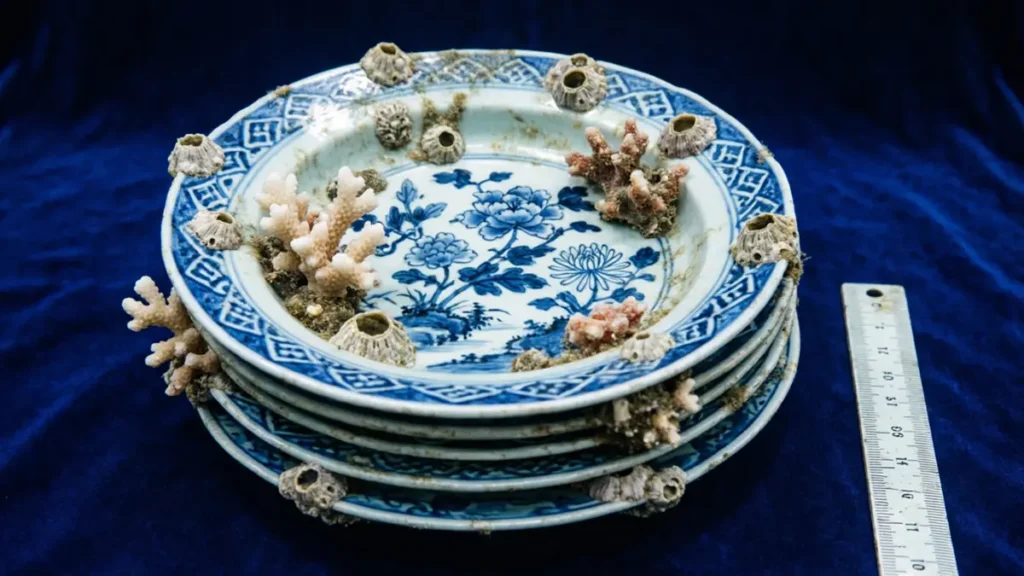
These figures are not merely cold statistics; behind every shard—whether broken or intact—lies a specific historical moment. The inventory of excavated artifacts reveals that most of the porcelain originated from Jingdezhen, Jiangxi, China, and displayed a typical late Ming style. Interestingly, archaeologists also discovered 374 iron cannonballs, 14 iron cannons, and a large number of navigational instruments, such as fragments of astrolabes. Together, these items paint a vivid picture: just before it sank, the ship was in the midst of a tense transition from commercial transport to military confrontation. This unique state of “wartime loading” is extremely rare among other peaceful trade shipwrecks.
It is precisely these detailed archaeological records that allow us to separate fact from the tangled web of legends and explore the vast trade network that drove it all.
The Wanli Era’s Global Web: Kraak Porcelain and the Silver Route
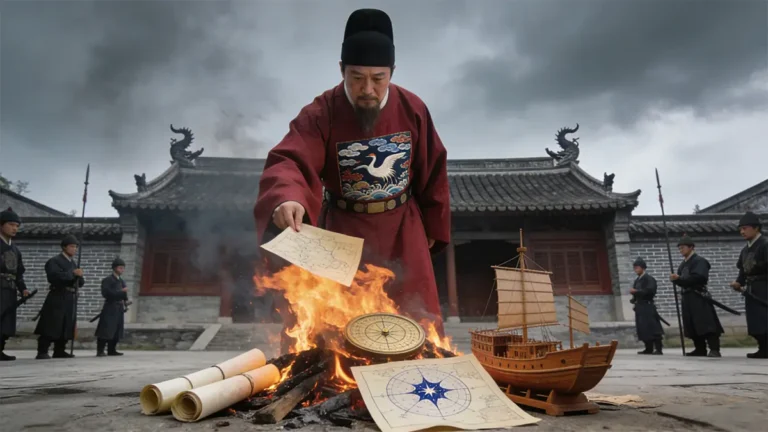
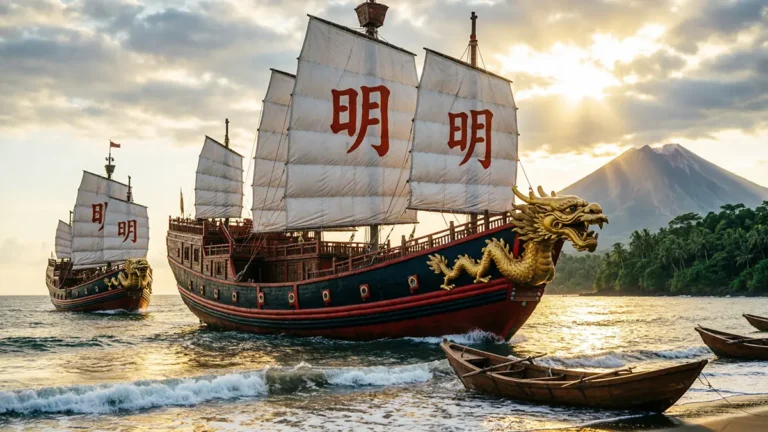
To understand why so much Chinese porcelain appeared on Spanish warships, we must go back to Manila in the late 16th century. In 1571, the Spanish conquistador Miguel López de Legazpi formally established the city of Manila, designating it as the headquarters of the Spanish Empire in Asia. At nearly the same time, China’s Ming Dynasty was under the rule of the Wanli Emperor (reigned 1572–1620). Although the Ming government occasionally enforced maritime prohibition policies, private trade along the coast of Fujian never ceased.This enduring maritime spirit was built upon the foundations laid a century earlier during Zheng He’s initial expeditions, which first systematiclly mapped these South China Sea routes.
Western sources provide vivid accounts of this. The Spanish Augustinian friar Juan González de Mendoza, in his 1585 work Historia de las cosas más notables, ritos y costumbres del gran reyno de la China (History of the Most Notable Things, Rites, and Customs of the Great Kingdom of China), described in detail the abundance of Chinese goods. He wrote that Chinese silk and porcelain were shipped continuously to Manila in exchange for silver from the Americas. This trade route, known as the “Manila Galleon Trade,” connected Yue Port in China, Manila in the Philippines, and Acapulco in Mexico.
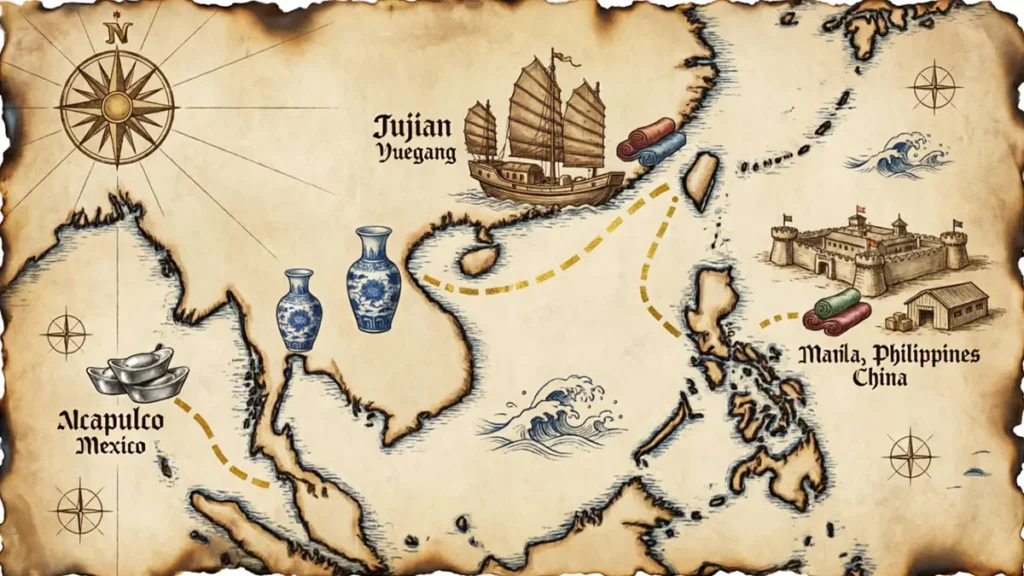
Within this system, a specific type of porcelain took center stage: Kraak Porcelain. The name derives from the Portuguese merchant ship “Carrack,” the European term for this type of large ocean-going sailing vessel. Designed specifically for export, this porcelain is characterized by wide rims and decoration using the “medallion” technique (dividing the plate surface into multiple fan-shaped sections, each painted with floral or miscellaneous motifs). In the ceramic collection database of the Victoria and Albert Museum (V&A), we can find numerous similar examples, which attest to the immense popularity of this style in the European and American markets of the time.
This large-scale transoceanic trade means that Ming Dynasty shipwrecks in the Philippines are not merely a regional archaeological phenomenon, but rather key evidence of the formation of a global economic system.
Storms and Sister Ships: The Forgotten Santa Margarita
However, the prosperity of trade often came with risks. The tragedy of the San Diego was not an isolated incident. Its sister ship, the Santa Margarita, encountered a storm the following year (1601) and sank near the island of Samar. According to the 17th-century Spanish historian Antonio de Morga in his Sucesos de las Islas Filipinas (1609), this ship was also laden with “exquisite porcelain and silk.”
Unlike the San Diego, the Santa Margarita met with a far more tragic fate. Shortly after it sank, it was salvaged by local residents and early treasure hunters, resulting in a large number of cultural artifacts being dispersed among the general public and a lack of systematic archaeological records. Even into the 20th century, scattered porcelain shards were still being discovered on the beaches of Samar. Although these scattered fragments are not as intact as museum exhibits, their widespread distribution serves as proof of the density of the trade networks at that time. In addition to these two famous vessels, fishermen in the waters off Palawan and Mindoro occasionally haul up blue-and-white porcelain shards bearing characteristics of the Wanli era in their dragnets.
It is worth noting that many sites broadly referred to as “Ming Dynasty shipwrecks” actually span the transitional period between the late Ming and early Qing dynasties (approximately 1620–1650). During this period, although China was politically turbulent, overseas trade continued uninterrupted; on the contrary, the change of regime gave rise to many unique porcelain pieces featuring hybrid styles. For researchers, accurately distinguishing these subtle chronological differences is key to interpreting the true historical value of Ming Dynasty shipwrecks in the Philippines.
Once these porcelain pieces reached the other side of the ocean, they ceased to be mere commodities and began to profoundly transform the lifestyles of Westerners.
White Gold: How Porcelain Reshaped Western Life
In 16th-century Europe, porcelain was regarded as “white gold,” a luxury accessible only to royalty and the highest ranks of the nobility. But as the Manila galleons transported tens of thousands of pieces of porcelain to the Americas each year, from where they were shipped onward to Europe, this situation began to change. Archaeological discoveries in Mexico reveal that as early as the beginning of the 1600s, ordinary middle-class families in Mexico City had already begun using Chinese blue-and-white porcelain bowls for meals.
This influence even permeated language and culture. The English word “China” gradually became synonymous with porcelain. Even more interestingly, this trade facilitated the earliest form of “global customization services.” Among the artifacts recovered from the San Diego, archaeologists discovered porcelain plates decorated with Spanish coats of arms and even Christian religious motifs. This suggests that Western merchants would provide Chinese artisans with drawings or samples in advance, instructing them to produce pieces according to Western aesthetic standards.
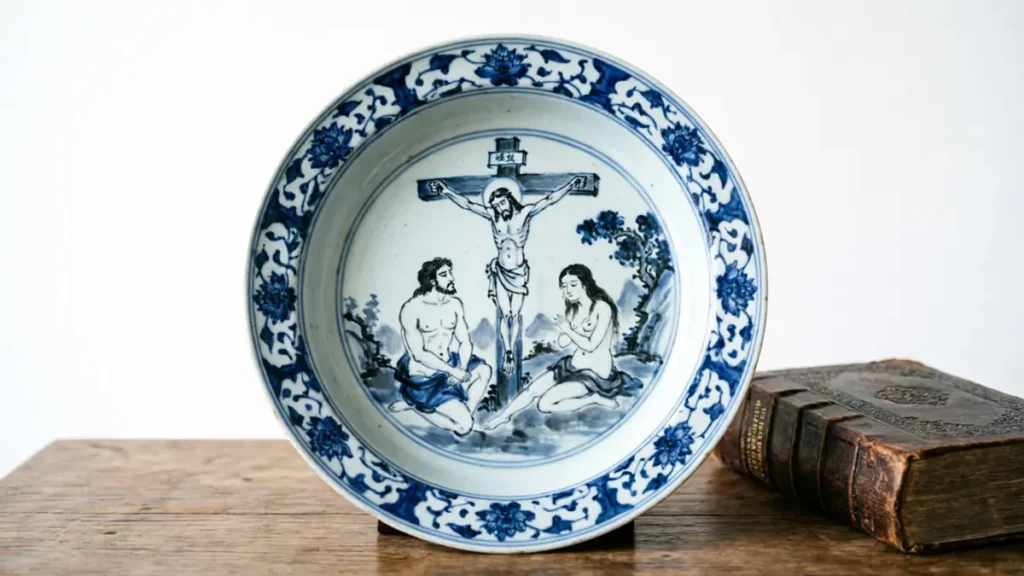
A late Ming blue-and-white plate in the British Museum’s collection, featuring a biblical scene at its center, serves as a prime example of this cultural fusion. Chinese artisans may not have fully understood the specific meanings of these Western stories, but through their masterful craftsmanship, they recreated Western themes with an Eastern artistic touch. This artistic dialogue, preserved to this day through sunken ships on the ocean floor, reveals a world that is more vivid and interactive than what is described in textbooks.
However, given such immense historical and economic value, how should we in modern society treat this heritage that lies dormant on the ocean floor?
Preservation, Not Plunder: Modern Archaeological Ethics and Law
Over the past few decades, stories of “treasure hunters” have been steeped in romance, but in the eyes of professional archaeologists, salvage operations conducted without scientific documentation are a disaster. Treasure hunters are concerned only with intact, valuable porcelain; they shatter artifacts buried at the bottom of the ship or carelessly discard shards and structural elements that may appear ordinary but contain vital information. Once artifacts are removed from their original context, crucial information about how the crew lived, how the cargo was loaded, and how the ship sank is lost forever.
The Philippine government is acutely aware of this. Under Republic Act No. 4846 (the Cultural Properties Preservation and Protection Act) and subsequent national cultural heritage laws, all underwater cultural heritage located in Philippine waters is the property of the state. Private salvage and the buying and selling of recovered artifacts are not only illegal but also subject to severe legal penalties. This stance is supported by the UNESCO Convention on the Protection of the Underwater Cultural Heritage.
The current trend is “in-situ preservation.” Unless there is an imminent risk of natural destruction or theft, the best form of protection is to leave the shipwreck on the seabed. For the public, understanding these laws is not merely about following the rules, but also about respecting our shared history. True value lies not in owning a porcelain plate salvaged from the seabed, but in understanding the story behind it and protecting that story from being erased by greed.
If you are drawn to these stories and wish to witness this history firsthand, you don’t actually need to dive into the deep sea.
Traveler’s Guide: Experience History at the National Museum
For travelers visiting the Philippines, the National Museum of the Philippines in Manila is a must-see destination. In the “San Diego Hall” of the main building, you can see the blue-and-white porcelain plates that lay at the bottom of the sea for 391 years. The museum’s curation is meticulous, showcasing not only exquisite artifacts but also a scale model of the shipwreck’s structure and explanations of the archaeological excavation process.
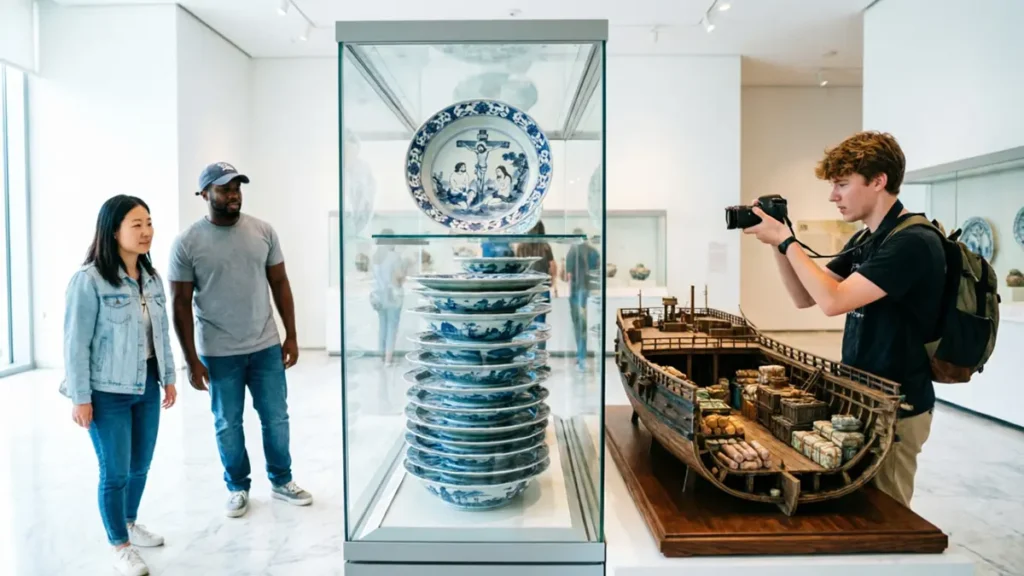
Standing before the display cases, you’ll notice traces of coral and marine life still clinging to some of the porcelain plates—a testament to their time spent on the ocean floor. In addition to Manila, Fort San Pedro in Cebu also hosts a small marine archaeology exhibition featuring porcelain shards discovered in the Visayan Sea. For diving enthusiasts, while most shipwreck sites are strictly protected and touching or removing any items is prohibited, guided recreational dives are available in certain designated areas, allowing you to gaze from afar at these historical relics covered in seaweed.
This kind of close-up encounter often leaves a deeper impression than any written account. As you gaze upon porcelain plates—painted by Chinese artisans centuries ago, purchased by Spanish merchants, and ultimately lost in Philippine waters—you realize you are standing at the intersection of a vast global network.
Conclusion: A Shared Maritime Heritage
These shipwrecks scattered across Philippine waters have long transcended national borders. They do not belong to any single country, but rather represent a shared heritage of all humanity. From the kilns of Jingdezhen to the port of Manila and down to the depths of Manila Bay, every shard of porcelain bears witness to humanity’s journey of exploration, exchange, and survival.
When we speak of Ming Dynasty shipwrecks in the Philippines, we are actually telling a story of connection. In an era without the internet or airplanes, it was these fragile porcelain pieces and sturdy wooden ships that tightly bound the East and the West together. Today, preserving these shipwrecks means safeguarding the key to our understanding of our own history.
If you have questions about the specifics of this history—such as how to identify Kraak porcelain—or would like to learn more about archaeological discoveries, the FAQ below may provide some insights.