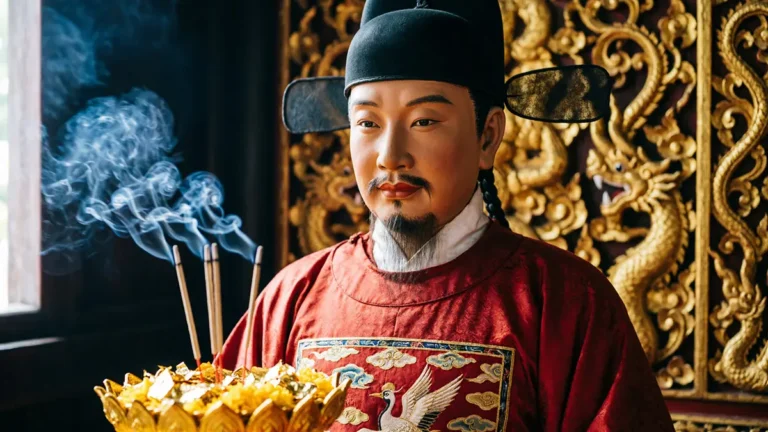
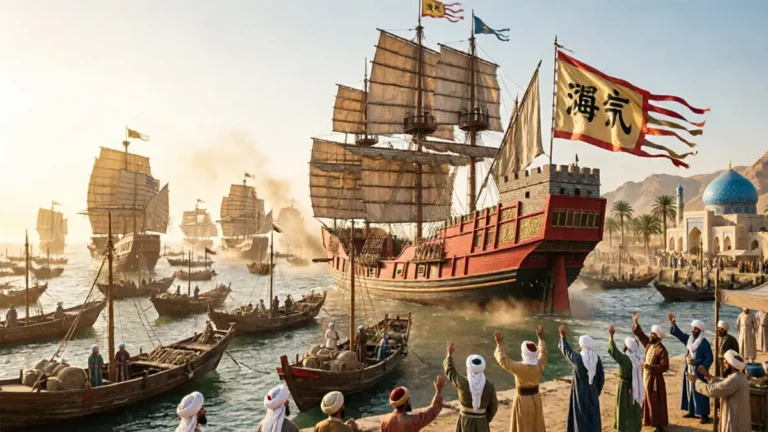
The Early Life of Ma He: From Yunnan to the Imperial Palace
He was not born Zheng He. His name was Ma He, a Muslim boy from the remote frontier of Yunnan. His life began with war, was reshaped by forced castration, and culminated in an imperial gift: a new name, a new identity, and a mission that would connect continents.
These three ruptures—loss of home, body, and name—did not break him. They forged one of history’s most remarkable diplomats and navigators.
Before we dive into his story, let’s answer a simple but powerful question:
What was Zheng He’s early life like?
In short: he was a child of war who became a bridge between worlds. Born into a Muslim family in southwestern China, he was captured around age ten during a Ming military campaign, castrated, and sent to serve in the imperial palace. Eventually assigned to the household of Zhu Di—the future Yongle Emperor—he rose through loyalty, intelligence, and sheer resilience. Though traumatic, this path gave him the rare ability to move between cultures: Chinese, Muslim, Mongol, and later, the kingdoms of Southeast Asia, India, and Arabia.
This article takes you back to the years between 1371 and 1404—to meet Ma He not as a myth, but as a human being shaped by violence, faith, and unexpected grace.
1: A Son of the Frontier – Muslims in Late Yuan Yunnan
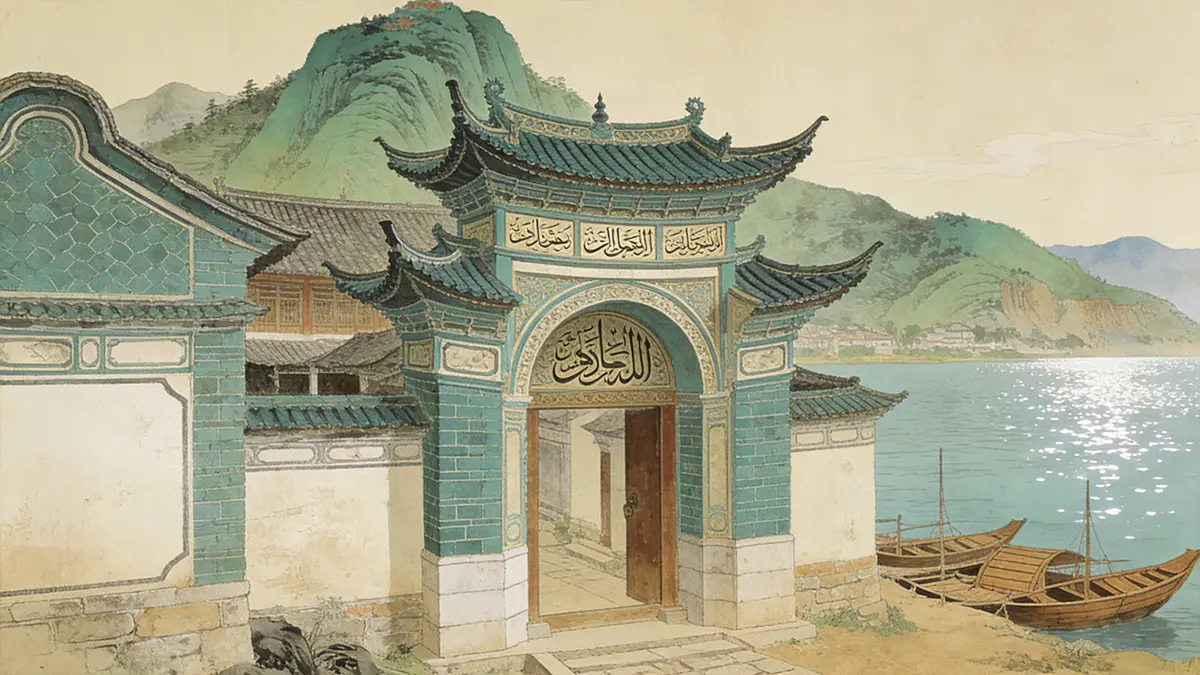
By 1371, the Yuan Dynasty (founded by Mongols) was collapsing—but Yunnan, deep in China’s southwest, still held out under Prince Liang, a loyalist to the old regime. That year, in Kunyang (today part of Kunming, Yunnan), a boy named Ma He was born into a respected Muslim family.
His family was no ordinary household. According to an epitaph unearthed in the 1970s at his father’s tomb in Jinning:
“The gentleman, styled Hajji, of the Ma clan… held court rank and claimed descent from the Prince of Xianyang.”
— Yunnan Provincial Museum, 1974
The ‘Prince of Xianyang’ was Sayyid Ajall Shams al-Din (1211–1279), a Central Asian Muslim administrator appointed by Kublai Khan to govern Yunnan. Reflecting this Central Asian Muslim ancestry, he built mosques while promoting Confucian schools, successfully integrating Islamic and Chinese traditions—a legacy that transformed Yunnan into a unique cultural crossroads and shaped Ma He’s global worldview.
The title “Hajji” in Ma He’s father’s name meant he had completed the pilgrimage to Mecca. This wasn’t just religious devotion—it signaled a family with global connections, long before the age of European exploration.
Young Ma He likely grew up hearing Quranic recitations at home and Confucian classics at school. In late Yuan Yunnan, such blending of identities was not unusual. But it would become his greatest strength.
2: What Happened When Zheng He Was 10?
At age ten, Ma He’s life changed forever when Ming armies invaded Yunnan—leading to his capture, castration, and entry into imperial service. This moment marked the turning point of his destiny.
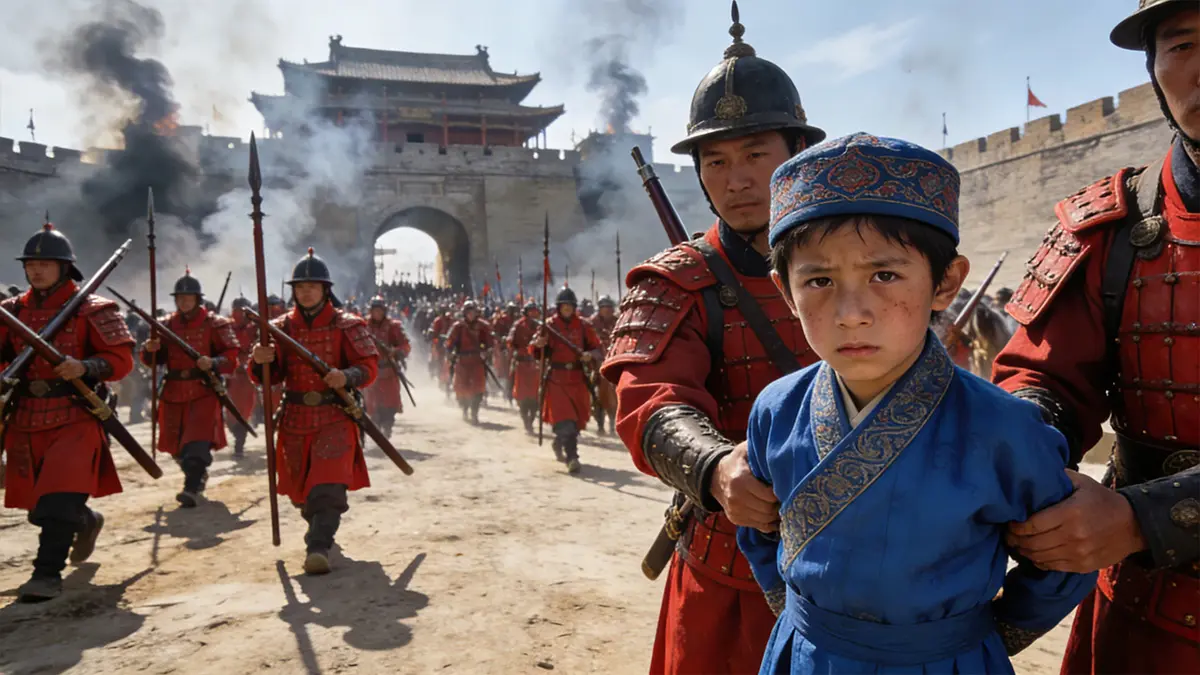
In 1381, the Hongwu Emperor (Zhu Yuanzhang), founder of the Ming Dynasty, ordered a massive campaign to bring Yunnan under central control. This strategic move, known as the Ming conquest of Yunnan in 1381, was a cornerstone of early Ming efforts to consolidate imperial authority.Generals Fu Youde, Lan Yu, and Mu Ying led 300,000 troops south. By spring 1382, they had crushed local resistance; Kunming fell, and Prince Liang died by suicide.
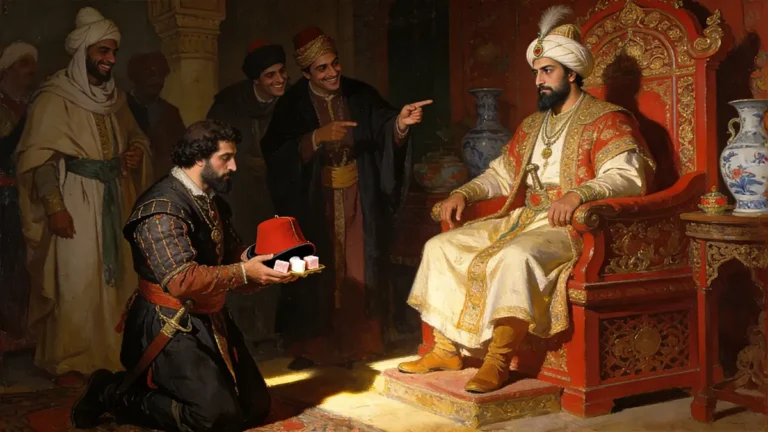
In wartime, it was common for victorious armies to castrate adolescent boys from defeated elite families. This served two purposes: eliminate potential rivals, and supply the palace with loyal servants who could enter the inner quarters—including the women’s quarters—without threatening royal bloodlines.
Ma He was likely between 10 and 14 years old. Most scholars, following historian Edward L. Dreyer, place his birth in 1371, making him about 11 at the time. Some local Yunnan records suggest he may have been slightly older—but the outcome was the same: he was castrated and sent to Nanjing as a palace servant. However, this trauma marked the beginning of his political transformation after castration, as he entered a system where eunuchs would eventually become the emperor’s most trusted agents.
Yet his story didn’t end there. He had an older brother, Ma Wenming. Years later, because Ma He—now a eunuch—could not have children, his brother gave him a son to adopt. This act, recorded in both the Epitaph of Lord Ma and the Zheng Family Genealogy (now in Nanjing Museum), shows how deeply Ma He clung to family, even after losing so much.
3: From Palace Servant to Prince’s Confidant
After his castration, Ma He entered the imperial palace in Nanjing. At the time, eunuchs held low status. The Hongwu Emperor had famously banned them from politics, posting a permanent warning: “No eunuch may meddle in government affairs.”
But rules bend in practice. Ma He stood out: tall, intelligent, and fluent in multiple languages—Chinese, Persian-influenced Hui dialects, and possibly Mongolian. Around 1385–1390, he was transferred to Beiping (modern Beijing), where he joined the household of Zhu Di, Prince of Yan—the emperor’s fourth son and future Yongle Emperor.
The Prince of Yan’s court was unlike the ceremonial Nanjing palace. Located on the northern frontier, it functioned like a military headquarters, constantly preparing for raids from Mongol remnants. Here, Ma He received training in strategy, logistics, and battlefield command—skills that would prove vital.
It’s also worth noting: Islam forbids bodily mutilation. Yet throughout his life, Ma He funded the repair of major mosques—in Nanjing, Xi’an, and beyond. Was this guilt? Faith? Or a quiet declaration: “I may serve the emperor, but I remain a Muslim.”This internal tension is the key to understanding Zheng He’s complex Muslim identity, a factor that would later reshape the geopolitical landscape of the Indian Ocean.”
4: From Ma He to Zheng He – The Gift of a Name
In 1399, civil war erupted. Zhu Di rebelled against his nephew, the Jianwen Emperor, in a conflict known as the Jingnan Campaign (“Pacifying the South”). Ma He fought loyally—and bravely.
Official histories say only: “He distinguished himself in the uprising.” But Ming archives reveal more: at the Battle of Zhengcunba (near modern Beijing), Ma He played a key role in defeating the imperial army—a victory that turned the tide of the war.
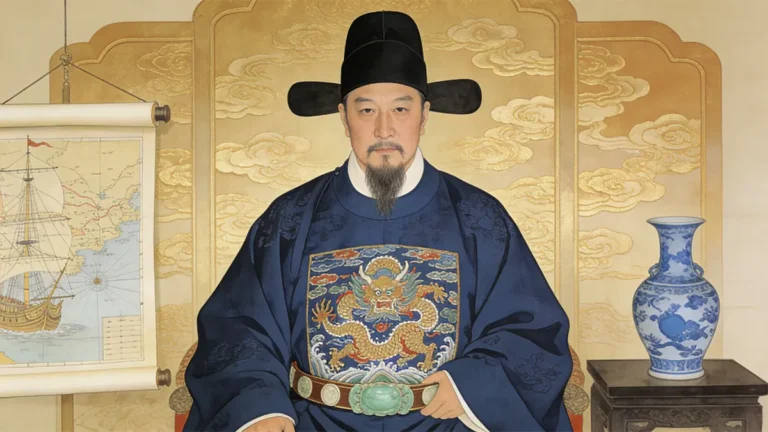
When Zhu Di seized the throne in 1402 as the Yongle Emperor, he rewarded his allies. In 1404, he summoned Ma He and granted him a new surname: Zheng—in honor of his valor at Zhengcunba.
From that day, Ma He became Zheng He.
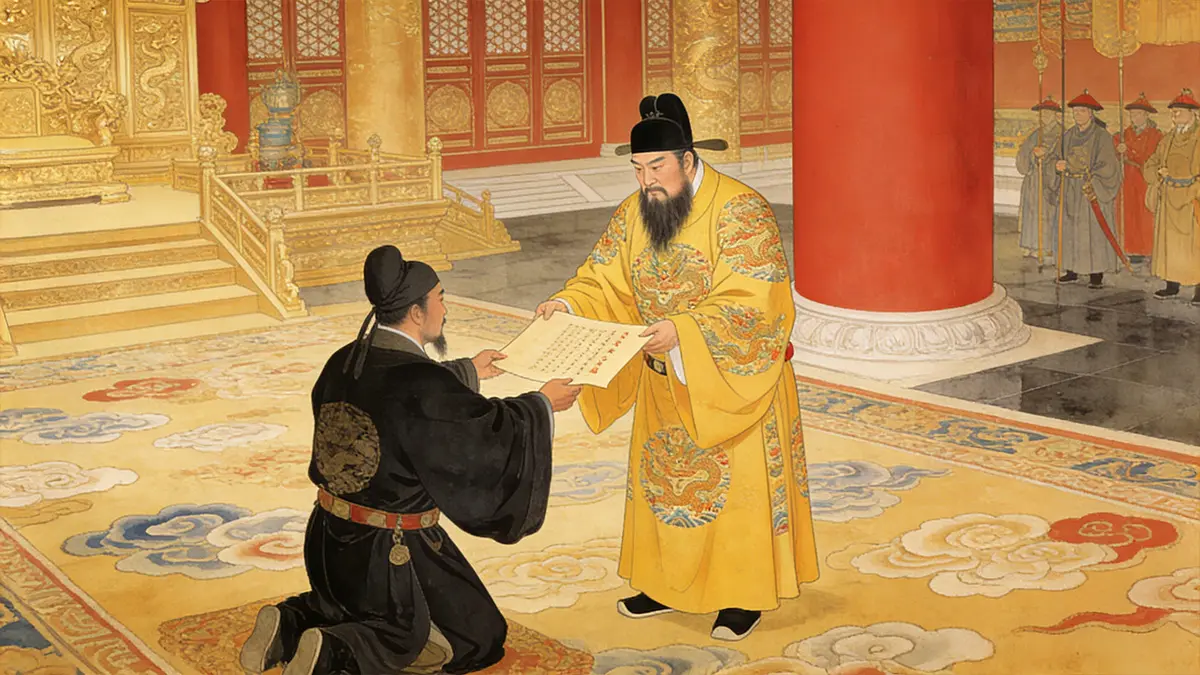
By now, he was no longer just a servant. He was a man of layered identities: a Muslim who printed Buddhist sutras for safe voyages; a eunuch who commanded armies; a former prisoner who would soon lead the world’s largest fleet. This ability to navigate multiple worlds made him uniquely suited for what came next.
(As for the nickname “Sanbao”—or “Three Jewels”—it first appears in a 16th-century travelogue. Scholars believe it refers to the Buddhist “Three Treasures” (Buddha, Dharma, Sangha), reflecting his later spiritual leanings—not his early life.)
5: Why His Early Life Matters – A Contrast with Columbus
On the eve of the Age of Exploration, two of history’s most famous seafarers emerged—one from China, one from Europe. Their approaches to foreign lands could not have been more different.
When Christopher Columbus landed in the Americas in 1492, he immediately claimed the land for Spain, demanded conversion to Christianity, and began extracting gold. His voyages launched centuries of conquest, slavery, and colonization.
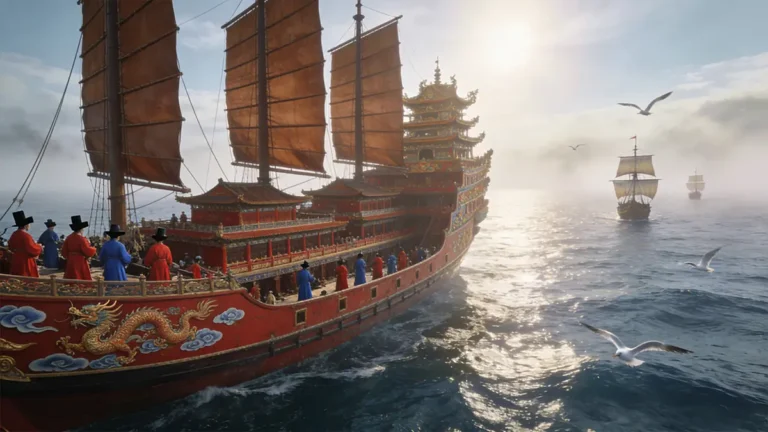
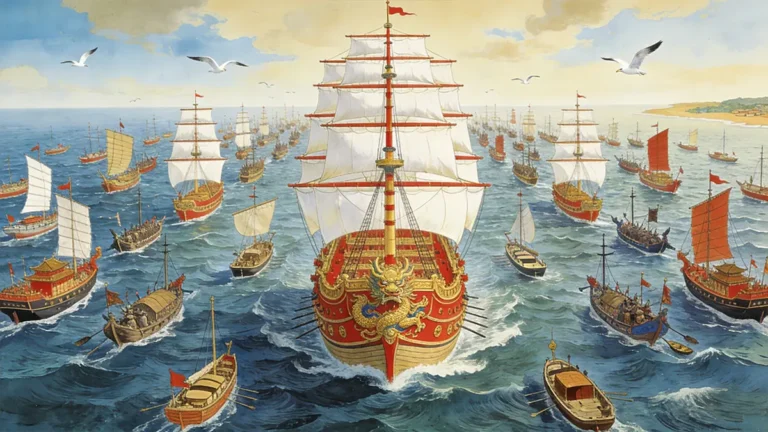
Zheng He, by contrast, set sail in 1405—nearly a century earlier—with no interest in empire. Over seven expeditions, his fleet visited over 30 kingdoms, from Vietnam to Kenya. At each stop, he:
- Exchanged gifts (silk, porcelain, calendars)
- Accepted symbolic tokens of friendship
- Mediated local disputes (like a conflict between Java’s rulers)
- And even sent envoys to pay respects near Mecca.
He never seized territory. He never built a fortress. He never planted a flag.
Why? Part of the answer lies in his origins. As a cultural outsider—a Muslim from a non-Han frontier region, marked by trauma and difference—Zheng He understood what it meant to be “other.” This gave him a rare empathy, a patience with difference that European explorers often lacked.
Historian Li Xinfeng puts it simply:
“Zheng He’s success lay not in the size of his ships, but in the breadth of his heart.”

Without his childhood in Yunnan—without the loss, the displacement, the resilience—his voyages might have mirrored Europe’s. Instead, they became a model of diplomacy over domination.
Epilogue: A Man Between Worlds
Zheng He’s life was a paradox: shattered by imperial violence, yet elevated by that same system. Denied the chance to father children, he helped “give birth” to a network of peaceful exchange across the Indian Ocean.
He was no longer just a boy from Yunnan. Nor merely a eunuch in the Forbidden City. He became a living bridge between civilizations—at a time when such bridges were rare.
Today, if you visit Zheng He Park in Jinning, Yunnan, you’ll find a stone inscribed: “Descendant of the Prince of Xianyang.” Touch it, and you might hear the footsteps of a child who lost everything—yet gave the world connection.
Appendix
Timeline (1371–1404)
- 1371: Ma He born in Kunyang, Yunnan
- Dec 1381: Ming army invades Yunnan (Veritable Records of the Hongwu Emperor)
- 1382 (age ~11): Captured and castrated — the defining trauma of his youth
- c. 1385–1390: Assigned to Zhu Di’s (Prince of Yan) household in Beiping
- 1399–1402: Fights in the Jingnan Civil War
- 1404: Granted the surname “Zheng” by the Yongle Emperor
Key Sources
- History of Ming: “Zheng He, a native of Yunnan… served Prince Yan and distinguished himself in battle.”
- Epitaph of Lord Ma: “Two sons: Wenming and He.” (Died 1382)