Why Was Admiral Zheng He a Muslim? Exploring His Complex Religious Identity
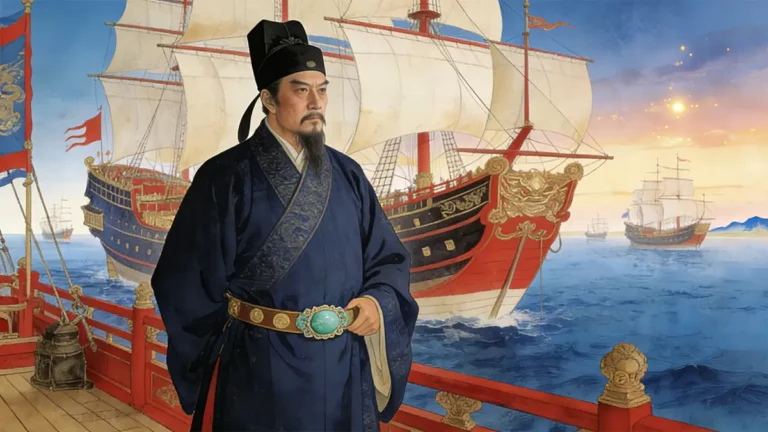
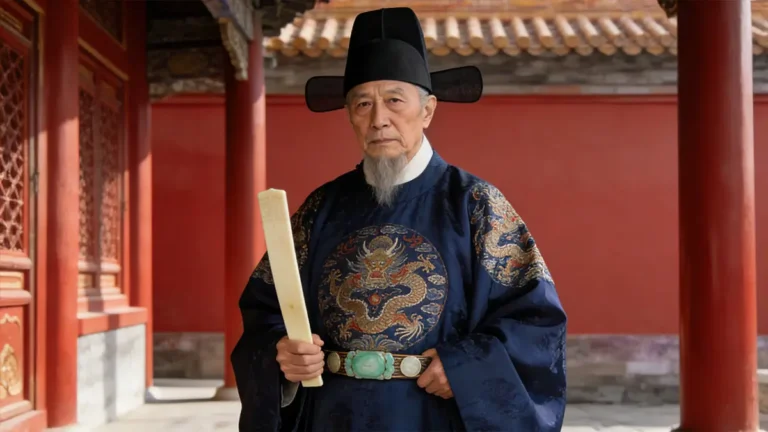
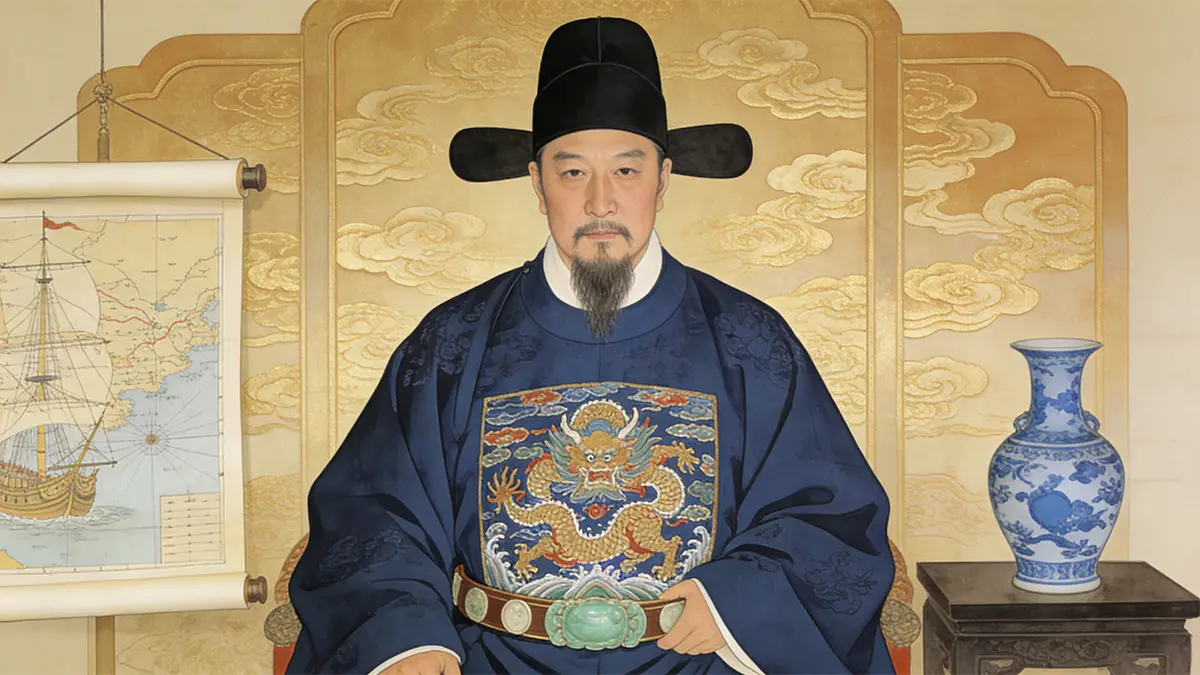
Was Zheng He Truly a Muslim? In short: yes. Zheng He (1371–1433), originally named Ma He, was born into a Muslim family in Yunnan, China. His father’s name was recorded as Ma Hajji—“Ma” being the family name, and “Hajji” (from Arabic Ḥājjī) an honorific title for those who have completed the pilgrimage to Mecca. Throughout his life, Zheng He presided over Mazu worship ceremonies and sponsored Buddhist temples, but these were acts of state ritual and political duty under the Ming dynasty, not signs of personal religious conversion. On the contrary, Zheng He’s Muslim identity became a crucial diplomatic asset during his seven voyages across the Indian Ocean.
This article answers five key questions, drawing on his father’s tombstone inscription, Ming official records, and historical materials from Southeast Asia.
1. Is there conclusive evidence of Zheng He’s Muslim identity?
Yes. The most direct evidence comes from a stele erected in 1390—the Epitaph of the Late Ma Gong—now housed in Jinning District, Kunming, Yunnan (formerly Kunyang). The inscription was composed by Li Zhigang, Minister of Rites in the early Ming dynasty, and states clearly:
“The gentleman bore the surname Ma, given name Hajji… He fathered two sons, the elder named Wenming, the younger named He.”
“Hajji” is the transliteration of the Arabic Ḥājjī, denoting a Muslim who has fulfilled the Hajj—one of Islam’s Five Pillars. This strongly suggests that Zheng He’s father, and possibly his grandfather, had journeyed to Mecca.
The surname “Ma” itself is also revealing. During the Yuan and Ming dynasties, this surname often pointed to Zheng He’s Central Asian background, serving as a Sinicized abbreviation of the Arabic name Muhammad. Contemporary records show many Hui people (the Ming-era term for Chinese Muslims) bearing surnames like “Ma,” “Ha,” and “Sa,” corresponding to Muhammad, Hasan, and Sa‘id.
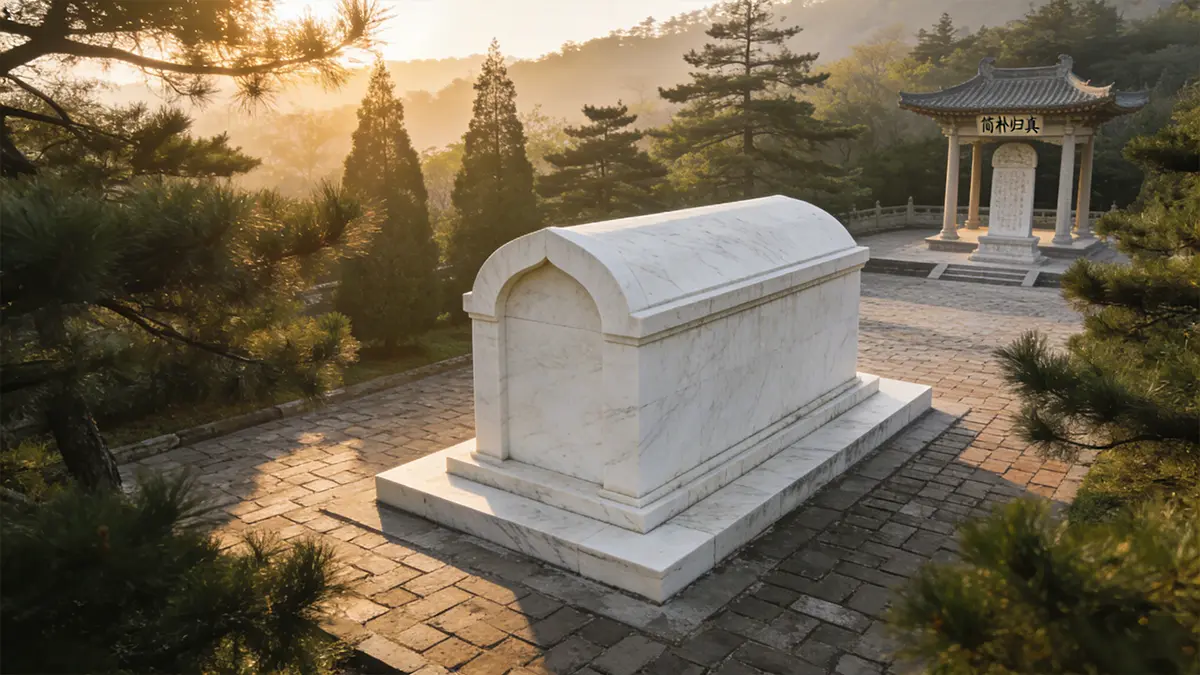
Archaeological evidence further supports this. Zheng He’s symbolic tomb at Niushou Mountain in Nanjing follows classic Islamic burial conventions: no idols, minimal ornamentation, a vaulted structure, and a strict orientation toward Mecca. This stands in stark contrast to Han Chinese tombs of the period and aligns precisely with Islamic funerary practice.
2. If he was Muslim, why did he worship Mazu and build Buddhist temples?
The answer lies in distinguishing official duty from personal belief.
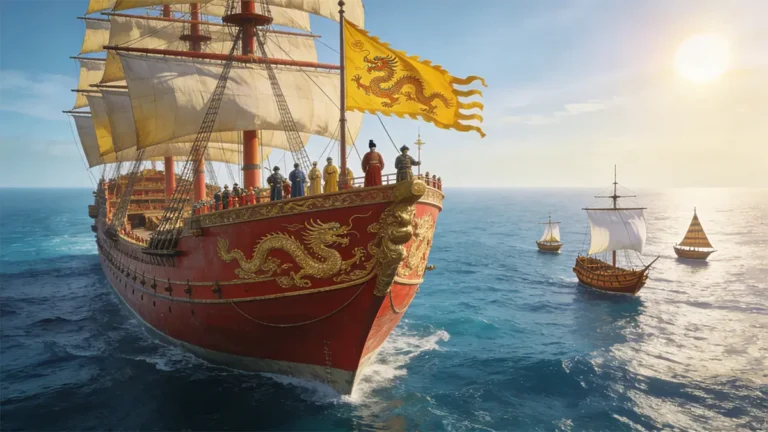
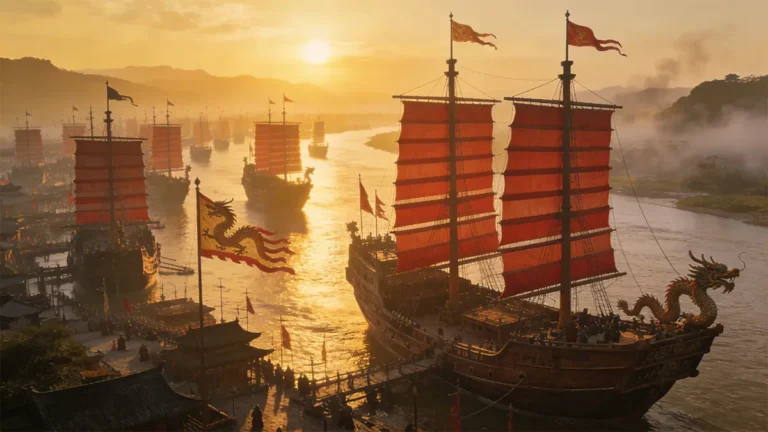
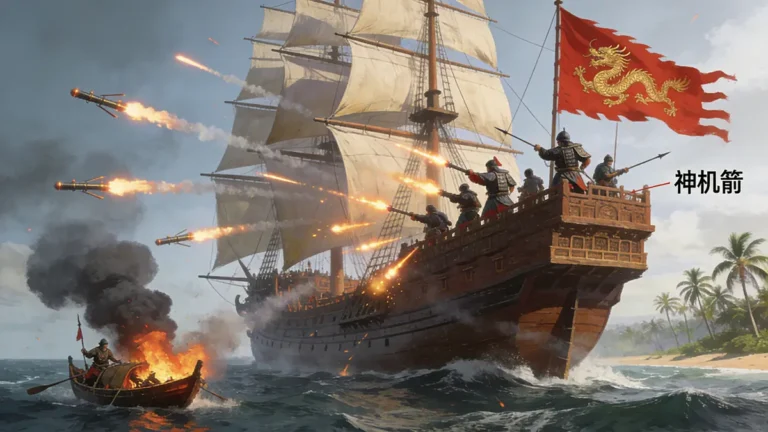
Before each of his seven voyages to the Western Seas, Zheng He typically held ceremonies honoring Mazu—the Chinese sea goddess, officially titled “Heavenly Princess Protecting the Nation and Its People” by the Yongle Emperor. He also erected the Stele of the Heavenly Princess’s Divine Responses in Changle, Fujian, in 1416. But this was not an act of faith; it was part of the Ming state’s maritime protocol. Worshiping Mazu was akin to a modern navy playing the national anthem before departure—a ritual of state, not religion.
Similarly, his supervision of the construction of Nanjing’s Great Bao’en Temple (famous for its glazed porcelain pagoda) fulfilled a direct imperial command: to perform posthumous rites for the Hongwu Emperor (Zhu Yuanzhang) and Empress Ma. Ming officials often participated in religious projects as “guardians of the Dharma,” reflecting loyalty to the throne—not personal conversion.To fully grasp why such a complex figure was chosen, one must also understand the strategic motivations behind the Yongle Emperor’s decision to launch these expeditions.
As historian Li Xinde observes:
“Ming Muslim officials’ involvement in Buddhist and Daoist activities stemmed from ritual obligation, not a change in faith.”
In effect, Zheng He operated within a layered identity:
- As an imperial envoy, he performed state rituals;
- As fleet commander, he respected the diverse beliefs of his crew;
- As a descendant of the Ma clan, he upheld his family’s Islamic heritage.
3. What role did his Muslim identity play in diplomacy?
It functioned as a form of soft power.
During his seven expeditions, Zheng He’s fleet entered the heart of the Islamic world on three major occasions:
- Kozhikode (formerly Calicut), India: Then the largest Muslim trading port in the Indian Ocean, where Zheng He established an official trading post (guanchang).
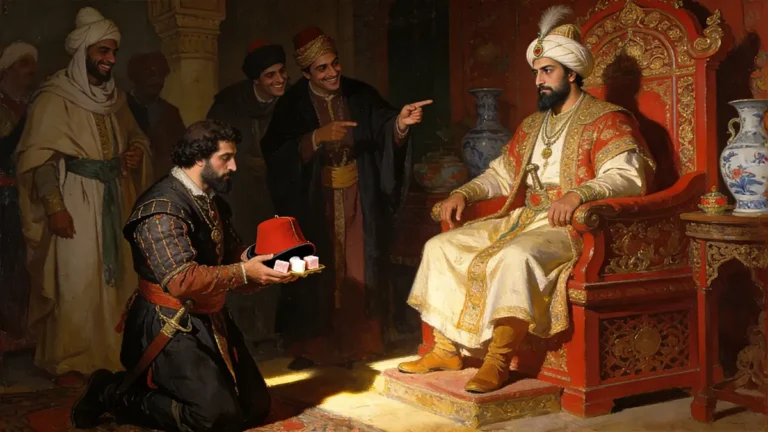
- Hormuz, Iran: The strategic gateway to the Persian Gulf. According to Ma Huan’s Yingya Shenglan (The Overall Survey of the Ocean’s Shores), the local ruler “sent ministers to greet him outside the city gates with utmost reverence.”
- Malacca, Malaysia: An emerging Muslim sultanate that Zheng He helped consolidate, turning it into a Ming strategic hub in maritime Southeast Asia.
These regimes trusted a Chinese envoy largely because he was Muslim. In the 15th-century Indian Ocean, shared religious identity was foundational to diplomatic trust. His familiarity with Arabic and Persian, knowledge of Islamic etiquette, and possible adjustments to voyage schedules during Ramadan—all signaled cultural kinship. Local rulers saw him not as a foreigner, but as “one of their own.”
The classical Malay chronicle Sejarah Melayu (The Malay Annals) explicitly records that the Sultan of Malacca “entered into a pact of brotherhood” with Zheng He and referred to him as “the noble Muslim from China.”
4. What legacy did he leave in the Muslim world overseas?
Today, Zheng He is venerated as a saint-like figure across Southeast Asia.
- Semarang, Indonesia: The city’s name is linked to Sam Po Kong (a local honorific for “Admiral Sanbao”). Landmarks include Sam Po Kong Temple, Sam Po Well, and Sam Po Cave. Legend holds that Zheng He dug wells to relieve drought—a deed still commemorated by local Muslim communities.
- Malacca, Malaysia: The Zheng He Cultural Museum displays historical records of his alliance with the sultan. The local Chinese Muslim community holds annual memorial events.
- Ottoman Archives, Turkey: Sixteenth-century documents refer to his fleet as “Muslim ships from the East.”
While these accounts blend history and legend, they reflect a deeper truth: Zheng He came to symbolize peace, justice, and cross-cultural respect—values that resonated far beyond China’s borders.
5. How should we understand his “multiple identities”?
Zheng He’s story reveals an often-overlooked reality: pre-modern China practiced institutionalized religious tolerance.
Though Confucianism was the state orthodoxy, the Ming dynasty granted limited but meaningful space to Islam, Buddhism, and Daoism. Muslims served as astronomers in the Huihui Astronomical Bureau, pharmacists in the Huihui Pharmacy, and envoys like Zheng He. His rise was not an exception—it was enabled by a system that valued competence over creed.
More profoundly, Zheng He demonstrated that a true ambassador of civilization need not choose between identities. He could be Zheng He, the loyal servant of the Ming emperor—and Ma He, the son of a Hajji. In an age when globalization was just beginning, this compatibility made peaceful diplomacy possible.
References
- Epitaph of the Late Ma Gong (1390), Kunyang, Yunnan
- Ma Huan, Yingya Shenglan (The Overall Survey of the Ocean’s Shores), Yongle era, Ming dynasty
- History of the Ming Dynasty, “Biography of Zheng He”
- Li Xinde, Zheng He and Islamic Culture, Ningxia People’s Publishing House, 2005
- Angela Schottenhammer, “Zheng He and the Islamic World,” Journal of Song-Yuan Studies, 2019