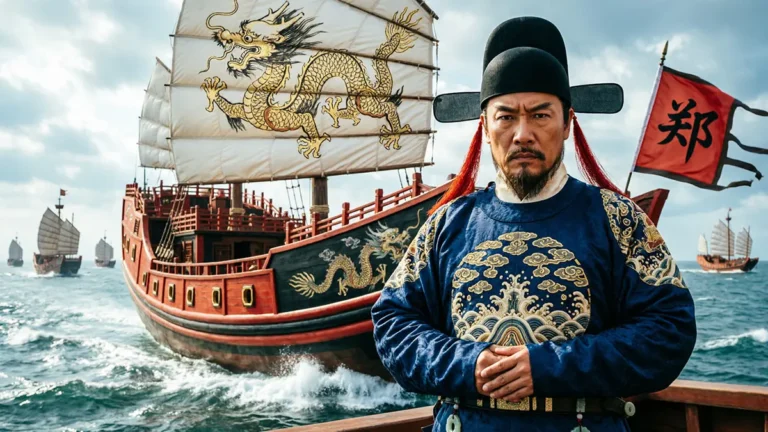
What Did Zheng He Trade in Hormuz? Silk, Porcelain, and Pearls
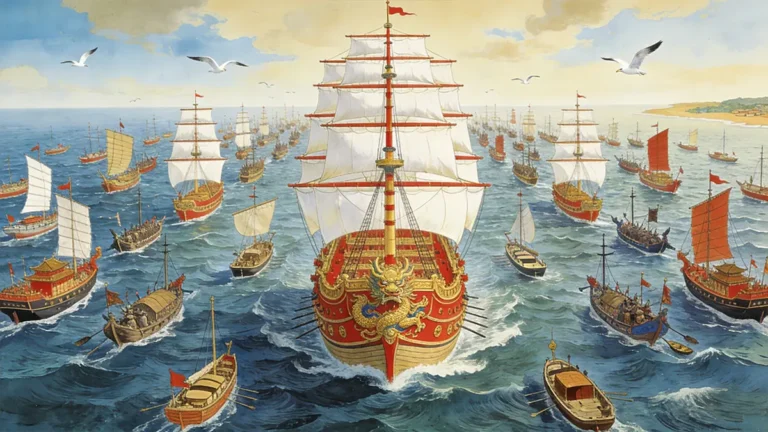
In the early 15th century, while European navigators were still sketching coastlines, a vast Chinese fleet had already dominated the Indian Ocean trade network. Drawing on archaeological discoveries, Ma Huan’s The Overall Survey of the Ocean’s Shores, and the latest Western scholarly research, this article delves into the historical reality of the Zheng He Hormuz trade. This was not merely a diplomatic mission but a meticulously orchestrated global supply chain integration, with its pivotal hub being the thriving kingdom known as “Hulumuosi”—today’s Strait of Hormuz.
The Forgotten Crossroads
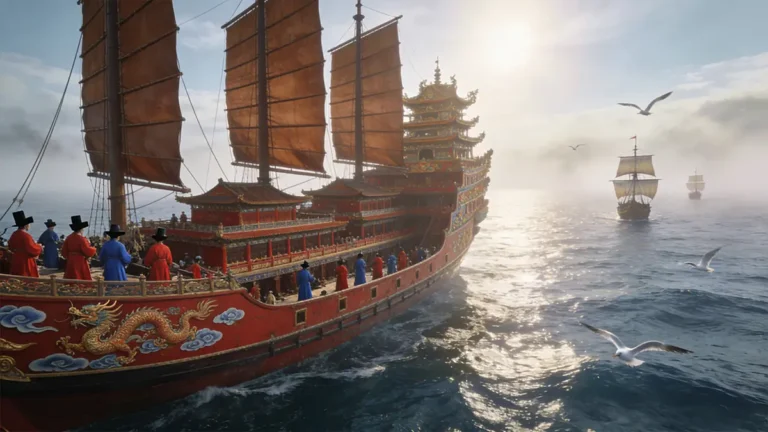
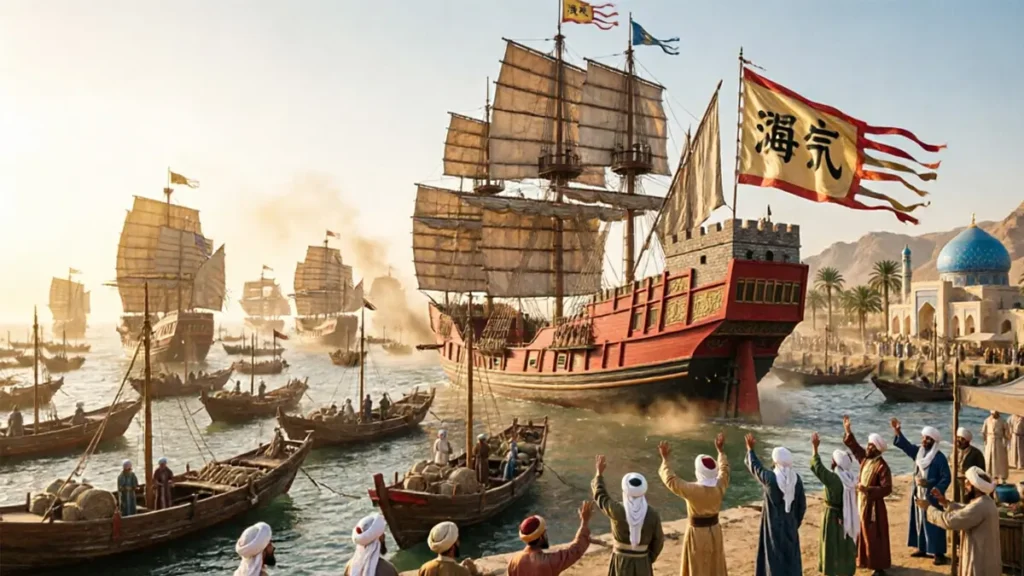
If you turn on the news today, the Strait of Hormuz is usually associated with oil shipping crises or geopolitical tensions. But in 1413, these waters presented a very different scene. Back then, there were no blockade lines—only massive treasure ships from Nanjing slowly entering the gateway to the Persian Gulf.
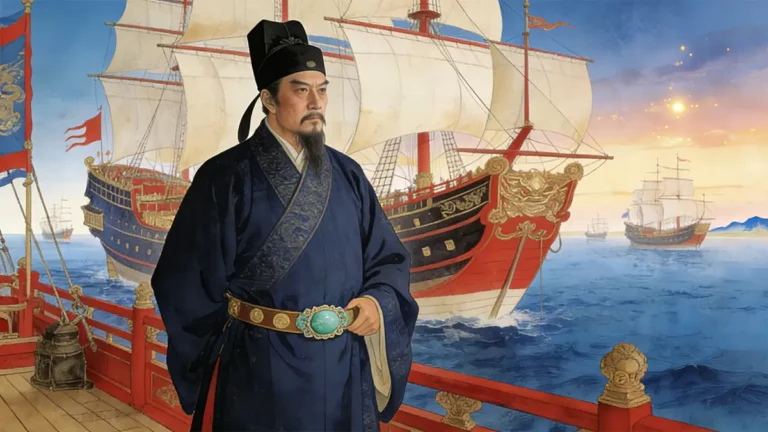
For Western historians, the Age of Discovery usually begins with Columbus in 1492 or Vasco da Gama in 1498. Yet archives reveal that over half a century before these events, Admiral Zheng He of the Ming Dynasty had already established regular maritime routes linking East Asia and East Africa. The most critical node along this route was Hulumuosi (historically known as Hormuz).
The transactions here were not mere barter but highly complex state-level operations. To grasp the scale of the Zheng He Hormuz trade, we must look beyond textual records to hard data. Yet note that this data often conceals the ambiguities of historical sources—the very allure of historical inquiry.
Having confirmed the fleet’s arrival at this location, we must now determine the exact year of their arrival and the frequency of their voyages. Let us turn to the dusty pages of their logbooks, while also examining where scholars diverge in their interpretations.
Timeline and Fact-Checking: The Fourth and Sixth Voyages
According to the History of Ming and Ma Huan’s field records, Zheng He’s fleet visited Hormuz primarily during two key periods.
First was the Fourth Overseas Voyage (1413–1415). This marked the Chinese fleet’s first large-scale penetration into the Persian Gulf. According to research by Geoff Wade, Professor of History at the University of Cambridge, the primary objectives of this voyage were to establish tribute relations and secure a route to the Holy Land (Mecca). The fleet remained in Hormuz for a sufficiently extended period to establish a stable trading post.
The second period was the Sixth Maritime Expedition (1421–1422). This mission had more specific objectives: escorting envoys from previously visiting nations back to their homelands and conducting direct trade with substantial Chinese goods. The database of the School of Oriental and African Studies (SOAS), University of London, indicates that the list of “tribute items” brought back from this voyage was the most extensive of all expeditions, with the majority originating from Hormuz and its surrounding regions.
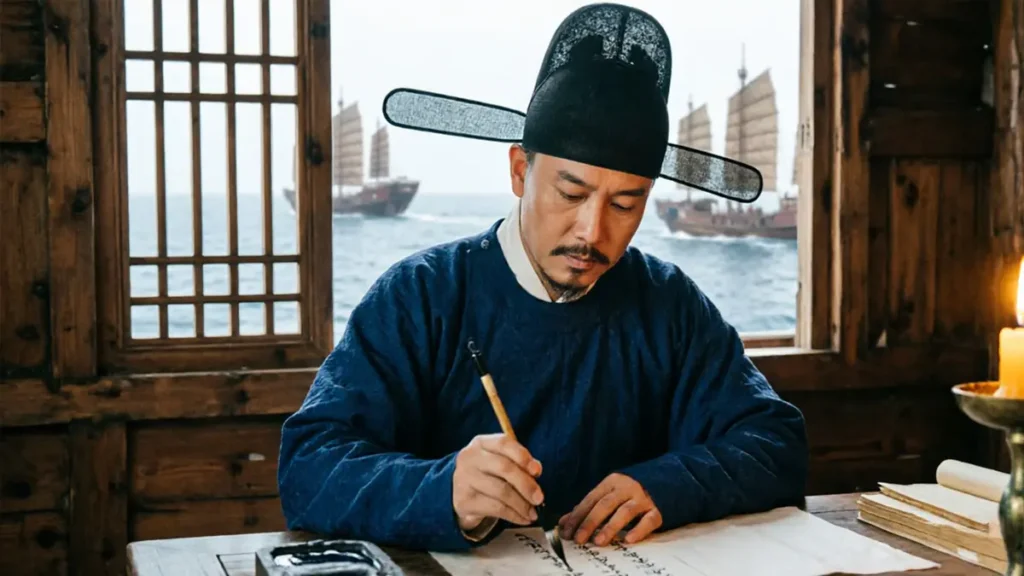
Ma Huan, serving as interpreter aboard the fleet, recorded invaluable firsthand observations in his work The Overall Survey of the Ocean’s Shores (Yingyai Shenglan). He recorded that upon the fleet’s arrival, the local king personally led Muslim merchants to greet them at the port. Such a reception protocol was exceptionally rare in international diplomacy at the time. However, scholars caution that Ma Huan’s account may carry elements of “tribute narrative” embellishment, intended to highlight the emperor’s majesty and virtue. Therefore, we must maintain a degree of caution when interpreting scenes of “all nations paying homage.”
The fleet arrived, and the people were seen, but what truly provided the archaeological “smoking gun” for this historical event was the physical evidence they left behind. After all, words can be embellished, but buried porcelain shards do not lie—though even the origin of these shards can sometimes spark debate.
Irrefutable Evidence: Blue-and-White Porcelain Shards on Iran’s Coast and Academic Controversy
For a long time, Western academia maintained a cautious stance on whether Zheng He’s fleet truly reached the heart of the Persian Gulf. This persisted until archaeological excavations provided compelling evidence—yet also raised new mysteries.
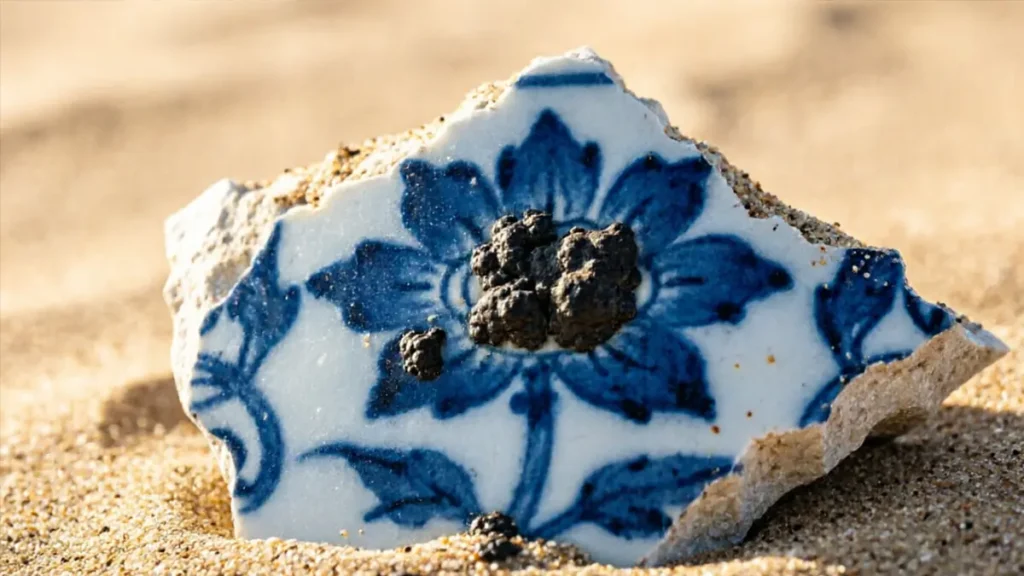
Archaeologists have uncovered substantial quantities of early Ming Dynasty blue-and-white porcelain shards on Kish Island and Hormuz Island in southern Iran. According to reports published by the British Museum and Iran: Journal of the British Institute of Persian Studies, these shards have been dated to between 1400 and 1430 AD, aligning closely with the timeframe of Zheng He’s voyages.
Particularly noteworthy are the characteristics of these porcelain fragments. They utilize “Sumali Blue” cobalt pigment. This cobalt pigment, rich in iron, develops distinctive black crystalline spots during firing. Chemical analysis indicates the raw material originated from the Persian region. This reveals an intriguing closed-loop: Chinese artisans used Persian raw materials to produce porcelain, which was then transported back to Persia by Zheng He’s fleet and sold to local nobility.
This was more than mere trade; it represents one of the earliest documented cases of global raw material processing and re-export. At sites across the Hormuz archipelago, complete vessels bearing distinct characteristics of Ming dynasty imperial kilns have even been unearthed. However, an academic gray area persists: some archaeologists contend that while the shards are undoubtedly Ming, it remains difficult to confirm with absolute certainty whether they were directly brought by Zheng He’s fleet or arrived via subsequent private merchant caravans. After all, once trade routes are established, private commerce often follows swiftly. This uncertainty does not diminish Zheng He’s achievements; rather, it renders the historical picture more vivid and complex.
Armed with physical evidence, let us now examine the ledgers closely. What goods were so valuable that the Ming Dynasty would expend immense resources to traverse half the globe for trade? The answer may prove stranger than you imagine—even somewhat absurd.
Trade List: From Cobalt to Giraffes
When we dissect the specifics of the Zheng He Hormuz trade, we uncover a remarkably strategic inventory. These transactions were not random but tailored to meet the specific demands of the Ming imperial court.
What Did China Export?
Beyond the aforementioned blue-and-white porcelain, silk constituted another major category. Yet copper coins proved particularly intriguing. Ma Huan’s records note that while local currency in Hormuz was gold, Chinese copper coins were regarded as valuable commodities in certain transactions—even collected as decorative items. This reflects the economic influence China exerted over surrounding regions at the time.
What Did Hormuz Offer?
The list of goods is dazzling:
- Gemstones: Ma Huan detailed “cat’s eye gemstones” and “red thorns” (likely rubies or red spinels), describing them as “as large as fingertips, worth a fortune.” Modern mineralogists speculate these likely originated from nearby mines, cut and polished by Hormuz merchants.
- Spices and Medicinal Herbs: Ambergris was paramount, a key ingredient for high-grade perfumes and traditional Chinese medicine, primarily sourced from East Africa and transshipped through Hormuz.
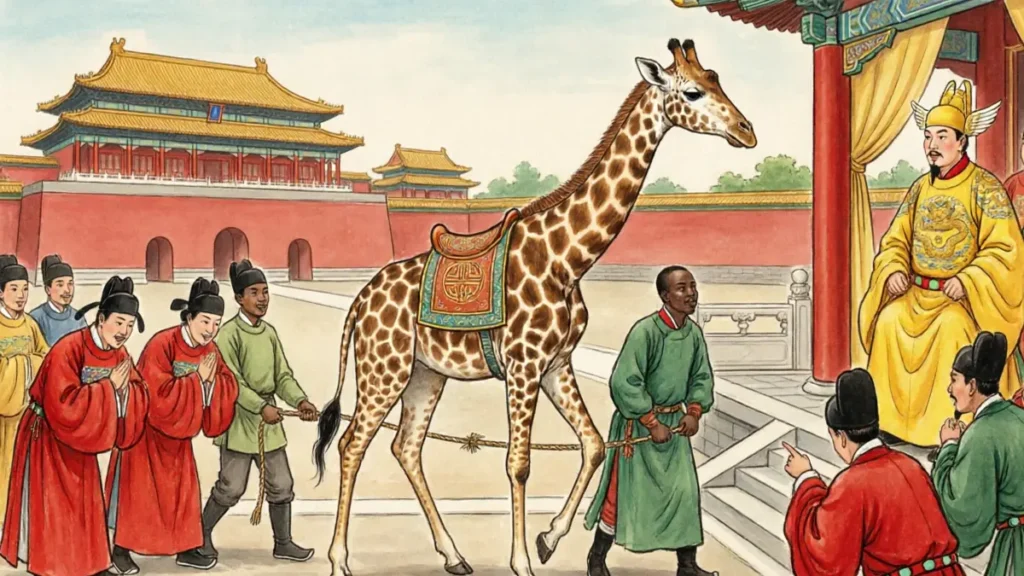
- Live Animals: The most famous was the “qilin.” In reality, this referred to giraffes. Historical records indicate these giraffes were captured in East Africa (such as in the Kingdom of Malindi), transported to Hormuz, and then shipped back to Nanjing by Zheng He’s fleet. Hormuz served as a crucial logistical hub in this process. Imagine securing a towering giraffe on a swaying wooden deck for months at sea—an astonishing logistical feat.
This inventory reveals that the Ming Dynasty pursued not territorial expansion but access to scarce resources. This model stands in stark contrast to the military fortresses later established by the Portuguese in the same region.
Given that this trade model was so mutually beneficial, why did it not endure? Why did later Western colonizers choose a completely different path? The differing motivations behind these choices remain a focal point of historical debate and hold the key to understanding why East and West diverged.
Controversy and Contrast: The Tribute System vs. Colonialism
In mainstream Western historical narratives, maritime exploration is often tied to territorial occupation and religious propagation. However, Zheng He’s actions in Hormuz broke this paradigm.
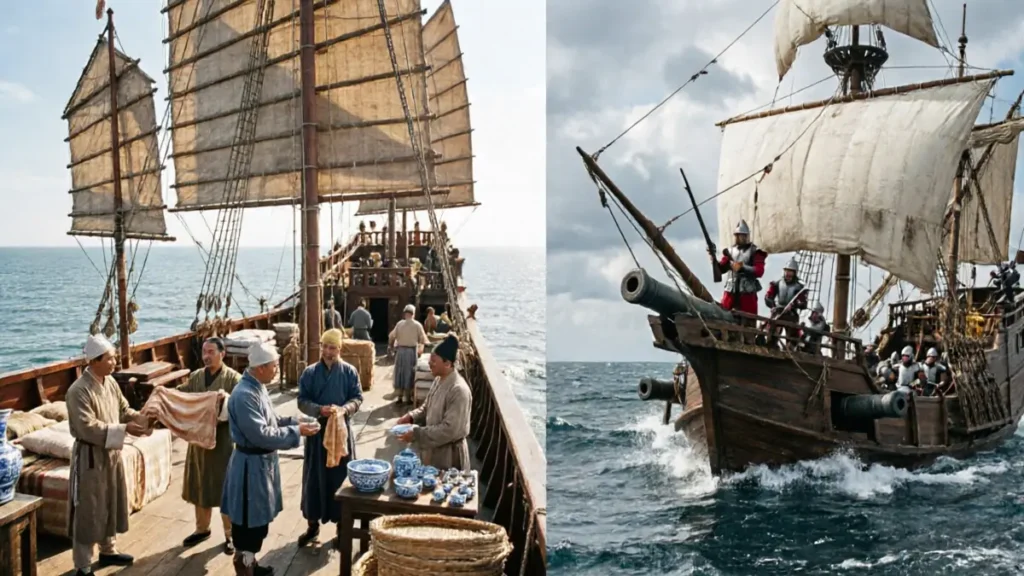
According to American sinologist Edward L. Dreyer’s analysis in Zheng He: China and the Oceans in the Early Ming Dynasty, the Ming Dynasty’s “tribute system” was fundamentally an agreement exchanging political recognition for economic benefits. Zheng He’s fleet did not establish military bases in Hormuz, did not force locals to convert their faith, nor did it plunder resources. Instead, the Ming Dynasty adhered to the principle of “giving generously and receiving sparingly,” often bestowing gifts upon the King of Hormuz that exceeded the value of the tributes received.
Some critics argue this model was economically unsustainable, burdening Ming finances. However, scholars like Harvard’s China historians contend that these substantial subsidies secured long-term regional stability and safe passage, enabling private merchant groups to follow suit. This created a unique dynamic where the government laid the groundwork while private entities took the lead.
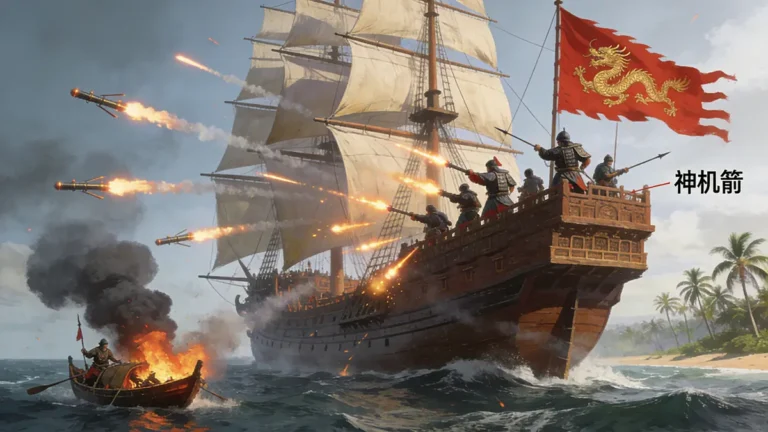
In contrast, the Portuguese who arrived in the early 16th century immediately began constructing fortresses, controlling shipping lanes, and taxing passing vessels. The collision of these two models ultimately led to the rapid filling of the power vacuum in the region after the Ming withdrawal from the Indian Ocean. It is worth noting that occasional voices have questioned whether Zheng He’s missions were truly entirely “peaceful,” suggesting that the sheer scale of the fleet itself served as a deterrent. Even so, compared to the trail of bones left by later European powers in the Indian Ocean, Zheng He’s footprints appear remarkably gentle.
As the political winds shifted within the Ming court, this invincible fleet eventually vanished. Yet this abrupt historical interruption left the world with a colossal “what if” and several unsolved mysteries that persist to this day.
A Sudden Halt and Echoes of History
In 1433, Zheng He passed away during the return journey of his seventh voyage. Shortly thereafter, the Ming court underwent dramatic political upheaval. The civil official faction gained the upper hand, arguing that ocean voyages were burdensome and costly, while the eunuch faction (Zheng He’s social class) held excessive power that threatened imperial authority.
Consequently, maritime archives were destroyed, construction of large treasure ships was banned, and the maritime prohibition policy (Haijin) was strictly enforced. The once-bustling Hormuz trade route gradually fell silent. Merely decades later, when Vasco da Gama rounded the Cape of Good Hope to reach the same waters, he found no trace of the Chinese fleet—only scattered local regimes.
Had the Ming Dynasty sustained the Zheng He Hormuz trade network, the course of world history might have diverged dramatically. Globalization could have arrived earlier through a gentler, multipolar approach rather than the blood and tears of later colonialism. Of course, this remains mere conjecture. History offers no “what ifs,” only outcomes.
Today, as we turn our gaze once more to the Strait of Hormuz, beyond the oil tankers and warships, we should perhaps remember that this very waterway once witnessed the largest peaceful maritime exchange in human history. The blue-and-white porcelain shards sunk to the seabed remain silent witnesses to this forgotten era of splendor.
Historical details often lie hidden within disputes over specific names and locations. To aid your deeper exploration, we’ve compiled key questions most frequently asked by Western readers—including some intriguing academic tidbits.