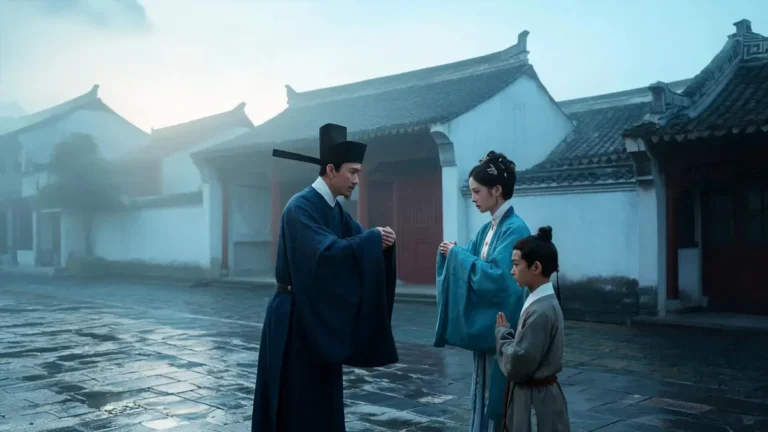
Jianwen Emperor (Zhu Yunwen): Mystery of the Second Ming Emperor
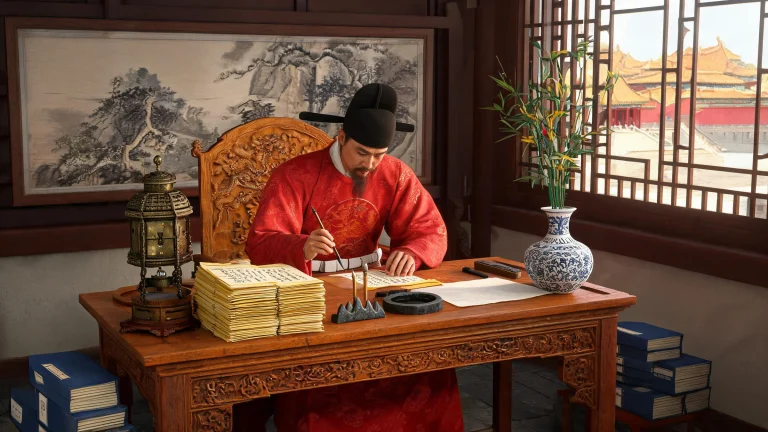
In 1407 an official of the Ministry of Rites named Hu Ying left the capital. Five years after the Jianwen Emperor was presumed dead, the court was still sending men to find him. His commission, as the History of the Ming records it in the biography of Hu Ying, had three parts. He was to distribute imperial writings, to seek out the immortal Zhang Sanfeng, and to travel through the provinces, prefectures, counties and villages of the empire, “watching in secret for where the Jianwen Emperor might be.”
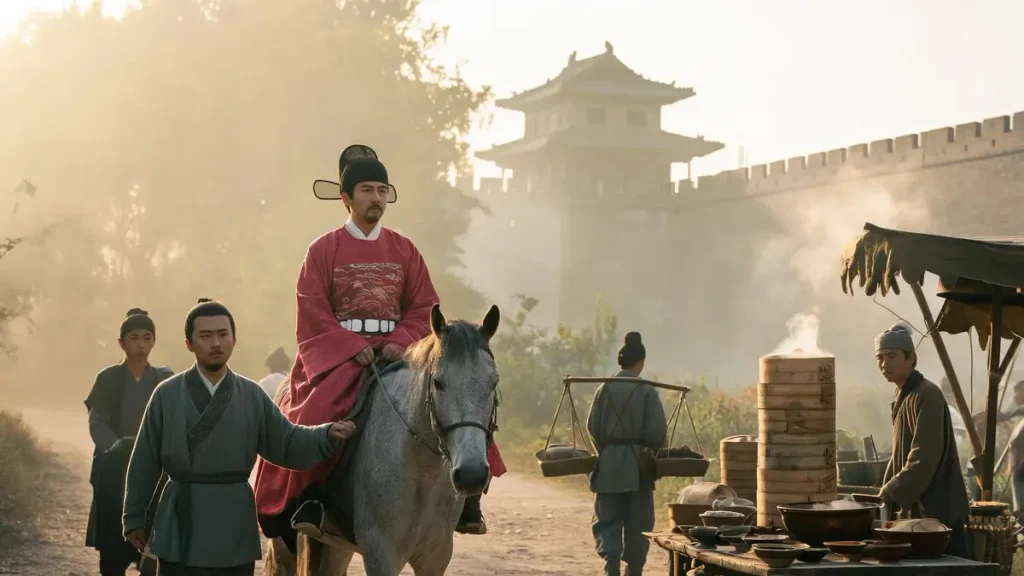
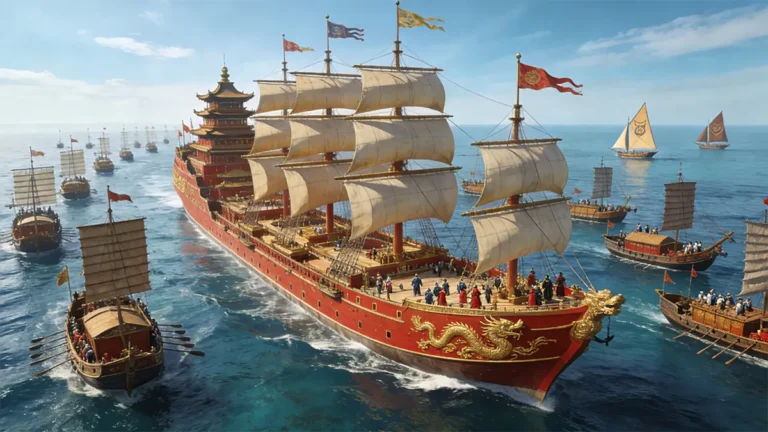
He was not the only man looking. In the sixth month of 1405 Zheng He took a fleet to sea from the Liu River mouth near Suzhou: more than 27,800 soldiers and sailors in sixty-two great ships, the largest of them 44 zhang long and 18 zhang in the beam. The biography of Zheng He gives two reasons for the voyage in one sentence: the Yongle Emperor suspected the Jianwen Emperor had fled overseas and wanted to trace him, and he wanted to display his armies in foreign lands and show the wealth of China. Six hundred years on, most people remember only the second.
Hu Ying stayed out for years at a time. His first tour did not end until 1416. He went out again in 1419 and worked through Jiangsu and Zhejiang, and through Huguang. In 1423 he reached Xuanfu to see the emperor, and the biography records the night in full: “The emperor had already gone to bed. Hearing that Hu Ying had arrived, he rose at once and summoned him in. Hu Ying reported everything he had learned, and did not come out until the fourth watch.” They talked past midnight. Then four characters close the entry: from this his doubts were finally released. What Hu Ying reported, the History does not write down in a single word.
A grandson raised to lighten the law
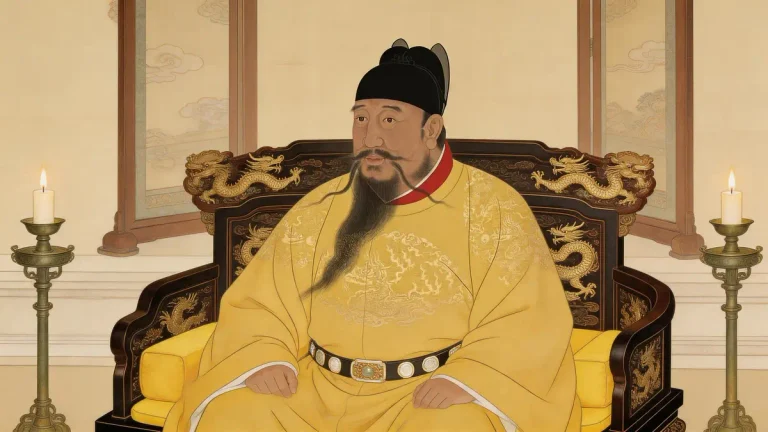
The man they were looking for was a grandson of Zhu Yuanzhang. Zhu Yunwen was the second son of Crown Prince Zhu Biao, and his mother was a consort of the Lü family. In the fourth month of 1392 Zhu Biao died. In the ninth month Zhu Yuanzhang named this grandson, then fifteen or sixteen years old, imperial grandson-heir. The annals describe him as quick and fond of learning, and deeply filial: at fourteen he nursed his father through an illness without leaving him day or night, and two years later, when his father died, he mourned until he was worn to nothing. Zhu Yuanzhang stroked his head and said, “You are truly filial. Do you not think of me?”

Zhu Yuanzhang had him learn to read memorials and draft rescripts. The crown prince, while he lived, was known for kindness and for cutting punishments where he could. The grandson followed him and went a step further. He asked leave to examine the ritual classics and compare the penal codes of the dynasties before, and he had seventy-three articles of the Hongwu code, judged disproportionately severe, made lighter. The realm praised him.
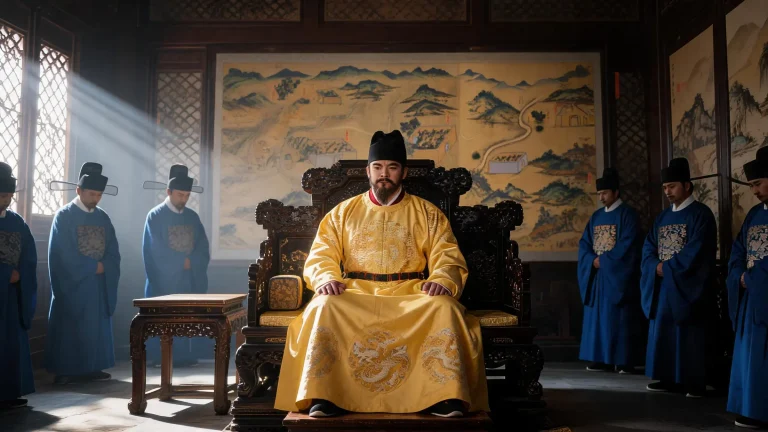
In the intercalary fifth month of 1398 Zhu Yuanzhang died. The testament named him: “The imperial grandson Yunwen is benevolent and clear-sighted, filial and fraternal, and the realm turns to him. He should ascend the great position.” The Jianwen Emperor took the throne that day and changed the reign title the next year. His grandfather’s reign had been Hongwu, and the military work of it had taken thirty-one years. The two characters he chose for the new reign called for civil government instead. What the Jianwen Emperor did in his first months pointed the same way. He proclaimed the three-year mourning, and when the ministers asked him to commute it into days, he answered that he would not imitate the ancients by keeping silent. He called Fang Xiaoru into the Hanlin Academy as expositor-in-waiting. He proclaimed lenient government, pardoned the guilty and remitted arrears of tax. He merged and abolished prefectures and counties and cut redundant posts, and released the single men in the garrisons of the empire as commoners. In the second month of 1400 the Jianwen Emperor issued an edict on the land tax of Jiangsu and Zhejiang. The empire had a proper form of levy, and those two provinces were taxed too heavily, and the official fields of Suzhou and Songjiang had been rated as private land as a punishment meant for the moment, never as a standing rule. The rate was cut to no more than one dou a mu. The heavy levy of Suzhou and Songjiang had been Zhu Yuanzhang’s way of making one example serve for many, and his grandson lowered it.
The verdict appended to his annals gives him eight characters: in statutes and institutions, he set his mind on restoring antiquity. The same passage keeps one small scene. He came late to court once because of illness, and Yin Changlong remonstrated with him. He admitted the fault at once and had the memorial read out at home and abroad.
Five uncles in one year
The trouble was in the north. In his last years Zhu Yuanzhang had put the frontier troops in the hands of his sons. The Prince of Yan, Zhu Di, commanded the cavalry along the border, and the Prince of Ning, Zhu Quan, had the Three Uriyangkhad Guards under him. While the grandfather lived, the arrangement held. After him, the Jianwen Emperor, then in his early twenties, had nothing with which to hold his uncles down.
In the second month of 1399 the Jianwen Emperor issued an edict: the princes were not to command civil and military officials. The edict took back the princes’ authority over officials. The troops in the garrisons stayed with their own officers.
The reduction of the princely fiefs began with the Prince of Zhou, Zhu Su. In the eighth month of 1398 he was reduced to a commoner and moved to Yunnan. The annals of Chengzu explain the step. The emperor had taken the advice of Qi Tai and Huang Zicheng and meant to remove the princes one by one. Since he feared the strength of the Prince of Yan, he did not move against him first. He began with the Prince of Zhou in order to draw the connection tight. The Prince of Zhou was the Prince of Yan’s full brother; follow that line and it reaches Yan. In the fourth month of 1399 someone accused the Prince of Xiang, Zhu Bo, of plotting. He did not answer the charge. He set fire to his palace and burned himself to death. The same month the princes of Qi and Dai were reduced to commoners, and in the sixth month the Prince of Min, Zhu Pian, was reduced and moved to Zhangzhou. From Zhou to Min, in less than a year, five of them.
All five were sons of Zhu Yuanzhang and uncles of the Jianwen Emperor.
In the eleventh month of 1398 Zhang Bing, a vice minister of Works, was made provincial administration commissioner of Beiping, and Xie Gui and Zhang Xin took charge of the regional military commission there. Their assignment was to watch the prince’s secret affairs. In the sixth month of 1399 an officer of the Yanshan guard named Ni Liang reported a plot. The court arrested the prince’s household officials, and Xie Gui and Zhang Bing brought troops to surround his residence. The annals of Chengzu put his position into six characters: the prince felt himself in danger and feigned madness and illness.
The Prince of Yan calls it Jingnan
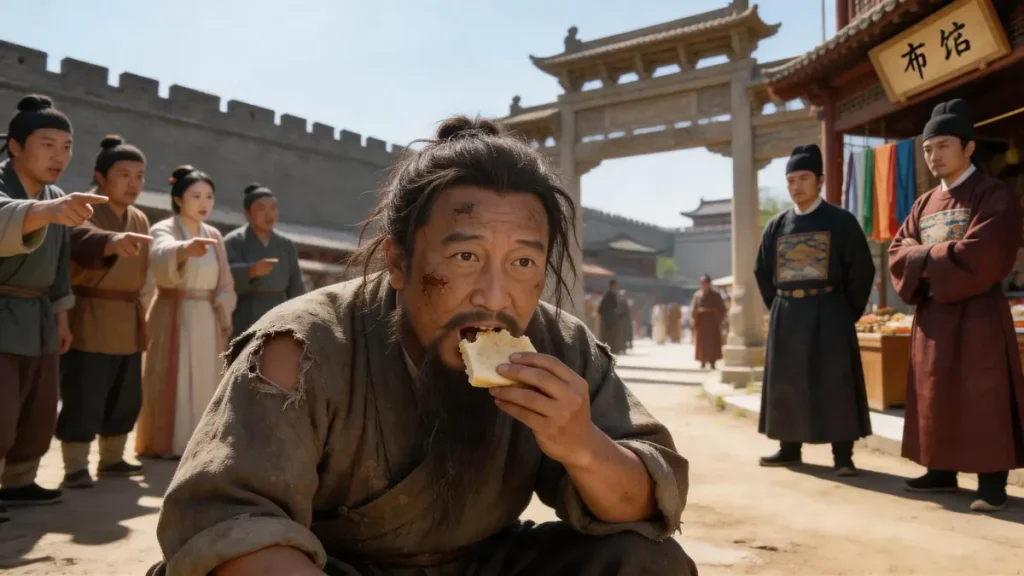
On a day in the seventh month of 1399 Zhu Di hid soldiers inside the Duanli Gate, tricked Xie Gui and Zhang Bing in and killed them, and seized the nine gates of Beiping, the old Yuan capital that would later be called Beijing. He sent a memorial to the throne naming Qi Tai and Huang Zicheng as treacherous ministers. As his authority he cited the Imperial Ancestral Instructions: when there is no upright minister at court and evil men are within, the princes shall drill their troops and await orders. In the same passage the Son of Heaven is to order the princes secretly to lead their garrisons and put the matter down. Then he gave his army a name. He called it Jingnan, the quelling of the troubles.
The war lasted four years. The court first sent Geng Bingwen, Marquis of Changxing. He fought north of the Hutuo River in the eighth month and lost. He was replaced by Li Jinglong, Duke of Cao, who lost at Zhengcunba in the eleventh month, lost again at the Bai River in the fourth month of 1400, and fled to Dezhou. The southern army did win its days. In the eighth month of 1400 Tie Xuan and Sheng Yong held Jinan and lifted its siege; in the twelfth month Sheng Yong killed the Yan commander Zhang Yu at Dongchang; in the third month of 1401 the Yan army lost Tan Yuan at Jiahe. None of it broke the other side.
After Jiahe the annals of Chengzu record one scene. Zhu Di rode close to Sheng Yong’s camp with a dozen horsemen and spent the night in the open. At daylight he found he was inside the ring of it. He led his horse out at an easy pace, sounded his horn and rode straight through the camp, and no one shot an arrow. The reason was the throne’s order: do not let me bear the name of a man who killed his uncle.
By the end of 1401 Zhu Di had been in the field three years. The annals count his holdings for him: of the cities he took, the government retook most as soon as his troops moved on, and what he held came to the three prefectures of Beiping, Baoding and Yongping. The outcome was still open. The next year a eunuch the court had dismissed ran to Beiping and described how empty the capital was. Zhu Di said, “Years of fighting, and when will it end? Better to stake everything on one crossing of the river and never look back.”
In the fifth month of 1402 the Yan army crossed the Huai River and moved on Yangzhou. The Jianwen Emperor sent the Princess Qingcheng to the Yan camp to offer territory and a truce, and Zhu Di refused. On a day in the sixth month the Yan army reached the Jinchuan Gate.
The Prince of Gu, Zhu Hui, and Li Jinglong opened it.
Two sentences, and no verdict on the Jianwen Emperor
On the day the Jinchuan Gate opened, the annals of the Jianwen Emperor carry one line: “Fire broke out in the palace, and the emperor’s end is unknown. The Prince of Yan sent eunuchs to bring out the bodies of the emperor and the empress from the fire, and eight days later they were buried.”
Zhu Di’s own account was that he had carried the emperor and his empress out of the burning palace and buried them eight days on.
The next line begins fresh: “Some say the emperor escaped by a tunnel.”
One sentence is official and the other is hearsay, set side by side in the same passage. The men who compiled the History, more than three hundred years later, did not choose between them. What follows describes the traces of an emperor’s travels as a monk, said to survive among the people of Yunnan, Guizhou, Sichuan and the Ba country.
The official account of the Jianwen Emperor’s end has two points that do not hold. The bodies were brought out of the fire by Zhu Di’s own eunuchs, and every man who saw them was his. The reign title was abolished soon after, and the four years of it were recorded as the thirty-second to the thirty-fifth years of Hongwu.
The other version has a basis too. More than one man fled when the capital fell. Fang Xiaoru was executed with his clan, Qi Tai and Huang Zicheng were killed, and those condemned as their faction died in numbers. To stay was to die, and to get away left one road open. Zhu Yuanzhang as a boy had entered the Huangjue Temple. That a man with nowhere left to turn would shave his head and hide among monks was not hard for people of the time to imagine.

The hardest thread runs through two biographies that have nothing else to do with each other. In 1407 Hu Ying was watching in secret for where the Jianwen Emperor might be, working through the provinces, prefectures, counties and villages of the empire. In 1405 Zheng He had put to sea because the Yongle Emperor suspected the Jianwen Emperor had fled overseas and wanted to trace him. One man searched on land and a fleet searched at sea, and neither said what it was doing.
In 1440 a monk walked from Yunnan to Guangxi and claimed to be the Jianwen Emperor. The prefect of Si’en, Cen Ying, reported him to the court. The man turned out to be Yang Xingxiang of Junzhou, over ninety years old. He was imprisoned and died four months later, and the twelve monks who had conspired with him were sent to Liaodong.
The posthumous name granted in 1736
Once Zhu Di entered the city, one thing to settle was what the year would be called. In the seventh month of 1402 he ordered that the year be recorded as the thirty-fifth year of Hongwu and the next as the first year of Yongle, and that everything the Jianwen Emperor had changed be restored to the old system. Palace and gate names, offices and statutes he had altered all went back to their Hongwu form, and the princes he had stripped were all restored. Those four years were entered under Hongwu from then on.
As for where he went, no one ever ran it to ground. The official version says he was buried eight days after the fire, and the History does not say where. The Ming tombs lie at Changping, and among the thirteen there is no place for him.
The dynasty’s own position is written in the later part of his annals. In the Zhengde, Wanli and Chongzhen reigns, ministers asked that the Jianwen line be given a fief again. They asked as well for a temple name and a posthumous name. Every request ended the same way: sent down to the office concerned for discussion, and never carried out. His own dynasty did not return the name to him in more than two hundred years.
Another dynasty gave it.
In the first year of the Qianlong reign, under the Qing, the court deliberated and granted him the posthumous name Emperor Gongmin Hui. The verdict in his annals gathers the matter at the end. After the change of dynasty the years were again counted as Hongwu, and from that time his descendants and subjects took any record of him as a thing to avoid. The countryside passed on doubts and mistakes.
From the fire in the palace to the first year of Qianlong is three hundred and thirty-four years. The posthumous name did not come from his own dynasty.