Why Did Zhu Yuanzhang Purge His Founding Generals? Inside the Ming Dynasty’s Bloodiest Official Purges
In Nanjing during the Hongwu era, a heartbreaking morning ritual was whispered among officials.
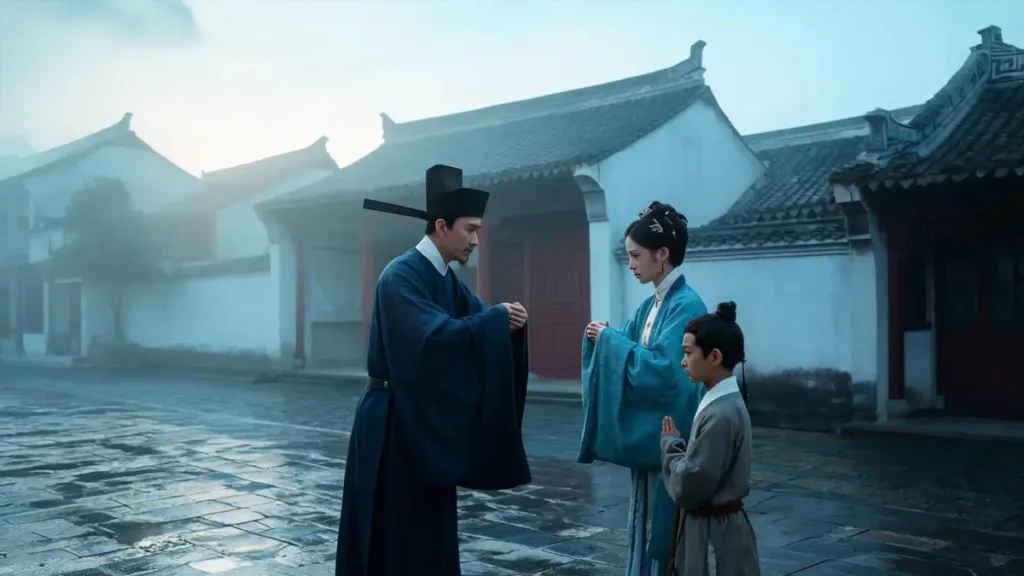
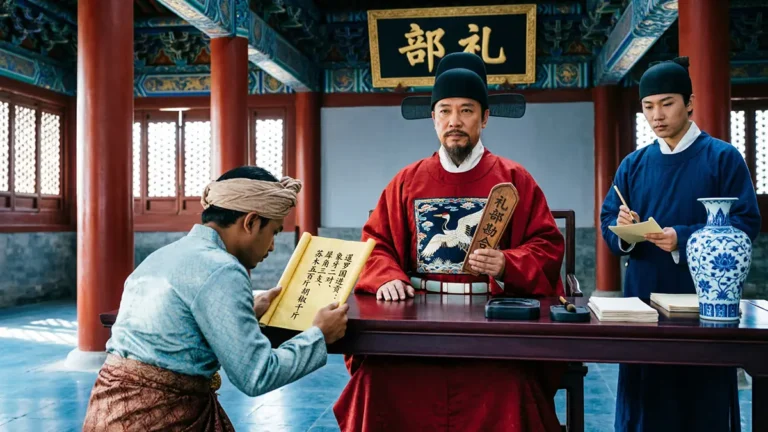
According to Ming-era notes, ministers would bid farewell to their wives and children before heading to court each dawn; if they returned home safely at dusk, the entire family would raise a toast, celebrating that they had survived another day. This atmosphere of terror in the imperial court tells you everything you need to know about the Hongwu Purges (the brutal political cleansings orchestrated by Zhu Yuanzhang, the founding emperor of the Ming Dynasty).
Far from the senile paranoia of an aging tyrant, this decades-long campaign was a calculated “surgical operation” designed to rewrite the political DNA of the Chinese empire through physical annihilation. It successfully ended the chancellorship that had endured for over a millennium and cemented an absolute monarchy. Yet, by destroying the state’s military and administrative buffers, it planted the seeds for the civil war and the eunuch dictatorships that would later tear the empire apart.
1. Why Did a Peasant Hero Become a Master of Purges?
Zhu Yuanzhang was the most humbly born founding emperor in Chinese history—and the most ruthless executioner of his own generals. He was a walking paradox: the peasant hero who expelled the Mongols and restored Han rule, and the grim reaper who made his entire court tremble.
Why would a leader who rose from mountains of corpses turn on the very comrades who had fought beside him? To understand the Hongwu Purges, we must look past the caricature of a bloodthirsty tyrant and examine the cold political calculus and deep psychological trauma beneath.
Zhu’s iron fist was forged from a profound sense of insecurity and cultural inferiority.
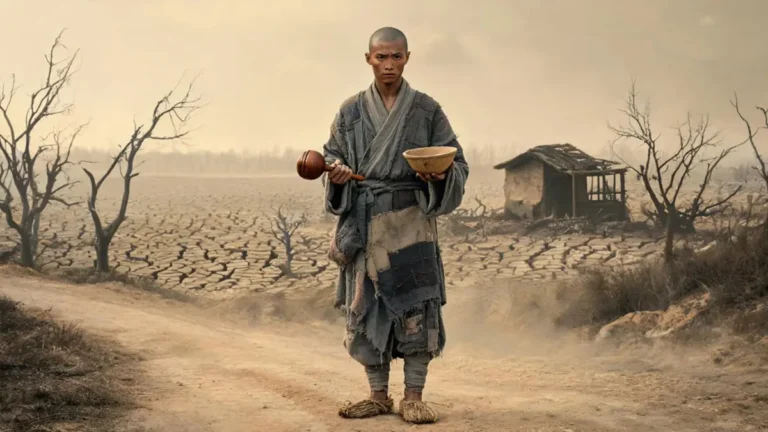
Orphaned and reduced to begging during a devastating famine, he lost his entire family in childhood. This trauma left him permanently locked in survival mode. When he finally sat on the Dragon Throne, facing highly educated scholar-officials and arrogant generals commanding massive armies, a crippling case of imposter syndrome took hold. He deeply distrusted the bureaucratic elite, convinced these scholars secretly looked down on him as an unlettered commoner. Nor could he trust his military nobles, fearing they might overthrow the Ming just as they had overthrown the Mongols.
This paranoia manifested in the infamous “literary inquisitions.” Zhu was hypersensitive to characters like “light” (guang), “bald” (tu), and “monk” (seng), interpreting them as mocking references to his past as a Buddhist novice. While some anecdotes were likely exaggerated by later historians, the underlying tension was real.
This was not just madness; it was a political defense mechanism. Much like Joseph Stalin purged the Old Bolsheviks to consolidate personal authority, Zhu sought to physically erase those who “knew him when he was nobody,” reshaping the bureaucracy into a machine entirely dependent on his will. For this peasant emperor, the purge was the only way to prove to himself that his power was real.
2. Redesigning Power: The Four Great Purges of Hongwu
If psychological trauma was the spark, then the “Four Great Cases of the Hongwu Era” were the blades Zhu used to carve up the old order. These were not random acts of violence, but highly calculated political projects:
| Case Name | Official Charge | Primary Target | True Political Objective | Estimated Death Toll |
|---|---|---|---|---|
| Hu Weiyong Case | Treason & Collusion | Civil Officials & the Chancellor | Abolish the chancellorship; centralize executive power | ~ 30,000 |
| Lan Yu Case | Treason | Military Aristocracy | Eliminate military threats; secure succession for the young heir | ~ 15,000 |
| Blank Seal Case | Financial Malfeasance | Local Administrators | Enforce fiscal discipline; strengthen central auditing | Hundreds to Thousands |
| Guo Huan Case | Embezzlement of Grain Tax | Ministry of Revenue & Local Officials | Combat economic crime; replenish the treasury and deter corruption | ~ 30,000 |
Note: Death tolls are heavily contested among scholars. Figures above synthesize data from the “History of Ming” and Wu Han’s “Biography of Zhu Yuanzhang,” serving as orders of magnitude.
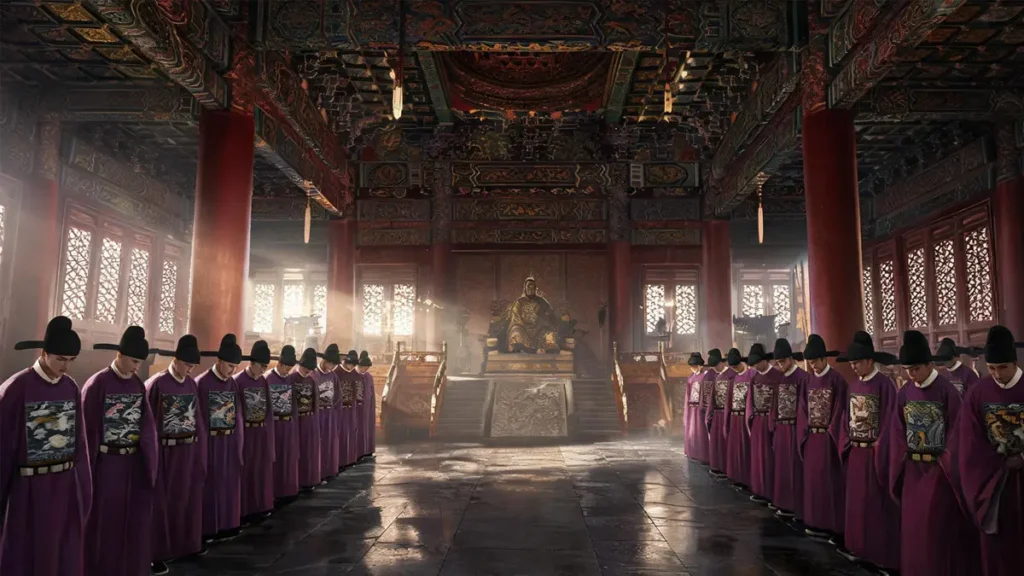
These campaigns served distinct, practical functions:
- The Hu and Lan cases were naked power grabs, solving the existential questions of “who governs” and “who fights.” By executing Hu Weiyong, Zhu abolished the 1,500-year-old office of prime minister, decreeing that his descendants must never revive it, bringing all ministries under his direct control.
- The Blank Seal and Guo Huan cases, though incredibly brutal, were administrative crackdowns—designed to scrape the poison of corruption and inefficiency off the bureaucratic bone.
Yet, when all four cases were swept into the logic of state terror, the rule of law vanished, replaced entirely by the emperor’s whim. By conflating anti-corruption with power consolidation, Zhu successfully centralized authority in the short term—but left the bureaucracy paralyzed by fear.
3. The Brocade Guards and “Performative Violence”
To institutionalize this reign of terror, Zhu created the Jinyiwei (The Brocade Guards)—a secret police force operating entirely outside the law.
Unlike ordinary constables, the Brocade Guards answered only to the emperor, holding absolute power to spy on, arrest, torture, and execute anyone they pleased. They were the emperor’s eyes and ears, and the Sword of Damocles hanging over every official’s head. This was a system that replaced institutional trust with personal fear.
A Global Comparison:
This was not a uniquely Chinese phenomenon. Across the globe, similar institutions—like Ivan the Terrible’s Oprichnina in Russia—emerged during the painful transition toward royal absolutism. When pre-modern states lacked a constitutional framework to centralize power, they almost always fell back on state terror.
On the execution block, “flaying and stuffing with straw” (剥皮揎草) became the ultimate symbol of Hongwu’s wrath.
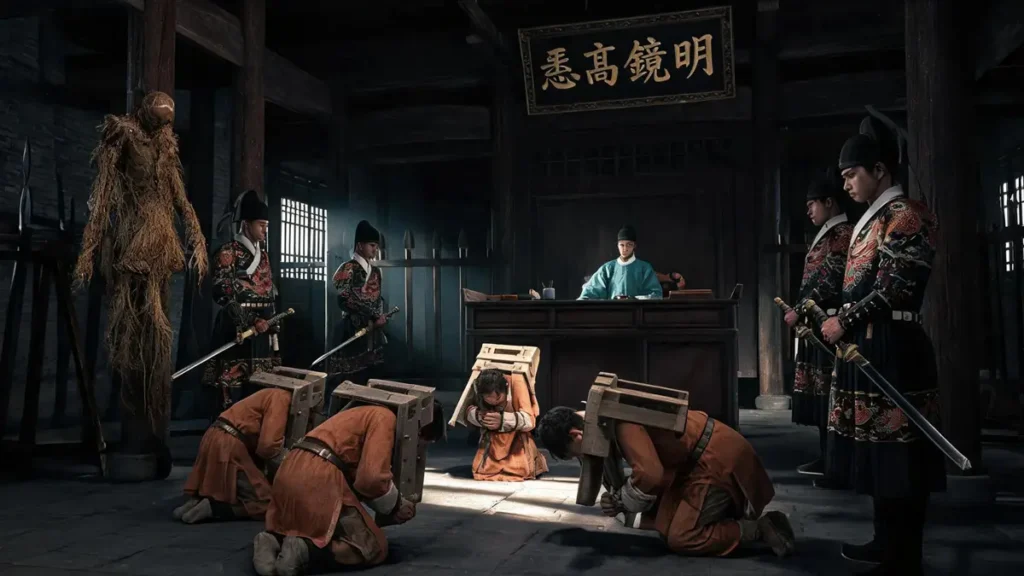
Corrupt officials were skinned alive, and their hides, stuffed with straw, were hung next to the desks of their successors as a grotesque warning. Whether or not this practice was embellished by later writers, the “performative violence” it represented was undeniable. Collective punishments like the “nine-familial extermination” (wiping out entire extended families for one person’s crime) created an inescapable social panic. This terror was not just about killing bodies; it was about breaking spirits, forcing an elite class that had once stood as equals with the emperor into absolute submission.
4. The Backfire Effect: How the Purges Ruined the Future
The tragic irony of the Hongwu Purges is that Zhu Yuanzhang won the present but lost the future.
By slaughtering almost every capable founding general, Zhu believed he was removing thorns from the path of his gentle grandson and successor, Zhu Yunwen. But when Zhu’s ambitious son, the Prince of Yan, launched the Jingnan Rebellion to steal the throne, the young emperor found his court completely devoid of military talent. Forced to rely on incompetent commanders, the young emperor lost the war—and his life. The “safe” officials Zhu had carefully preserved proved utterly useless in a real crisis. Excessive purging had destroyed the empire’s military resilience.
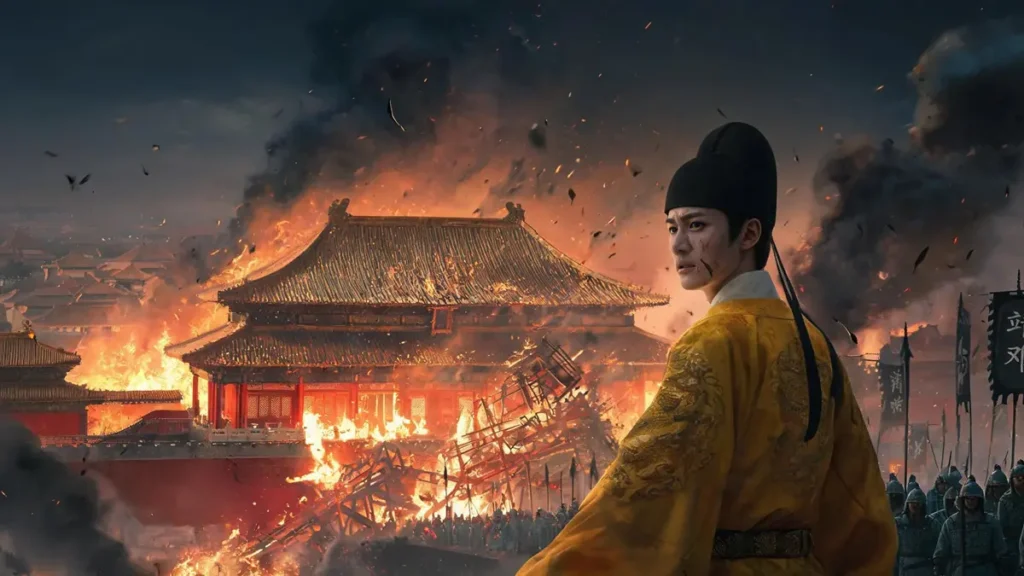
The institutional damage was even deeper. After abolishing the chancellorship, the emperor had to personally micro-manage an overwhelming mountain of paperwork. While Zhu possessed the superhuman stamina of a workaholic to pull this off, his descendants did not.
To fill this vacuum, the Grand Secretariat (内阁) and the court eunuchs gradually took over the day-to-day running of the empire. The absolute centralization Zhu designed to prevent usurpation by ministers instead birthed the notorious eunuch dictatorships of the mid-to-late Ming. This reveals the core dilemma of absolutism: the more power you concentrate at the top, the more fragile the system becomes, and the more it relies on the personal genius of the ruler. The moment a mediocre emperor takes the throne, the system collapses under its own weight.
5. A Global Historical Perspective: A “Necessary Evil”?
When placed in a global context, the Hongwu Purges lose their exotic “oriental” mystery and emerge as a brutal but common phase of early modern state-building.
- In England: Henry VIII executed Thomas More, Thomas Cromwell, and dozens of others to secure his succession and push through the Reformation.
- In France: Cardinal Richelieu systematically dismantled the power of the feudal nobility to pave the way for the absolute monarchy of Louis XIV.
- In the Ottoman Empire: Sultans legalized fratricide, allowing a new ruler to execute his brothers to prevent devastating civil wars.
These parallels suggest that during the transition from feudal fragmentation to centralized rule, violence is often the default tool used to forge a unified state.
Yet, there was a key difference. While Henry VIII used Parliament and legal theater to carry out his purges, Zhu Yuanzhang relied purely on personal will and extra-legal terror. This made Ming centralization happen much earlier and go much deeper, but it also made the system incredibly rigid.
As the historian Frederick W. Mote famously noted, early Ming despotism was an “inward-looking, defensive” system. It successfully restored order, but it failed to generate the dynamic social and economic energy that was beginning to transform Europe. Zhu’s purges successfully engineered a stable empire, but they locked China into a tragic institutional path.
Conclusion: Tyrant or Visionary?
Looking back at the blood-soaked decades of the Hongwu era, it is impossible to define Zhu Yuanzhang with a single label.
Was he a tyrant? Without a doubt. But he was also an ultimate pragmatist, a ruler willing to cover his hands in blood to buy stability for his dynasty.
His purges successfully eliminated the threat of military coups and built an empire that endured for 276 years. Yet, by crushing the political ecosystem, he stripped the empire of its ability to adapt and change. This is the tragic paradox of absolute control: you can use terror to buy absolute safety today, but you can never purchase adaptability for tomorrow.
Key References
- Veritable Records of Taizu (明太祖实录) & History of Ming: Treatise on Punishments (明史·刑法志) (Foundational historical facts and institutional records)
- Tan Qian’s Guoque (国榷) & Zhao Yi’s Nian’er Shi Zhaji (廿二史札记) (Corrections to official records and Qing-era historiographical critique)
- Wu Han’s Biography of Zhu Yuanzhang (朱元璋传) (Classic biographical study)
- Frederick W. Mote, Imperial China: 900–1800 (Global-historical positioning of early Ming absolutism)
- Ray Huang, 1587, a Year of No Significance (Analysis of Hongwu institutional rigidity and Ming political structure)
- Matteo Ricci’s Journals & Mendoza’s History of the Great and Mighty Kingdom of China _(External perspectives from early European observers)