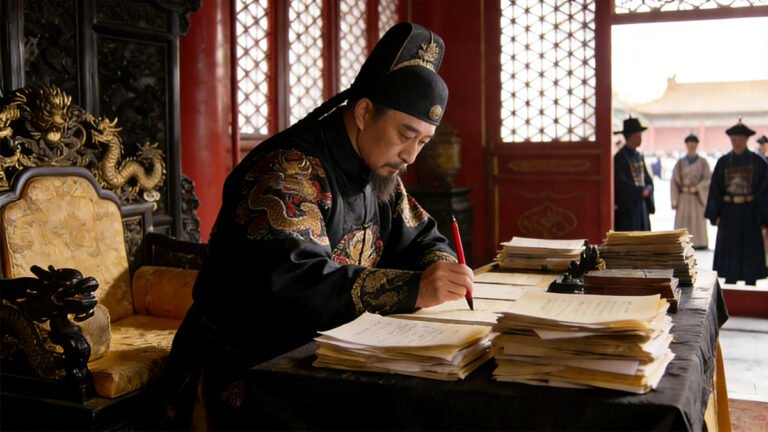
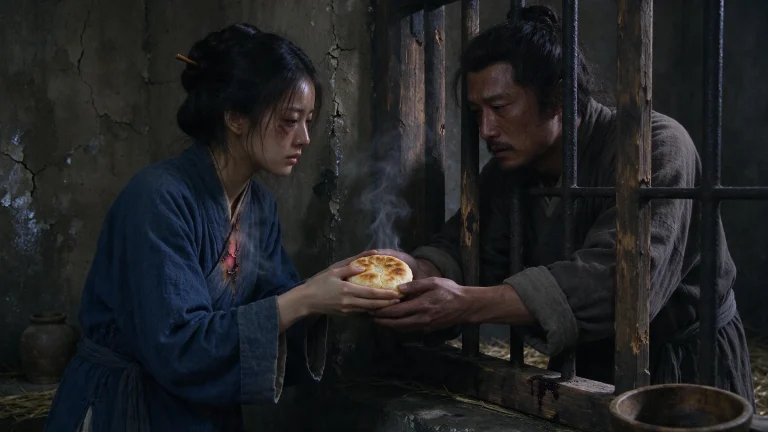
Was Zhu Yuanzhang Really a Buddhist Monk Before Becoming Emperor?
Yes, Zhu Yuanzhang, the founding emperor of the Ming Dynasty, was indeed a Buddhist monk in his early years. In 1344, after a devastating famine and plague killed his parents and brothers, the desperate teenager entered Huangjue Temple not out of religious devotion, but purely to survive. He spent several years there as a menial novice, followed by three years as a wandering beggar-monk. This brutal, ground-level experience profoundly shaped his character and later influenced how he ruled the Ming Empire. This article explores his journey from a starving novice to the most powerful man in China—and answers one key question: was his time as a monk about faith, or simply about staying alive?
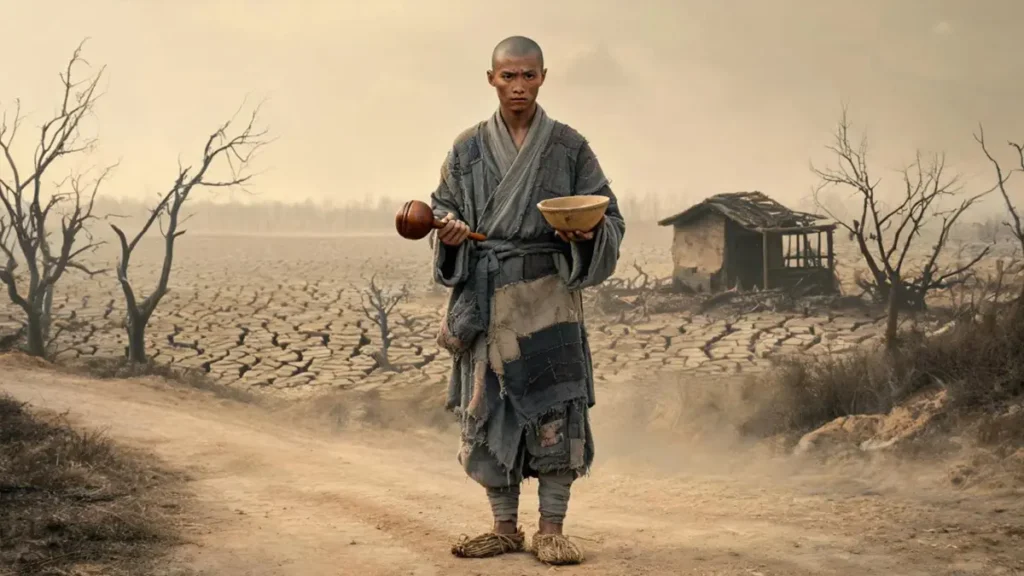
Imagine the Huai River Basin in 1344. A gaunt, ragged young man stumbles through a famine-ravaged landscape. Within the span of a few weeks, he has lost his father, his mother, and his eldest brother. His family is so destitute that they cannot even afford a proper burial plot. This young man will soon find refuge in a dilapidated local temple called Huangjue, where he will sweep floors, fetch water, ring bells, and eventually wander the countryside begging for scraps. No one at the time would have guessed that this beggar-monk would one day become the founder of the mighty Ming Dynasty. His name was Zhu Yuanzhang. He put on a monk’s robe not to seek enlightenment, but to get a bowl of watery gruel that would keep him alive.
Why Did Zhu Yuanzhang Become a Buddhist Monk? The Great Famine and Huangjue Temple
The answer is brutally simple: he did it to eat. This was not a story of religious awakening. It was a story of survival in its rawest form.
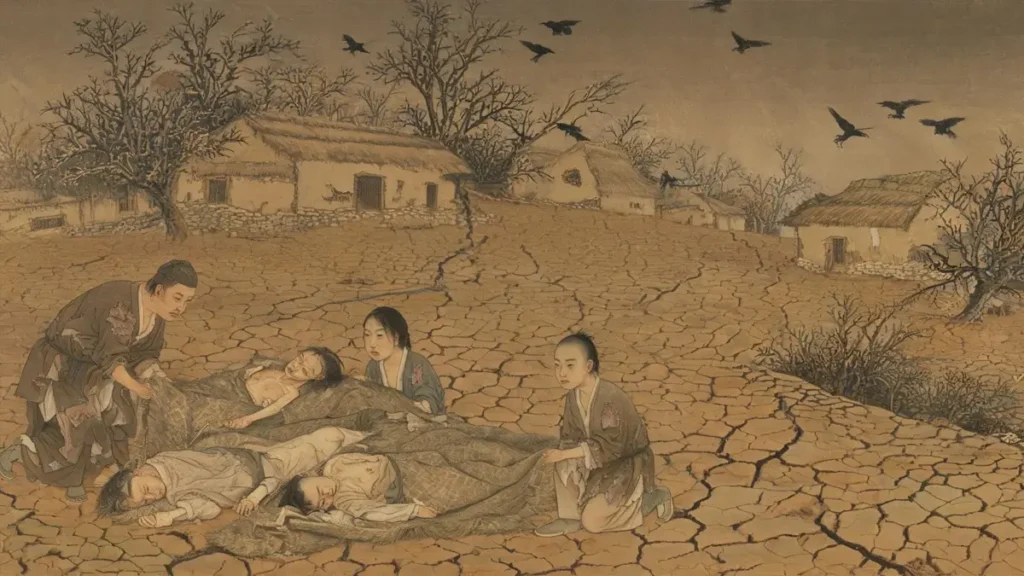
The final decades of the Mongol-led Yuan Dynasty were a living nightmare. According to the official History of Ming (Ming Shi), the year 1344 brought a perfect storm of disasters: drought, locust plagues, and a catastrophic epidemic. The Huai River region was hit especially hard. Zhu Yuanzhang’s family were landless tenant farmers with absolutely no buffer against such devastation. Within two weeks, his father, mother, and eldest brother all starved to death. For a sixteen-year-old boy, this was an annihilation of his entire world.
An elderly neighbor, taking pity on him, suggested a desperate last resort: enter Huangjue Temple and become a Buddhist monk. In 14th-century China, large temples functioned as powerful landlords and sanctuaries of last resort. Taking monastic vows did not necessarily signal a spiritual calling; for the destitute, it was essentially indentured servitude—exchanging manual labor for a guaranteed, if meager, meal. In his later autobiographical writings recorded in the Veritable Records of the Ming, Zhu recalled this period with phrases like "utterly alone with nothing to lean on" and "drifting like tumbleweed." For a Western parallel, picture an orphaned peasant in post-Black Death Europe, who lost everything to plague and war, seeking refuge in a monastery. His motivation wasn’t the call of God, but the gnawing pain of an empty stomach.
Zhu Yuanzhang’s Life as a Novice Monk: How Three Years of Begging Shaped Him
Getting into the temple was only the first hurdle. Life inside was its own grim test. This was nothing like the serene meditation one might imagine.
At Huangjue Temple, young Zhu Yuanzhang held the lowest possible rank: a novice monk, or more accurately, a monastic servant. His days were filled with the most menial tasks. He swept courtyards, offered incense, rang the ceremonial bell, cooked, chopped firewood, and washed clothes, working from dawn until well after dusk. Worse, he had to endure the constant scolding of senior monks and supervisors. This was his first brutal lesson in power dynamics—even a Buddhist temple had a strict, unforgiving hierarchy.
Then, things got even worse. The famine became so severe that even the temple could not feed its monks. The abbot had no choice but to send the younger novices out to "travel and seek alms." A more honest description is this: he was sent on a three-year begging expedition. For three long years, Zhu wandered like a homeless drifter through the towns and villages of the Huai region, exposed to wind and rain, knocking his wooden fish drum and pleading for handouts from door to door.
These three years became his most important university. He witnessed with his own eyes the corruption of Mongol officials, the cruelty of local authorities, and the hopeless suffering of ordinary people. He made contacts among villagers and memorized the landscape. A boy who had previously never even been to the county seat now knew every mountain pass, river crossing, and local power broker in the entire region. His cold, pragmatic, and deeply suspicious character was forged during this time. The Spanish author Juan González de Mendoza, in his 16th-century work The History of the Great and Mighty Kingdom of China, described the Chinese emperor as possessing an almost transcendent authority. But if Mendoza had known about the founder’s early life as a beggar-monk, he might have better understood the peasant-born vigilance that defined Ming imperial power.
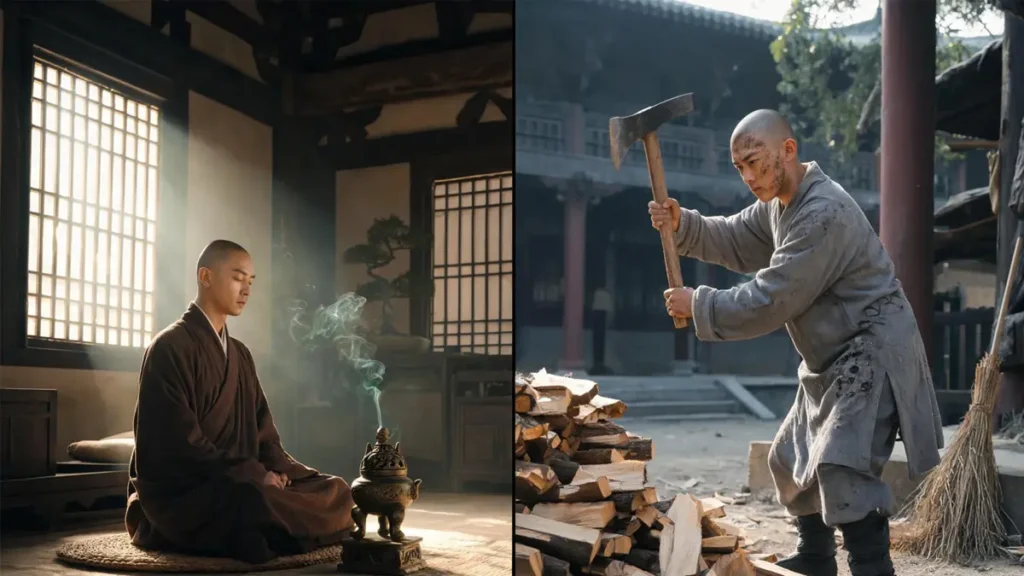
| Dimension | Zhu Yuanzhang’s Time at Huangjue Temple | Traditional Buddhist Monastic Life |
|---|---|---|
| Core Motivation | Pure survival imperative; avoiding starvation | Seeking spiritual enlightenment, liberation from suffering |
| Daily Activities | Menial labor, begging, observing society | Meditation, chanting sutras, studying scripture |
| Social Awareness | Deep understanding of peasant suffering and official corruption | Gradual withdrawal from secular concerns, inward focus |
| Character Forged | Pragmatism, resilience, ruthlessness, deep suspicion | Compassion, equanimity, detachment, a sense of transcendence |
| Ultimate Exit | Took off the robe and plunged into the chaos of rebellion | Continued monastic life, died within the temple community |
This comparison table illuminates a core truth: Zhu Yuanzhang’s monastic identity was completely twisted by the pressures of survival. His temple years were not a retreat from the world. They were a brutal, hands-on pre-degree in sociology. This helps explain the near-paranoid hostility he later directed toward his own scholar-officials. He knew exactly what those "respectable men" who had never done a day of hard labor thought of a peasant-born upstart like him.
From Monk to Rebel Soldier: The Turning Point in Zhu Yuanzhang’s Life
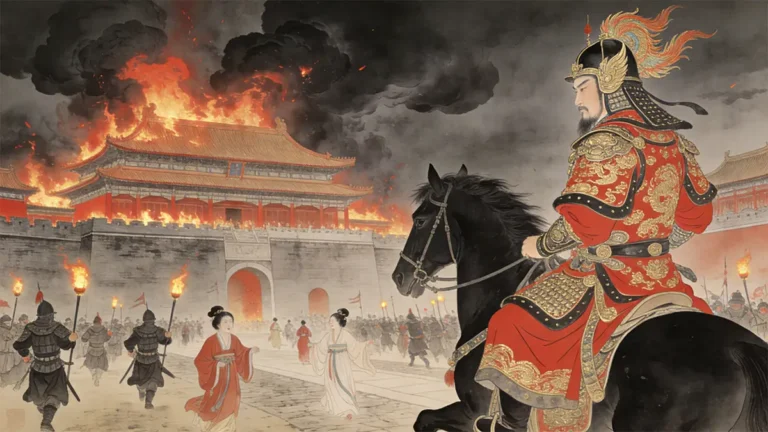
When Zhu Yuanzhang finally returned to Huangjue Temple in 1348, he found it burned to the ground by Mongol troops. What more could be taken from a man who had already lost even the right to be a beggar-monk?
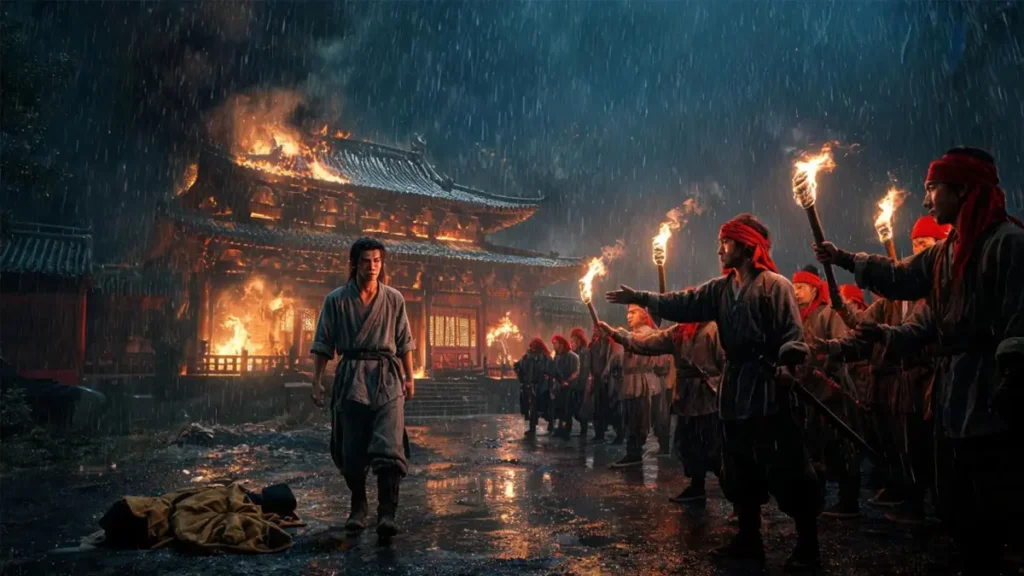
A pivotal turning point arrived quickly. A childhood friend named Tang He sent him a secret letter, inviting him to join a rebel force known as the Red Turban Army. This letter was essentially a death warrant—even association with rebels was punishable by the extermination of one’s entire family. As Zhu hesitated in fear, someone informed him that news of the letter had already leaked.
At this moment, he had only two choices: wait to be executed, or fight back. According to the History of Ming, he went to the ruined temple and cast a divination lot, asking the gods whether staying or leaving would be more ominous. Both outcomes came up as "disastrous." He later recalled in his autobiographical Imperial Tombstone Stele, "I asked about going, I asked about staying, and the gods gave me no sign." Finally, he made a cold, hard decision: "If I raise a banner in rebellion, I might just carve out a path to survival."
And so, the monk who had once chanted sutras and beaten a wooden fish drum was dead. In his place stood a rebel soldier named Zhu Yuanzhang. His modest literacy, rare among an army of peasants, allowed him to rise quickly. The geographical and social knowledge he had accumulated during his three years of wandering became a natural gift for leading troops. He joined the forces of a rebel leader named Guo Zixing and, through a combination of battlefield courage and shrewd intelligence, soon won favor and eventually inherited command of the army, launching his campaign for supreme power.
The Monk’s Shadow on the Emperor: How His Early Years Shaped Ming Rule
The influence of his early life is visible everywhere in his reign. The monk who had begged for mercy was gone, replaced by a ruler who was intensely pragmatic and often ruthless. For Zhu Yuanzhang, religion and politics alike were simply tools of survival.
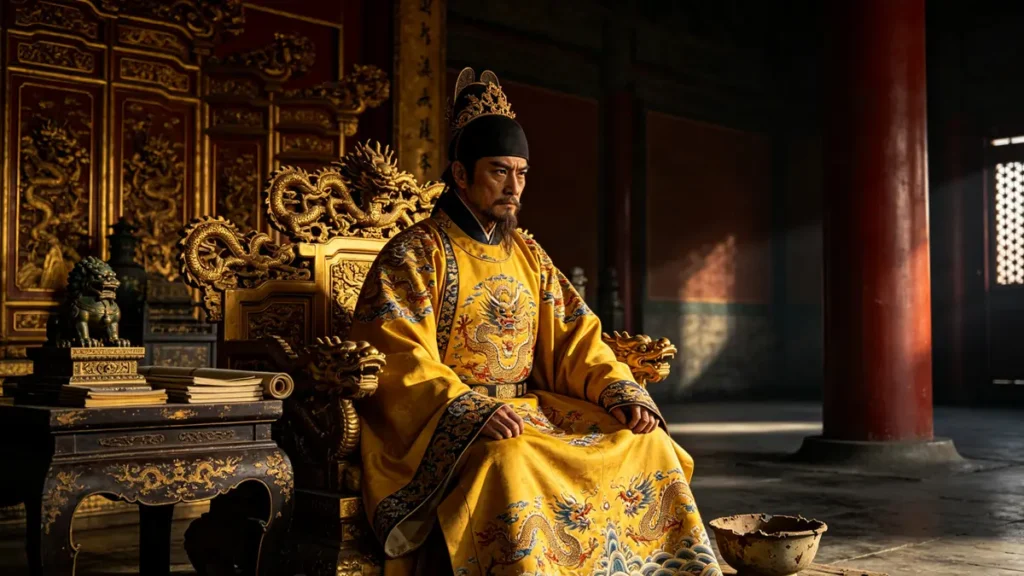
His punishment of corrupt officials was infamously severe, among the harshest in Chinese history. He personally devised a terrifying punishment known as "skinning corrupt officials and stuffing them with straw." The skin of the condemned would be flayed and stuffed like a scarecrow, then placed on display in the next official’s office hall as a stark warning to their successors. It sounds like something out of a horror story, but it was a grim reality in early Ming officialdom. Why such extremity? Because he never forgot the core reason his own family had died: greedy, exploitative officials who bled the people dry and left them to starve. He projected his hatred of Yuan Dynasty bureaucrats directly onto his own empire’s administration.
His religious policies were equally driven by realpolitik. On one hand, he patronized Buddhism, granting it official status and even creating a state bureaucracy for monks, effectively nationalizing the temple system. On the other hand, he strictly regulated monastic orders and forbade monks from having close contact with laypeople. He knew from personal experience exactly how much power a religious organization that attracted large followings could wield—he himself had emerged from that very system. The Italian Jesuit Matteo Ricci, in his Journals, observed a deep and instinctive distrust in Ming emperors towards any ideology or organization that could challenge their authority. In Zhu Yuanzhang’s case, this trait seems less like policy and more like an institutional form of PTSD.
So, this brings us back to the central question: would the Ming Dynasty have been the same if Zhu Yuanzhang hadn’t endured those hungry, desperate years as a monk?
Almost certainly not. Those years starved into existence not just an emperor’s stomach, but a tough, suspicious, and deeply personal worldview that would shape nearly three centuries of Chinese history. His monk’s robe was never a symbol of faith. It was the most tattered, and most important, armor in his entire epic of survival.
Primary References
- History of Ming (Ming Shi), "Annals of Emperor Taizu": Official dynastic records of Zhu Yuanzhang’s early life and the natural disasters of the era.
- Veritable Records of the Ming (Ming Taizu Shilu) : The court-compiled chronicles, containing Zhu’s own recollections of his origins.
- Zhu Yuanzhang’s Imperial Tombstone Stele (Huang Ling Bei) : A personally dictated and emotionally raw account of his family’s suffering and his rise to power.
- Juan González de Mendoza, The History of the Great and Mighty Kingdom of China: A 16th-century Spanish account providing a European perspective on the Ming Dynasty and its emperors.
- Matteo Ricci, The Journals of Matteo Ricci: Late-Ming missionary records that offer valuable insight into the nature of late Ming imperial rule and its bureaucratic system.