Lan Yu Rebellion Case: The 1393 Ming Purge Explained
In March 1393 the Hongwu Emperor recalled four senior commanders from the northern frontier. The emperor behind this decision was Zhu Yuanzhang, founder of the Ming Dynasty. Eight days later, on 22 March, Lan Yu, Duke of Liang, was executed for treason. The Lan Yu rebellion case also took the Marquis of Heqing, the Marquis of Puding, the Marquis of Jingchuan, the Count of Dongguan and the Minister of Personnel, Zhan Hui. In all, one duke, thirteen marquises, two counts and, by the emperor’s own figure, 15,000 people died.
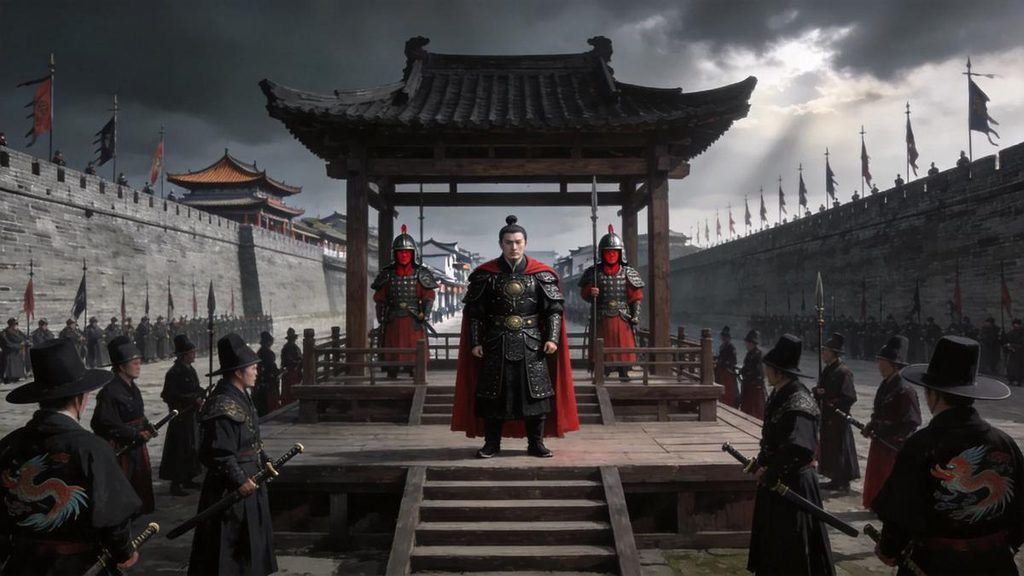
Four days after the executions, the Record of Treasonous Officials was published throughout the empire. The next day the emperor went out to plough the sacred field.
The indictment said Lan Yu had planned to strike while the emperor was performing that ceremony.
March 1388: the victory at Buir Lake
Five years earlier Lan Yu had marched north with 150,000 men. His target was Tögüs Temür, khan of the Northern Yuan and a grandson of the last Mongol emperor of China. At Baiyanjing, forty li (about twelve miles) short of Buir Lake, his scouts found no enemy, and he prepared to turn back. The Marquis of Dingyuan, Wang Bi, stopped him. They had taken more than a hundred thousand men into the steppe and had nothing to show for it. Going home empty-handed was not an option. Lan ordered the army to dig pits for its cooking fires so that no smoke would rise, then moved on the lake’s south shore by night. A windstorm blew sand through the air, and the Ming troops were inside the Mongol camp before anybody saw them.
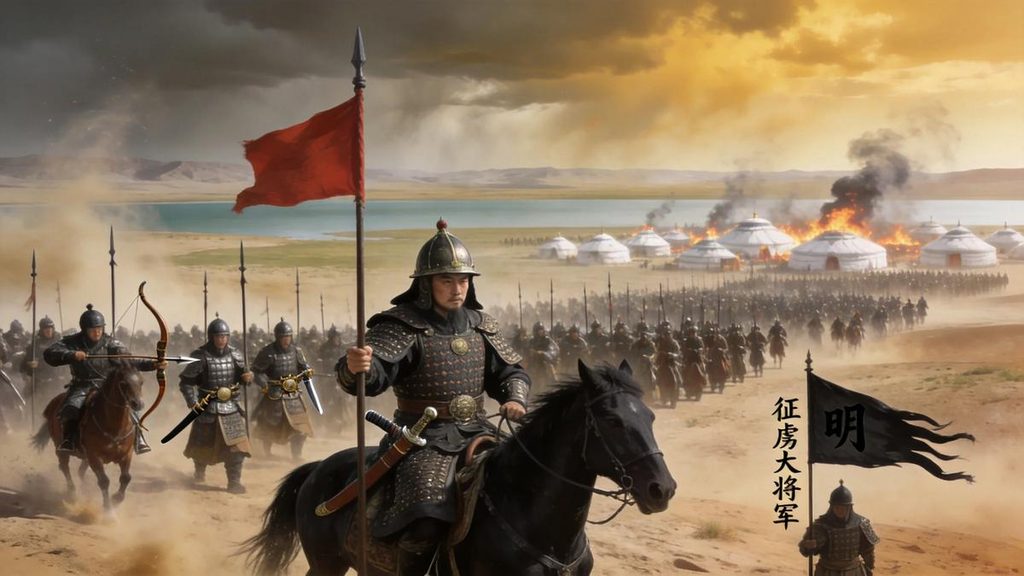
The History of the Ming records the haul. The khan and his heir escaped with a few dozen horsemen. His second son, his consorts and his daughters were taken, along with 77,000 men and women and more than 150,000 horses, camels, cattle and sheep. The emperor praised Lan Yu in an edict and compared him to Wei Qing of the Han and Li Jing of the Tang. On his return he was made Duke of Liang. Buir Lake sits today on the border between China and Mongolia.
Lan Yu came from Dingyuan, in Anhui. His elder sister had married Chang Yuchun, one of the two great generals of the founding wars, and Lan started his career in Chang’s camp. The crown prince, Zhu Biao, took Chang Yuchun’s daughter as his first wife. After Yunnan was conquered in 1381, Lan’s own daughter was married to the emperor’s eleventh son, the Prince of Shu. Few commanders of the founding generation stood closer to the imperial family.
The emperor changed one character in his title and carved his faults into an iron warrant
The History of the Ming describes Lan Yu as a tall, red-faced man with courage and strategic sense. Xu Da and Chang Yuchun were dead, and the court sent him whenever it needed a large army in the field. His temper grew with his position. He kept a household of estate slaves and adopted sons. He took farmland at Dongchang, and when a censor came to look into it, he drove the censor away. Coming back from a campaign, he reached Xifeng Pass at night, and when the gate did not open quickly enough, his troops broke it down.
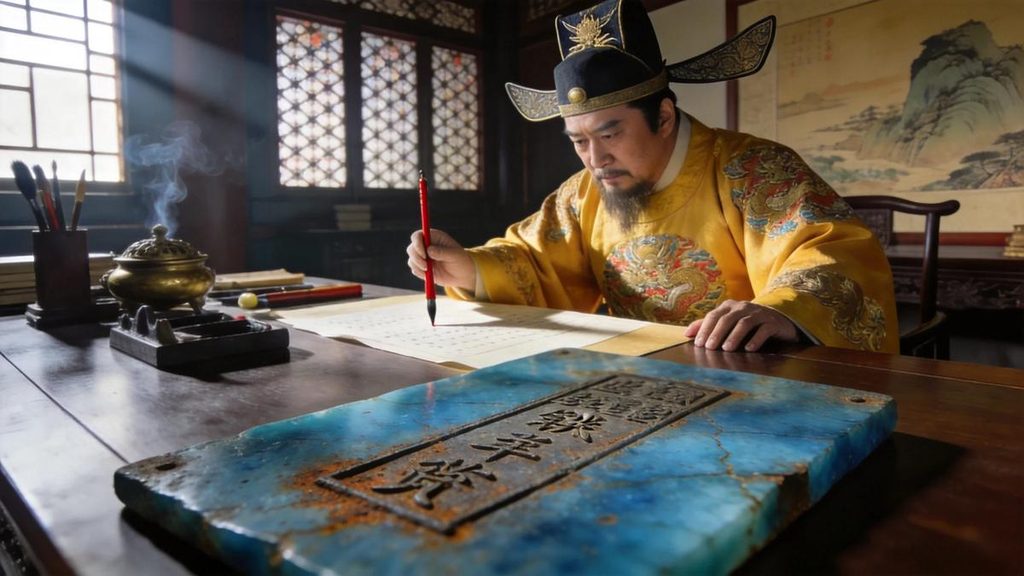
The emperor had first meant to make him Duke of Liang with a different character, and changed that character because of the offences. He also had the record of his faults carved into his iron warrant, the document that certified a nobleman’s rank and privileges.
A later campaign brought him the honorary post of grand tutor to the heir apparent. He was not pleased, and said he was surely fit to be grand preceptor instead. The men ranked above him were the Duke of Song and the Duke of Ying, and after that more of his memorials came back rejected.
1392: the crown prince dies
In 1391 the emperor sent his heir, Zhu Biao, to survey Shaanxi and plan a new capital there. Zhu Biao came home, fell ill and died the following spring. In the ninth month of 1392, the emperor named Zhu Biao’s son Zhu Yunwen as his heir.
The family ties matter here. Zhu Biao’s first wife, Lady Chang, had borne him Zhu Xiongying and Zhu Yuntong. His second wife, Lady Lü, had borne Zhu Yunwen. Lady Chang was Chang Yuchun’s daughter, which made her Lan’s niece. The boy who was now heir had no such tie to Lan Yu.
In the eleventh month of 1392, Lan captured the rebel Yuelu Timur and his son at Jianchang, and was called back to the capital.
What survives of the alleged plot is the interrogation record and the Record of Treasonous Officials compiled from it. The compilers of the History of the Ming, working centuries later, knew the old proverb that the bow is put away once the birds are gone, and rejected it. What the purge did is not in doubt. It removed the only group of Ming officers who had commanded large armies, and their posts in the heir’s household had been honorary.
The Lan Yu rebellion case: one duke, thirteen marquises, and 15,000 people
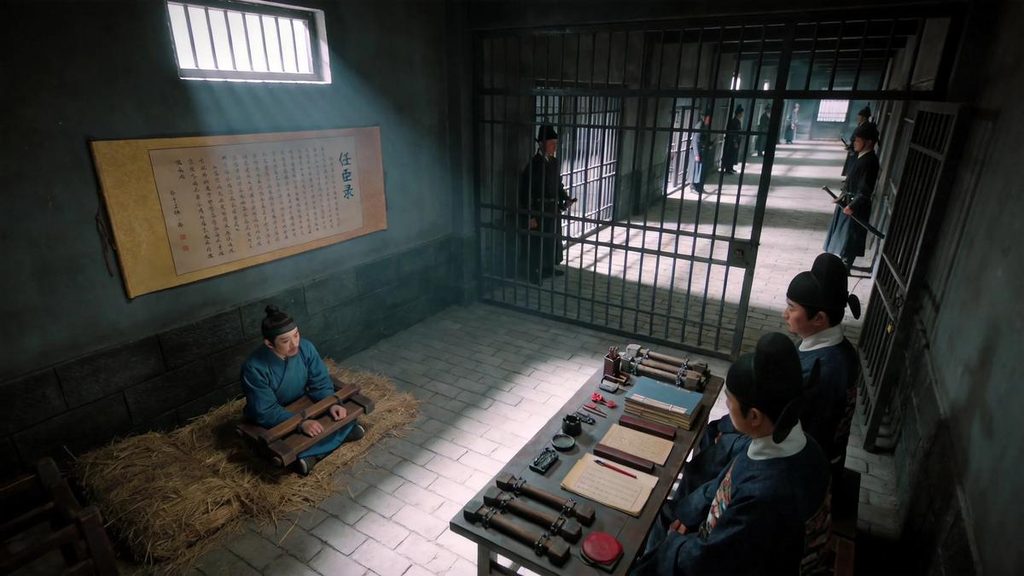
The killing did not stop in the third month. Zhang Wen, Marquis of Huining, was executed that year as a member of the Lan faction. In the ninth month, the emperor issued an edict announcing that the rebel’s plot had been uncovered and 15,000 people put to death, and declaring that the Hu and Lan factions would no longer be pursued. The Record of Treasonous Officials named one duke, thirteen marquises and two counts. Thirteen years earlier, the Hu Weiyong case had cost more than 30,000 lives.
The famous names were the noble ones. Most of the 15,000 were junior officers and ordinary soldiers. The History of the Ming puts six short biographies after Lan Yu’s own. Cao Zhen, one of the six, had built post roads in Sichuan and cut a channel for grain barges; he was named as the head of the conspiracy and executed with his son. The chapter ends with a sentence about the empire’s men of courage and martial skill being mown down until few were left.
The case reached further than the capital’s garrison. Naghachu, who had surrendered at Jinshan in 1387, was a descendant of Muqali, Genghis Khan’s chief general in northern China. He had brought more than 200,000 of his people over to the Ming. He died on the road to Yunnan with Fu Youde’s army, and in 1393 his son Chaghan, now Marquis of Shenyang, was executed with the Lan faction.
Over the next two and a half years the list kept moving. Fu Youde was executed in the eleventh month of 1394, Wang Bi in the twelfth, and Feng Sheng in the second month of 1395. Chang Sheng, Duke of Kai, died in those same years, and how he died is a question the sources leave open. The History of the Ming says plainly that the Veritable Records do not record his death. Then it offers two versions. One is that he fell in battle at Puzikou at the end of the Jianwen reign. The other is that a man accused him of massing troops at Sanshan under the Hongwu Emperor, and he was executed with the Lan faction.
One month later, the frontier army was ordered to obey the emperor’s sons
In the third month of 1393, a month after Lan Yu’s death, the emperor ordered Feng Sheng and Fu Youde to hold the frontier in Shanxi and Beiping. The same order placed every officer in their guards under the command of the Prince of Jin and the Prince of Yan. Four days later a second decree said that for those two princes, only major military matters had to be reported to the throne.
Since 1380, military authority in the Ming had been divided. The old Chief Military Commission had been broken into five, which kept the registers and ran the training; the Ministry of War issued marching orders; and a general was appointed case by case to lead an army in the field. Lan Yu was the most successful of those temporary commanders. In the month he died, the officers of the frontier army were handed to princes of the imperial blood.
In the fifth month of 1398, a month before the Hongwu Emperor died, the commanders Yang Wen and Guo Ying were sent to garrison Kaiping, and the order again said that both were to obey the Prince of Yan.
Zhu Yunwen, who took the throne that year, tried once to take the armies back. In the second month of 1399 he proclaimed his father and Lady Chang emperor and empress after death, and ordered that the princes were no longer to command civil and military officials. In the seventh month, the Prince of Yan, Zhu Di, rose in rebellion.
The court’s answer was Geng Bingwen, Marquis of Changxing. By the end of the Hongwu reign, only two of the founding dukes and marquises were still alive, Geng Bingwen and Guo Ying, and Geng was sixty-five. In the eighth month of 1399 he reached Zhending with a paper strength of 300,000 men and 130,000 in fact, was beaten north of the Hutuo River, and was replaced that same month by Li Jinglong. In 1403, the first year of the Yongle reign, the Minister of Justice and a chief censor accused him of keeping household vessels decorated with dragons and phoenixes. Geng Bingwen killed himself.
The official record of the last Hongwu years is thin. The Veritable Records of the Ming Taizu were compiled once under the Jianwen Emperor and revised twice after Zhu Di took the throne. Chang Sheng’s death is not recorded there. The verdict, the lists and the edicts of the Lan Yu case all survive.
Questions readers ask
Sources and further reading
- History of the Ming (明史), juan 132, biographies of Lan Yu and the six marquises executed with him. https://zh.wikisource.org/zh-hans/明史/卷132
- History of the Ming, juan 3, basic annals of Taizu, for the month-by-month record of 1392 to 1398. https://zh.wikisource.org/zh-hans/明史/卷3
- History of the Ming, juan 2, for the abolition of the Chief Military Commission in 1380. https://zh.wikisource.org/zh-hans/明史/卷2
- History of the Ming, juan 4, annals of the Jianwen Emperor. https://zh.wikisource.org/zh-hans/明史/卷4
- History of the Ming, juan 118, on the sons of Zhu Biao and the two consorts, Lady Chang and Lady Lü. https://zh.wikisource.org/zh-hans/明史/卷118
- History of the Ming, juan 125, biographies of Xu Da and Chang Yuchun, including the disputed death of Chang Sheng. https://zh.wikisource.org/zh-hans/明史/卷125
- History of the Ming, juan 129, biographies of Feng Sheng and Fu Youde, including Naghachu and his son Chaghan. https://zh.wikisource.org/zh-hans/明史/卷129
- History of the Ming, juan 130, biographies of Geng Bingwen and Guo Ying. https://zh.wikisource.org/zh-hans/明史/卷130
- History of the Ming, juan 308, biography of Hu Weiyong, for the 30,000 deaths in that case. https://zh.wikisource.org/zh-hans/明史/卷308
- Zhao Yi, Notes on the Twenty-Two Histories (廿二史札记), on Zhu Biao’s marriage to Chang Yuchun’s daughter.
- Wikipedia, "Lan Yu (general)". https://en.wikipedia.org/wiki/Lan_Yu_(general)
- Wikipedia, "Naghachu". https://en.wikipedia.org/wiki/Naghachu
- Wikipedia, "Muqali". https://en.wikipedia.org/wiki/Muqali
- Wikipedia, "Buir Lake". https://en.wikipedia.org/wiki/Buir_Lake
- Wikipedia, "Geng Bingwen". https://en.wikipedia.org/wiki/Geng_Bingwen