Hu Weiyong Case Explained: Causes, Key Figures, and Historical Impact
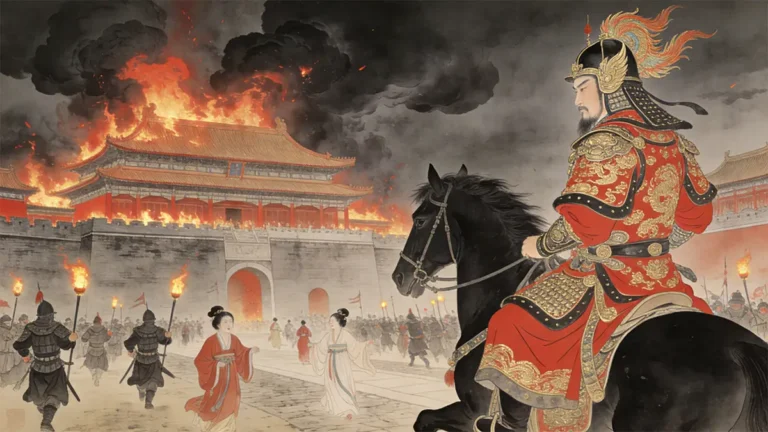
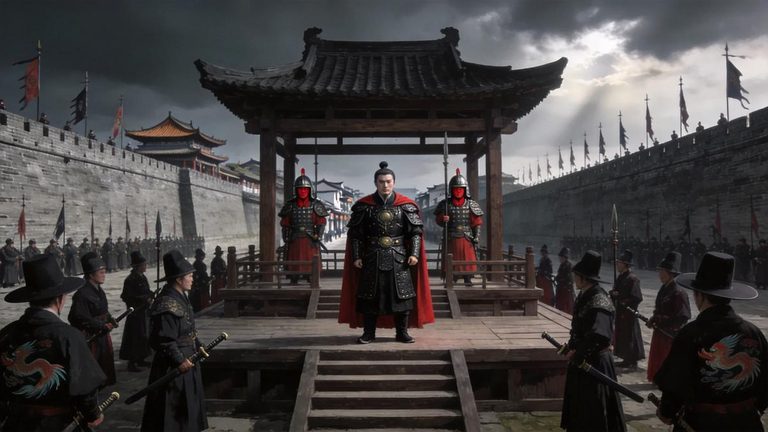
In the first month of 1380, Tu Jie, a vice censor-in-chief, sent up a memorial accusing the sitting left grand chancellor, Hu Weiyong, of plotting rebellion. The Hu Weiyong case, Ming dynasty officials would find, swallowed far more than the grand chancellor. The accusation went to a joint tribunal of court officials, and the verdict was quick. Hu Weiyong, the censor-in-chief Chen Ning, and Tu Jie himself, the man who had laid the charge, were executed together.
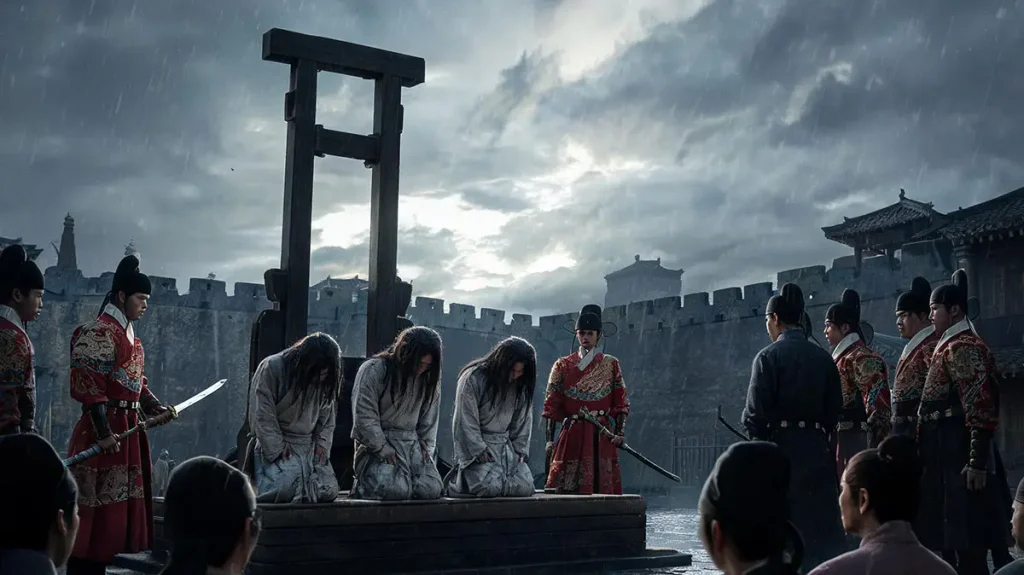
The History of the Ming records the reckoning the tribunal made for Tu Jie: he had been part of the conspiracy, and he turned informer only when he saw the plot would fail. He could not be spared.
Five days later, Zhu Yuanzhang, the founding emperor of the Ming dynasty, sacrificed to heaven and earth at the southern suburb of Nanjing and then ordered the Central Secretariat abolished and the office of grand chancellor done away with. He re-ranked the Six Ministries, the empire’s central administrative departments, and split the Chief Military Commission into five commissions for the center, left, right, front and rear. From that point the Six Ministries reported directly to the emperor with no institution standing in between. Neither the Ming nor the Qing, which took power in 1644, ever restored the grand chancellorship.
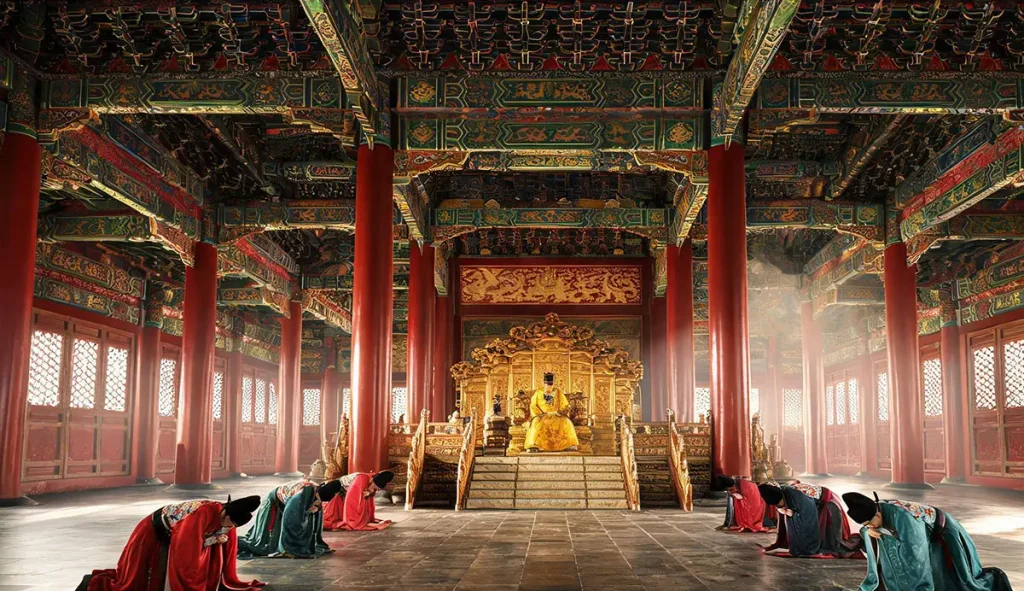
The compilers of the History of the Ming later counted the men who had held the post. Only three men had actually sat in the Central Secretariat and run its business as grand chancellor. They were Li Shanchang, Wang Guangyang, and Hu Weiyong, who had just been killed.
The Central Secretariat in 1373
In the seventh month of 1373, the sixth year of the Hongwu reign, Hu Weiyong was appointed right grand chancellor. He was from Dingyuan, in the Huai River valley, and had joined Zhu Yuanzhang’s army at Hezhou while the future emperor was still one rebel commander among several. He began as a clerk who carried documents at a marshal’s headquarters and worked his way up to assistant administrator of the Central Secretariat The man he had thrown in with had started lower still: an orphaned peasant who buried his parents in a neighbour’s field before fighting his way from beggar-monk to the Dragon Throne. The dynasty was five years old that year.
The Ming had been founded in 1368, after Zhu Yuanzhang drove the Mongol Yuan dynasty out of China, and its government was staffed by officials chosen through the imperial examination system, the competitive written tests in the Confucian classics that opened careers in the bureaucracy. Nothing about the year felt settled. Mongol forces remained in the north, Japanese pirates known as wokou raided the coast, and the loudest voices at court belonged to men from the Huai region who had followed Zhu from the beginning.
He took office after the right grand chancellor Wang Guangyang was demoted and sent to Guangdong. Zhu Yuanzhang could not settle on a replacement and left the position vacant, letting Hu Weiyong handle the business of the secretariat alone. The History of the Ming is terse about this stretch: the emperor found the right man difficult to find and did not fill the chancellorship for a long time, and Hu Weiyong monopolized the affairs of the secretariat.
The grand chancellor commanded the hundred officials and conducted daily government in the emperor’s place. He reviewed memorials, appointed and dismissed officials, and moved money and grain. The Ming had taken this machinery straight from the Yuan, titles included: the Central Secretariat, the senior administrators, the left and right assistants, the assistant administrators. The names alone do not tell a reader who answered to whom.
"Prime minister" was never an official title. The Han called the post chancellor, the Tang called it jointly managing the affairs of the Chancellery and the Secretariat, and the Song shortened that to jointly managing affairs. Emperors were never easy with the office, and the usual remedy was to break it apart. After the Han, the chancellor’s duties were handed out piece by piece to other men. Tang emperors often had several chancellors at the same time. The Song took military authority away to the Bureau of Military Affairs and fiscal authority to the State Finance Commission.
In 1376 Ye Boju, a local instructor in Shanxi, submitted a memorial criticizing the enfeoffment of imperial princes and the severity of punishments. Zhu Yuanzhang was furious and said he would shoot the man himself with a bow. When Ye Boju was brought to Nanjing, the grand chancellor reported his case at a moment when the emperor was in good spirits, and he escaped the arrow. He died later in the prison of the Ministry of Justice. The grand chancellor at the time was Hu Weiyong. Ye Boju’s warning about enfeoffed princes came true more than twenty years later, when the Prince of Yan, Zhu Di, fought his way to the throne. Ye Boju did not live to see it.
Hu Weiyong was not a modest man. He handled business carefully and knew how to please the emperor by appearing deferential. The History of the Ming says he matched the emperor’s wishes through studied compliance. His gate grew busy. Local officials hoping for promotion and generals who had lost favor came with gold and silk, famous horses and rare objects, in numbers too large to count. Among the documents sent up by the other offices he withheld anything that worked against him. The History of the Ming compressed his manner into one line: in matters of life and death, dismissal and promotion, he sometimes acted without reporting to the throne.
Not everyone accepted him. The general Xu Da disliked what he did and found an occasion to tell the emperor. Hu Weiyong tried to solve the problem at its root by buying Xu Da’s gatekeeper, Fu Shou. Fu Shou reported it.
Zhu Yuanzhang once asked Liu Ji who could serve as grand chancellor. Liu Ji judged Yang Xian to have the talent for the office but not the temperament for it. He called Wang Guangyang shallow and narrow, worse than Yang Xian. Of Hu Weiyong he said that putting him to the reins would risk breaking the carriage shaft. Zhu Yuanzhang told Liu Ji that no one suited the chancellorship better than Liu Ji himself. Liu Ji declined, saying he was too hard on evil men and too impatient with detail. All three men later fell.
Hu Weiyong’s son was riding in the street and fell from his carriage to his death. In his anger, Hu Weiyong had the driver killed. Zhu Yuanzhang was outraged and ordered him to pay with his own life. Hu Weiyong asked instead to compensate the dead man’s family with gold and silk. The emperor refused. The History of the Ming treats this as the point where he turned toward planning rebellion.
Champa sends an embassy, and Hu Weiyong says nothing
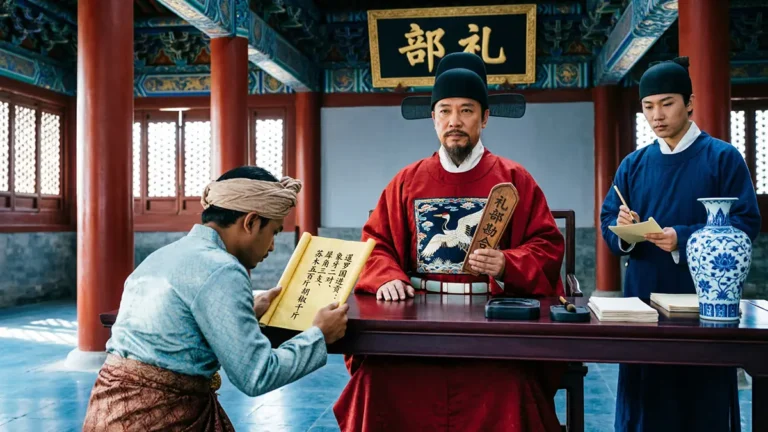
In the ninth month of 1379, the twelfth year of the reign, the kingdom of Champa, in what is now central and southern Vietnam, sent envoys to present tribute. Hu Weiyong did not report it. A eunuch leaving the palace saw the envoys and told the emperor when he came back. Zhu Yuanzhang was enraged and rebuked the officials of the Central Secretariat. Hu Weiyong and Wang Guangyang kowtowed in apology and blamed the Ministry of Rites, which blamed the Secretariat in turn. The emperor grew angrier, threw everyone involved into prison, and demanded to know who had been in charge.
At the end of that year Wang Guangyang was demoted and sent toward Guangnan. A decree caught up with his boat at Taiping and ordered him to die. Earlier Tu Jie had said that Liu Ji was poisoned by a physician sent by Hu Weiyong, and that Wang Guangyang must have known. The emperor put the question to him, and Wang Guangyang answered that nothing of the kind had happened. Zhu Yuanzhang accused him of shielding colleagues and deceiving the throne, then brought up older accounts: that he had protected Zhu Wenzheng in Jiangxi, and that he had failed to expose Yang Xian when he served in the secretariat.
After his death a concubine followed him. Zhu Yuanzhang asked where the woman had come from and learned she was the daughter of a magistrate whose household had been confiscated into state service. He was furious. Women of confiscated households were meant to go to families of merit, and a civil official’s home was not that. The judicial offices were ordered to investigate, and the senior officials of both the Central Secretariat and the Six Ministries were drawn in.
Chen Ning, the censor-in-chief executed with Hu Weiyong in the first month, had come up by another road. Collecting taxes in Suzhou he used heated irons on people’s skin, and his office called him Chen the Branding Iron. His son Menglin urged him to restrain himself, and he beat the young man several hundred strokes until he died. Zhu Yuanzhang heard of it and asked what kind of man would treat his own son that way, and what he would then do to a ruler. Chen Ning took fright and began to plot with Hu Weiyong.
In the first month of the next year, Tu Jie sent up the memorial accusing Hu Weiyong of rebellion. Shang Gao, a vice censor-in-chief who had earlier been demoted to clerk in the Central Secretariat, accused him as well. The History of the Ming does not say why Shang Gao was demoted. It notes only that he had at the time been reduced to a clerk in the Secretariat. The case went to a tribunal of court officials, and it reached Chen Ning and Tu Jie himself.
Tu Jie appears in two different forms in the sources. The Veritable Records of Taizu present him as the informer, reporting the plot several days before it broke. The History of the Ming has him inside the conspiracy first, turning informer only when he saw it would fail. Which version is closer to what happened, the surviving materials do not settle.
Palace treason cases breed legends, and the most widely told is the story of Yun Qi. Hu Weiyong, the story goes, claimed that a well at his old residence had begun to produce a sweet spring, a sign of heavenly favor, and invited the emperor to see it. At the West Flower Gate a eunuch named Yun Qi seized the emperor’s reins, unable to speak, and pointed toward Hu’s house. The emperor climbed the wall, saw soldiers hidden inside the compound, and closed the trap. The legend had something to work with. The History of the Ming records that a stone shoot suddenly grew in the well of Hu Weiyong’s old house at Dingyuan and that the water rose several feet. His followers competed to call it an auspicious sign. Firelight, they said, was seen at night over the family graves. As for Yun Qi himself, Qian Qianyi examined the sources in the late Ming and found nothing in either the official or the unofficial histories. Since the Veritable Records place Tu Jie’s disclosure days before, an emperor as suspicious as Zhu Yuanzhang is hard to picture riding out to admire a spring. Scholars today generally treat the episode as a later invention.
The Hu Weiyong case, Ming dynasty records, and ten years of added charges
Whether Hu Weiyong meant to rebel is a separate question from whether he was convicted. The Hu Weiyong case, Ming dynasty records show, is a timeline: charges added year by year after the accused man was dead. The History of the Ming itself records that his treason had still not fully come to light when he was executed. In 1385 Li Cunyi was accused, was spared death, and was settled at Chongming. In the tenth month of 1386 the Lin Xian case was concluded, and the charge of collusion with Japan began to be established. In 1388, on a campaign into the northern desert, the general Lan Yu captured Feng Ji, and by the fifth month of 1390 the interrogation produced more: the design against the throne became much more clearly known.
Among the charges added along the way was one concerning a man who was already gone. Tu Jie’s accusation had folded the poisoning of Liu Ji into the list of Hu Weiyong’s crimes. The medicine Liu Ji took in his last illness had been brought to his door by Hu Weiyong together with a physician. The History of the Ming is vague about the result: something like a stone formed in his belly.
What made the case large was Li Shanchang. In 1385 someone accused his younger brother Li Cunyi and Li Cunyi’s son of belonging to Hu Weiyong’s party. Zhu Yuanzhang spared them death and settled them at Chongming. Li Shanchang did not send a memorial of thanks, and the emperor noted the omission. Five years later Li Shanchang was seventy-seven and no longer able to control the men around him. He wanted to build a house and asked the Duke of Xin, Tang He, for three hundred garrison soldiers. Tang He reported the request quietly. In the fourth month a resident of the capital was sentenced to exile, and Li Shanchang interceded several times for a relative of his named Ding Bin. Zhu Yuanzhang was provoked, interrogated Ding Bin, and Ding Bin, who had once served in Hu Weiyong’s household, testified about Li Cunyi’s dealings with Hu Weiyong years earlier.
The testimony contained a conversation. Hu Weiyong had asked Li Cunyi to sound out Li Shanchang, who was shocked and angry and shouted a warning: an inquiry would destroy nine branches of the clan. Hu Weiyong sent an old friend of Li Shanchang’s, Yang Wenyu, with an offer of a princely title over the Huai region if the plot succeeded. Li Shanchang was startled and refused, but he was moved. Hu Weiyong came to his door and was refused again. After a long delay Hu Weiyong sent Li Cunyi once more, and Li Shanchang sighed: I am old. When I am dead, do as you please.
Others stepped forward. Li Shanchang’s household slave Lu Zhongqian accused him of exchanging gifts and private words with Hu Weiyong. A slave of Lu Zhongheng named Feng Tiemu accused his master, along with Tang Shengzong, Fei Ju and Zhao Yong, of joining Hu Weiyong’s design. It happened that an ominous change appeared in the heavens, and the omen was read as bearing on a great minister. Li Shanchang was killed together with his wife, daughters and younger brothers, more than seventy members of the household in all.
Officials of the day would not accept the charge either. The year after Li Shanchang’s death, Wang Guoyong, a bureau director in the Ministry of Works, submitted a memorial on his behalf, drafted by Xie Jin. The argument was blunt. Li Shanchang already stood at the top of the official world; even had he helped Hu Weiyong succeed, he could have gained no more than he already had, so why take the risk? The memorial added that if ministers were to be killed to satisfy an omen in the heavens, that was worse still. Zhu Yuanzhang read it and imposed no penalty.
The case reached out in other directions. Song Lian had taught the crown prince for more than ten years. In 1380, because his eldest grandson Song Shen was listed in Hu Weiyong’s party, he came close to execution. The empress and the crown prince pleaded for him, and the sentence was changed to resettlement at Maozhou. He died at Kuizhou on the way, at seventy-two.
The historian Wu Han went through the charges one by one in his Study of the Hu Weiyong Treason Case and argued that they accumulated over time. A further problem lies in the official history itself. The Veritable Records of Taizu was first compiled under the Jianwen Emperor, revised twice under the Yongle Emperor, and what survives is the third version, completed in 1418 in 257 chapters. Qian Qianyi’s Examination of the Veritable Records of Taizu was a check on those revisions.
The 17,000-character memorial
Zhu Yuanzhang’s quarrel with paperwork did not begin in the year he abolished the chancellorship. In 1376 Ru Taisu, a secretary in the Ministry of Justice, submitted a memorial on five matters. It ran to nearly seventeen thousand characters. Zhu Yuanzhang had it read aloud where he sat. By 6,370 characters it was still general argument, with not one concrete item, and he lost his temper and had Ru Taisu beaten. That evening he ordered the reading to continue. Past sixteen thousand characters the five matters appeared, some five hundred characters in all, four of them workable. The next morning he sent those four out to be carried out, and he wrote a preface admitting the fault: he had wearied of elaborate writing and turned on a loyal subject, and that was his mistake. In the same preface he set a rule. Memorials were to state facts and nothing else, and anything beyond the prescribed format would be prosecuted.
A few years later the path the documents took was changed. In the sixth month of 1377 an edict allowed officials and commoners to seal their submissions and send them straight to the throne. In the seventh month a new office appeared, the Office of Transmission, with the duty of receiving documents from inside and outside the court and handling their forwarding, sealing and return. Until then such papers had gone first through the Central Secretariat. In the third month of 1378 an order followed: memorials no longer had to be reported to the Secretariat. By the first month of 1380, when the Secretariat was abolished, the entrance for paperwork had bypassed the grand chancellor for two and a half years.
1,660 memorials in eight days
With the chancellorship gone, everything arrived on the emperor’s desk. In the ninth month of 1384 Zhang Wenfu, a supervising secretary, did the arithmetic. Over the eight days from the fourteenth to the twenty-first, offices inside and outside the capital sent in 1,660 bundles of memorials covering more than 3,300 separate matters. Zhu Yuanzhang’s answer is preserved in the Veritable Records. He said that he governed the world on heaven’s behalf and would not complain of the labor, but that a single man facing such a volume could not possibly give every item its due.
Help appeared in 1382, when the emperor chose several grand secretaries from the Hanlin Academy, the empire’s chief scholarly institution, to serve as his secretaries and advisers. Under the Yongle Emperor they became a standing body, housed at the Wenyuan Chamber, the palace library, and people called them the Grand Secretariat. Their rank was modest. They had no office of their own and no seal, and their position rested on the emperor’s trust. The Grand Secretariat’s ability to override the Six Ministries came later, after the Xuande reign, and it came through drafting the imperial rescript, the practice known as piaoni, in which a grand secretary wrote a proposed reply for the emperor to approve. Through that function the office slowly took hold of the drafting of policy.
A draft still had to go back into the palace for the emperor’s vermilion endorsement. If he did not take up the brush, the document stopped where it was. In the later middle years of the Wanli reign the emperor stopped appearing at court for long stretches. Taxes were still collected and the frontiers still garrisoned, so at a glance the empire ran as before. The war in Liaodong, the hole in the finances, factional conflict and the dispute over the succession all piled up in the years he did not show himself. The man who wrote in his place was a eunuch secretary of the Directorate of Ceremonial.
The name of the Grand Secretariat changed hands as well. In 1729 the Yongzheng Emperor created the Grand Council above it. In 1911 the Qing court replaced both with a responsible cabinet, and the monarchy ended the same year. From 1380 to that year the basic arrangement held: the emperor over the Six Ministries, with a small secretarial staff to help him get through the paperwork.
The History of the Ming ends its account of the case briefly: Hu Weiyong was dead, and his treason had still not fully come to light. The case did not stop there. In the second month of 1393 the commander of the Embroidered Uniform Guard, the imperial secret police, accused the general Lan Yu of plotting rebellion. The same method ran again from the beginning: accusation, tribunal, wide implication, and the extermination of the accused man’s clan. In the ninth month of that year Zhu Yuanzhang issued an edict saying that the rebel Lan Yu had been destroyed with fifteen thousand of his kin and followers, and that from then on the Hu and Lan factions would be pardoned and not pursued. The Record of Treasonous Officials names one duke, thirteen marquises and two counts. With the more than thirty thousand people executed in the Hu Weiyong case, the two affairs together come to roughly forty-five thousand. The founding generation of Ming commanders was by then nearly gone.
In 1395 Zhu Yuanzhang put the rule into the Imperial Ancestral Instructions he left to his descendants. Ancient times, he wrote, had never had a chancellor. The Qin created one and collapsed soon afterward. His own dynasty had abolished the office and set the five commissions, the Six Ministries, the Censorate, the Office of Transmission and the Court of Judicial Review to divide the work, with all matters concluded at court, which was why it was secure. Then came the sentence that made the arrangement permanent: in future, when sons and grandsons become emperor, they are not to establish a chancellor. Should any subject dare to memorialize asking for one, the civil and military officials shall impeach him at once; the offender shall be executed by slow slicing, and his whole family put to death.
The History of the Ming placed Hu Weiyong first among its Biographies of Treacherous Ministers, on the charge of rebellion. The abolition of the chancellorship Zhu Yuanzhang did not leave to anyone else. He wrote it into the ancestral instructions himself, and he required his descendants to keep it, generation after generation.
Questions readers ask
Sources and further reading
- History of the Ming (Mingshi), chapters 2, 127, 128, 132, 139 and 308: https://zh.wikisource.org/zh-hans/明史/卷308
- Veritable Records of Taizu (Ming Taizu Shilu), chapter 165: https://ctext.org/wiki.pl?if=gb&chapter=136146
- Imperial Ancestral Instructions (Huang Ming Zuxun), first chapter: https://www.madbull.site/dianji/mj/z/zyz/zx/02.htm
- The Palace Museum, entries on the Hu Weiyong case, the Office of Transmission and the Qing Grand Council: https://www.dpm.org.cn/court/event/159188.html
- Wu Han, A Study of the Hu Weiyong Treason Case (Hu Weiyong Dang’an Kao).
- Qian Qianyi, Examination of the Veritable Records of Taizu (Taizu Shilu Bianzheng).
- Encyclopaedia Britannica, Hongwu: https://www.britannica.com/biography/Hongwu
- Wikipedia, Hu Weiyong, Grand Secretariat and Government of the Ming dynasty: https://en.wikipedia.org/wiki/Hu_Weiyong