Empress Ma and Zhu Yuanzhang: The Greatest Love Story in Chinese History
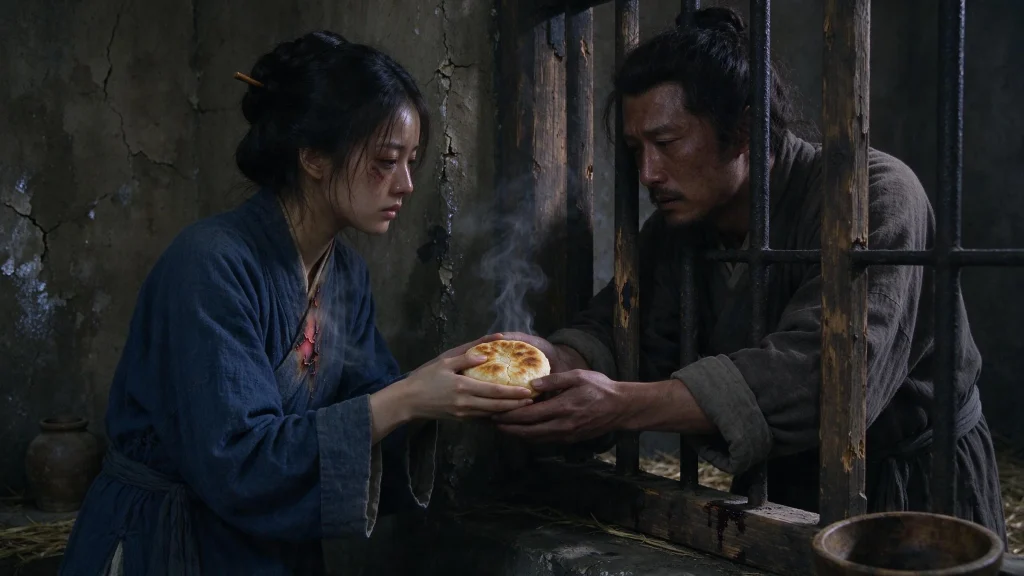
A young woman hid a cake straight off the stove in her robe and carried it to the place where her husband was being held. By the time she took it out, the skin on her chest had burned. The History of the Ming tells the whole thing in one line: "She stole a cake, carried it in to him, and the flesh was scorched."
Her family name was Ma, and she came from Suzhou, in what is now northern Anhui on the Huai River. Her father, known in the records only as Lord Ma, was a friend of the Red Turban commander Guo Zixing, and before he died he left his daughter in Guo’s household. Guo Zixing raised her as his own child. In 1352 a young man walked into that camp with nothing. His parents and brothers had died in the plague that emptied the Huai valley, and he had come from a Buddhist monastery. Guo Zixing thought him remarkable and married his adopted daughter to him. Zhu Yuanzhang, who founded the Ming dynasty in 1368 and ruled it as the Hongwu Emperor, was four years older than Empress Ma.
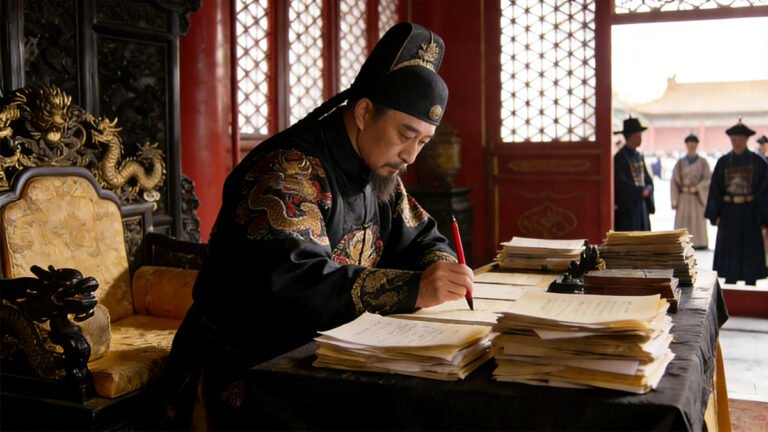
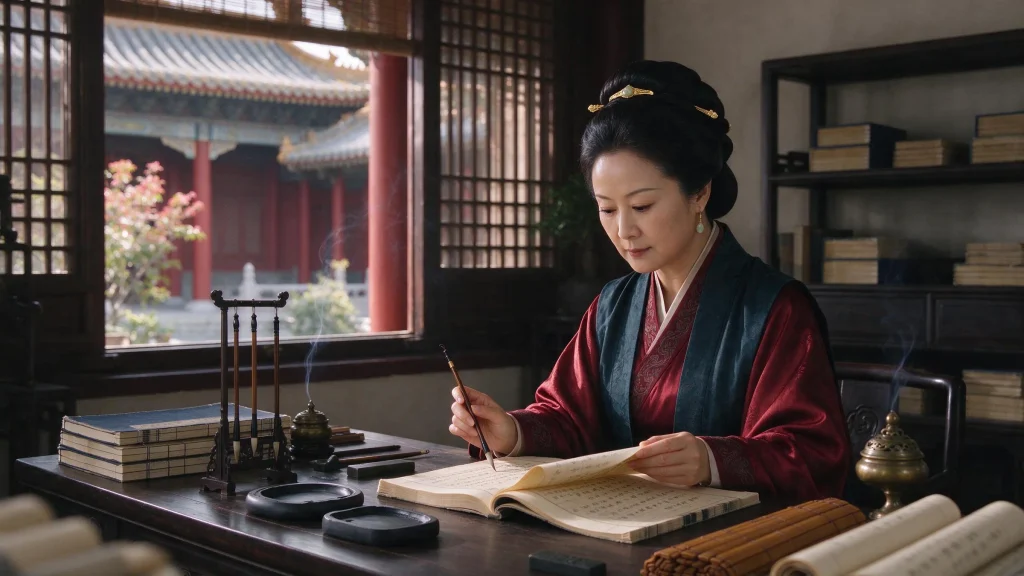
The first thing the History of the Ming says about Empress Ma is that she was kind and shrewd. The second is that she loved books and history. Very few women of her rank in that century could read. Zhu Yuanzhang kept notes and memoranda, and the biography says that whenever he had jottings, he had the empress take charge of them, so that in a sudden crisis he never forgot one.
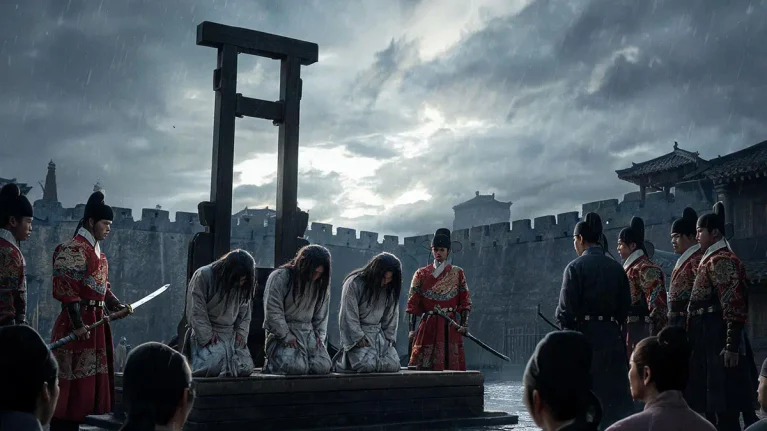
Sixteen years later he took the throne. Over the next two decades he killed the men who had helped him win it. In 1380 the Hu Weiyong case implicated more than 30,000 people. In 1393 the Lan Yu case destroyed 15,000. The History of the Ming says of those same years that because of Empress Ma, punishments and executions were postponed or reduced many times.
Haozhou in the 1350s: one cake, and one notebook
Guo Zixing was not an easy man to serve. Zhu Yuanzhang distinguished himself in his camp, rose, and then fell under suspicion. The History of the Ming disposes of the quarrel in a single sentence: Guo Zixing once believed slander and suspected him, and the empress served Guo’s wife so well that the rift was healed. Her method was settled from that point on. Instead of fighting the accusation, she went to the man’s wife. The imprisonment, and the famine, belong to that same stretch of months, and the cake was carried during it.
Empress Ma did not carry only one cake. The biography says she kept dried provisions in store for her husband so that he never went short, while she herself often went without a full meal.
Zhu Yuanzhang told the story himself, many times. Once he was emperor he liked to praise her in front of his ministers, comparing her to Empress Zhangsun, wife of the Tang emperor Taizong and the byword for a good empress in Chinese political writing. He compared her cake to the bean gruel and the wheat rice that the Han founder Liu Xiu ate while he was a fugitive, meals his followers carried to him in the dark. He was talking to ministers whose own service had begun in a losing rebellion.
Her answer is recorded next to his. When he made her empress in 1368, she said: "I have heard that husband and wife keep faith with each other easily, and that ruler and minister find it hard. Your Majesty has not forgotten the poverty we shared. I hope you will not forget the hardships your ministers shared with you." He had been using their private hunger to praise his wife. She took the compliment and aimed it at the officials standing in the hall.
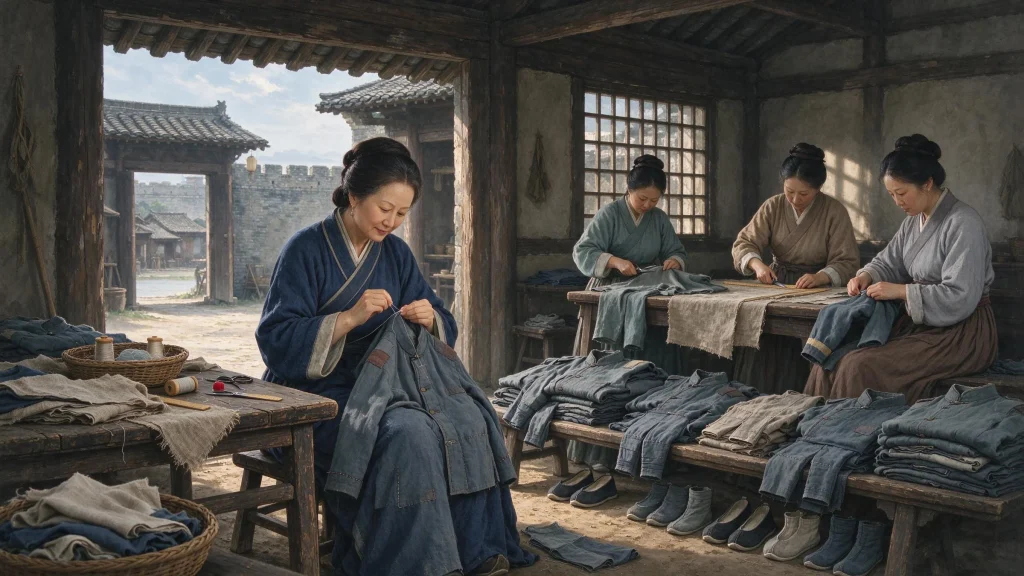
She had not spent the war years inside a palace. After his army took Taiping, she led the officers’ wives across the Yangtze. In Nanjing she sewed clothes and shoes for the soldiers herself. In 1360, when Chen Youliang brought his fleet up to Longwan, she emptied the palace stores of gold and silk and handed them out to the troops. Her biography also credits her with one line of policy delivered early: she told him that the empire would be settled by killing as few people as possible. He agreed.
1368 and 1372: the rules that shut Empress Ma out of politics
In 1368, the first year of the new dynasty, Zhu Yuanzhang ordered his scholars to compile an admonition for women. What he told the Hanlin academician Zhu Sheng was blunt: empresses and consorts were the mothers of the empire, but they were not to be allowed to intervene in government. His reason sits in the same passage. When the inner palace came to direct the state, he wrote, it seldom ended in anything but disaster.
Four years later, in 1372, the court set up six bureaus and one office for the inner palace: palace administration, ceremonial, apparel, food, bedchamber and works, plus an office to handle discipline. It came to seventy-five officials and eighteen female scribes, about one hundred and forty fewer than the Tang court had kept. An iron tablet was made and hung inside the palace with the rules for consorts inscribed on it in gilt characters. Every item of clothing and food for the empress and everyone below her had to be requisitioned in writing through the palace office and countersigned before the ministries would release it, and anyone who went around that procedure was sentenced to death. Court women below the rank of concubine who fell ill were not seen by a physician at all. Medicine was dispensed on the strength of a written description of the symptoms.
The editors of the History of the Ming add their own verdict at this point: through the whole life of the dynasty the inner palace stayed orderly, and the ruling house’s domestic rules were judged stricter than those of the Han or the Tang.
Empress Ma is the one person in that system with a record of talking across the line it drew. The biography says that when the emperor decided business in the front hall and flew into a rage, Empress Ma would wait for him to come back into the inner palace, where he was no longer on display, and raise the matter then.
One story shows how Empress Ma argued. He lost his temper with a palace woman and ordered her punished. The empress pretended to be angry too, and had the woman handed to the office that handled palace discipline. When he asked what she thought she was doing, Empress Ma said an emperor should not let temper decide rewards and punishments. Anger could easily make a sentence too heavy. The office would weigh it properly, and in any case he delegated other people’s cases to the proper court. He accepted the argument, which was an argument about procedure rather than mercy.
What she could reach was specific people and specific sentences. The Hu Weiyong case broke in the first month of 1380. Five days after Hu Weiyong was executed, the Central Secretariat was abolished and the chancellorship with it. In the end more than 30,000 people were implicated in the case. She was alive through all of it.
The day Song Lian was sentenced to death, she gave up wine and meat
The first case in the biography is a short one. Guo Jingxiang was holding Hezhou when someone reported that his son had come at him with a spear. The emperor wanted the son killed. She said that Guo Jingxiang had only this one son, that the report might be false, and that killing him would end the family line. Zhu Yuanzhang ordered an investigation. The accusation was false.
The second case concerns Li Wenzhong. While Li was holding Yanzhou, an official named Yang Xian accused him of misconduct, and the emperor wanted him recalled. Empress Ma pointed out that Yanzhou faced enemy territory, that swapping commanders in the field was unwise, and that Li Wenzhong had a good name while Yang Xian’s word could not be trusted. The recall was dropped, and Li Wenzhong went on to win more battles.
Song Lian was different.
In 1380 the Hu Weiyong case reached his eldest grandson, Song Shen. Song Lian had retired to Pujiang and was past seventy. He was brought to Nanjing and sentenced to death. He had taught the crown prince and the imperial princes. Zhu Yuanzhang had once said in front of the court that Song Lian had served him for nineteen years without one false word and without belittling a single man, and was not merely a gentleman but a worthy. He had also given Song Lian a length of fine silk and told him to keep it for thirty-two years, until it could be made into a coat for his hundredth year. In 1380 none of that counted.
Empress Ma began with the obvious argument. Even a common household treats the teacher of its sons with respect to the end, she said, and how much more should the Son of Heaven. And Song Lian had been at home; he could not have known what his grandson was doing. The emperor refused.
Then she changed her method. At dinner she stopped taking wine and meat. When he asked why, she said she was performing good works for Mr. Song. The History of the Ming says the emperor was distressed, threw down his chopsticks and got up. The next day Song Lian was pardoned, and sent to live at Maozhou.
What Empress Ma had bought was his life, not his freedom. Song Lian died the following year at Kuizhou, on the road, aged seventy-two.
A rich man’s case sits beside his, and the sources do not agree about it. The History of the Ming calls him Shen Xiu, a wealthy man of Wuxing who paid for a third of the Nanjing city wall and then offered to pay the army as well. The emperor said a commoner who rewarded the emperor’s troops was a troublemaker who deserved death. She answered that the law existed to punish the lawless and not the unlucky, that a man whose wealth rivaled a state carried his own misfortune, and that heaven would attend to it. Shen Xiu was spared and sent to Yunnan as a soldier. Ming-era local records say something else: Mo Dan’s gazetteer of Wujiang, written in 1488, states that Shen Wansan was already dead when the rebel Zhang Shicheng held the region. The county gazetteer of 1747 prints both versions and adds a note that the accounts differ and nobody knows which is right. Gu Cheng argued in 1999 that Shen Wansan lived and died under the Yuan dynasty and that the Ming story is a later legend. Fan Shuzhi wrote back that Gu Cheng’s case was not baseless but was not convincing either. The name in the empress’s biography is Shen Xiu. The legend that grew out of it made him Shen Wansan, the richest man in Jiangnan.
Two more cases belong here. Zhu Yuanzhang had sentenced serious criminals to hard labor on the city wall, and Empress Ma objected that labor in place of punishment was a grace of the state, but that exhausted prisoners given hard labor would probably die of it. He released them. And when the officials ate their meal at court after an audience, she had a portion brought to her, tasted it, found it poor, and told him that a ruler should keep his own table plain and feed capable men well. He reprimanded the Court of Imperial Entertainments for it. The same instinct produced a permanent line in the budget. Empress Ma asked the emperor how many students were at the Imperial University. He said several thousand. She asked what their wives and children lived on. Grain was then set aside in what became known as the Red Board Granary and issued to the students’ families. Family rations for university students date from her.
What the official records never say about Empress Ma’s feet
Empress Ma’s biography contains no word about her feet.
The "big-footed empress" is a folk name. In the version that circulates, women of the Yuan and early Ming bound their feet, large feet were a disgrace, and the empress who came out of army camps had never been bound, which produced a stock of jokes. English Wikipedia states as fact that she did not have bound feet. That sentence has no source in the Ming History’s chapter on her, and nothing from the period settles the question.
Footbinding in the Ming is a complicated subject in its own right. Dorothy Ko argues in Cinderella’s Sisters that the practice was never uniform, and that region and family counted for as much as fashion. The Ma family were commoners in the Huai valley, her husband had been a novice monk before he took up arms, and farm women there worked the fields. All of that is background. None of it establishes what her feet looked like.
A second folk etymology attaches to her as well. The Chinese phrase for giving yourself away, literally "letting the horse’s foot show," is traced by popular telling to the empress who could not hide her unbound feet. Stories of this kind are easy to find and hard to document.
What Empress Ma is recorded doing is plainer. She wore coarse cloth washed so many times that she refused to replace it when it wore thin. Hearing that an empress of the Yuan had boiled old bowstrings to weave cloth, she had old silk boiled down and woven into quilts for the old and the childless. The scraps went to princesses, so that they would know what silkworms cost.
"Titles and stipends for my own family would be unlawful"
Zhu Yuanzhang proposed to find her relatives and give them office. Empress Ma’s answer was that conferring rank and stipend on the empress’s own family was unlawful, and she refused until he dropped the idea.
After she died he made her father the Prince of Xu and her mother his consort, built up the grave and founded a shrine. Posthumous honors for parents who died long before the dynasty existed do not create a clan of imperial in-laws, and the two facts can stand together.
Empress Ma read, and she had opinions about government. She had the palace scribes copy out the household rules of the worthy empresses of the Song so that she could read them morning and evening. When someone remarked that the Song had been too lenient, she asked whether too lenient was not better than too harsh.
After the Yuan capital fell, the generals brought its treasures back to Nanjing and presented them. She said the Yuan had owned these things and could not keep them, and that perhaps an emperor had treasures of his own. Zhu Yuanzhang replied that he understood her to mean worthy men. She bowed and went further. She and he had risen from poverty, she said, and she was always afraid that arrogance would grow out of luxury and that collapse would begin in small things, and so she hoped he would find worthy men to govern with him. He called two lines from that conversation excellent and had the palace scribes write them down. Laws changed too often will fail, and when laws fail, fraud appears. A people disturbed too often will be exhausted, and when a people is exhausted, disorder appears.
The eighth month of 1382
In the eighth month of 1382, Empress Ma fell ill.
Ministers asked to pray for her and to find good physicians. Empress Ma refused both. "Life and death are fate," she said, "and what good is prayer? What can a doctor do? And if the medicine fails, will you not punish the doctors because of me?" Her worry was written down exactly as she put it: if the treatment did not work, the men who tried it would be punished on her account.
That same month the court had other business. The emperor restored the imperial examinations, which had been suspended in 1373, and fixed them at one sitting every three years.
Nine days later, on 23 September 1382, she died. She was fifty by the Western count.
Empress Ma’s last instruction to him was recorded as: "I ask Your Majesty to seek worthy men and accept remonstrance, to be careful at the end as at the beginning, so that your sons and grandsons are worthy and the people are settled."
The History of the Ming says he wept aloud, and that he never appointed another empress. In the ninth month she was buried at Xiaoling, on the south slope of Purple Mountain outside Nanjing. The palace women made a song about her, and the historians put it at the end of her biography: "Our empress was sage and kind; her influence reached every household. She nurtured us and raised us; we cannot forget her goodness."
In the tenth month of that year the court created the Censorate. In the eleventh it appointed the first grand secretaries of the halls and pavilions, the office out of which the Grand Secretariat later grew.
The executions went on without her. In 1385 the Guo Huan case cost the lives of officials from the vice ministers of the Six Ministries downward, with tens of thousands jailed to death, and the recovery of the grain ruined much of the middling population of the provinces. In 1390 Li Shanchang, who had served as Zhu Yuanzhang’s grand chancellor, was executed at seventy-seven along with more than seventy members of his household. In 1393 the Lan Yu case destroyed 15,000 people. The History of the Ming’s chapter on criminal law, writing of the Hu Weiyong and Lan Yu cases together, says that those implicated to death came to forty thousand.
Empress Ma cannot be credited with holding any of that back. The Hu Weiyong case broke while she was alive and well enough to argue, and five days in 1380 erased the chancellorship and put 30,000 names on a list. What she could change was one sentence at a time, for one person at a time.
Zhu Yuanzhang died in June 1398, aged seventy-one, and was laid in the same chamber at Xiaoling. Empress Ma had been there for sixteen years. The tomb’s name is usually explained as coming from her posthumous name, Xiaoci, which means filial and kind. She died as Empress Xiaoci. In 1403 the Yongle Emperor lengthened the name, and in 1538 it was lengthened again, until it ran to seventeen characters and still began with those two.
In 2003 Xiaoling was inscribed on the UNESCO World Heritage list as part of the Imperial Tombs of the Ming and Qing Dynasties.
The last words of Empress Ma that the History of the Ming preserves are the ones asking him to be careful at the end as at the beginning.
Questions readers ask
Sources and further reading
- History of the Ming (Mingshi), juan 113, biographies of empresses and consorts, for the whole of the empress’s biography, the palace regulations of 1368 and 1372, and the cases of Song Lian, Shen Xiu and Guo Jingxiang. https://zh.wikisource.org/zh-hans/明史/卷113
- History of the Ming, juan 128, biography of Song Lian, for his career, his grandson Song Shen, his retirement in Pujiang and his death at Kuizhou. https://zh.wikisource.org/zh-hans/明史/卷128
- History of the Ming, juan 3, basic annals of Taizu, for the eighth month of 1382: the restoration of the examinations, the death of the empress, and her burial at Xiaoling in the ninth month. https://zh.wikisource.org/zh-hans/明史/卷3
- History of the Ming, juan 94, on criminal law, for the Guo Huan case and the figure of forty thousand dead in the Hu Weiyong and Lan Yu cases. https://zh.wikisource.org/zh-hans/明史/卷94
- Gu Cheng, "A study of Shen Wansan and his family" (沈万三及其家族事迹考), Historical Research, no. 1 (1999).
- Fan Shuzhi, "An examination of the Shen Wansan story" (沈万三事迹考辨), collected in Ming Literati and Their Fate (明代文人的命运).
- Dorothy Ko, Cinderella’s Sisters: A Revisionist History of Footbinding (University of California Press, 2005).
- Wikipedia, "Empress Ma (Hongwu)". https://en.wikipedia.org/wiki/Empress_Ma_(Hongwu)
- Wikipedia, "Ming Xiaoling". https://en.wikipedia.org/wiki/Ming_Xiaoling
- UNESCO World Heritage Centre, "Imperial Tombs of the Ming and Qing Dynasties". https://whc.unesco.org/en/list/1004
- Xinhua report, 4 July 2003, on the inscription of Ming Xiaoling alongside the Ming tombs near Beijing. https://news.sina.cn/sa/2003-07-04/detail-ikkntiak7544512.d.html
- Institute of History, Chinese Academy of Social Sciences, "A brief examination of the Shen Wansan story". http://lishisuo.cssn.cn/xsyj/ms/202001/t20200116_5078516.shtml